Suit Investment Guide & Estimator
Find the perfect suit level based on your needs and budget
Step 1: Select Your Usage
Step 2: Budget Priority
Select your usage and budget, then click "Analyze" to see your recommended suit specifications.

Quick Summary: What You're Actually Paying For
- Fabric Grade: High-twist wools and cashmere cost significantly more than polyester blends.
- Construction Method: Hand-stitched canvassing replaces cheap, glued interlinings.
- Labor Intensity: Bespoke and made-to-measure suits require dozens of hours of skilled manual labor.
- Fit and Finishing: Hand-finished buttonholes and precise shoulder expressions add immense value.
The Secret Life of Fabric
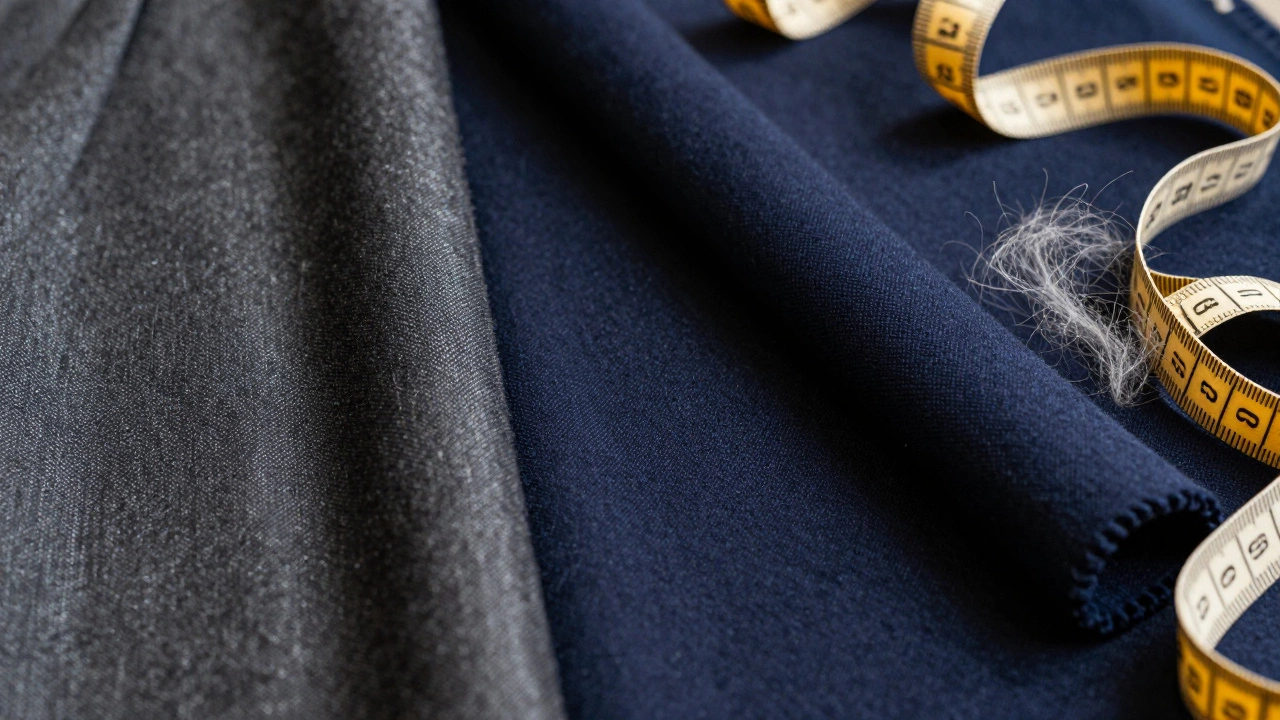
The first place money disappears is in the raw materials. Most budget suits use a mix of polyester and viscose. These fabrics are plastic-based, which means they don't breathe and often have a shiny, artificial sheen. When you move up in price, you encounter Wool is a natural protein fiber known for its durability, breathability, and ability to hold a crease.
But not all wool is equal. You'll see numbers like "Super 100s" or "Super 150s." This refers to the fineness of the fiber. A Super 150 wool is thinner and softer, making the suit feel like a second skin. However, thinner fibers are harder to weave and more fragile, which drives the cost up. Then there are the luxury blends. Mixing wool with Cashmere, a soft wool derived from the undercoat of cashmere goats, adds a level of warmth and softness that standard wool can't touch. If a suit uses fabric from a world-renowned mill like Loro Piana or Vitale Barberis Canonico, you're paying a premium for a century of expertise in textile engineering.
Fused vs. Canvassed: The Invisible Skeleton
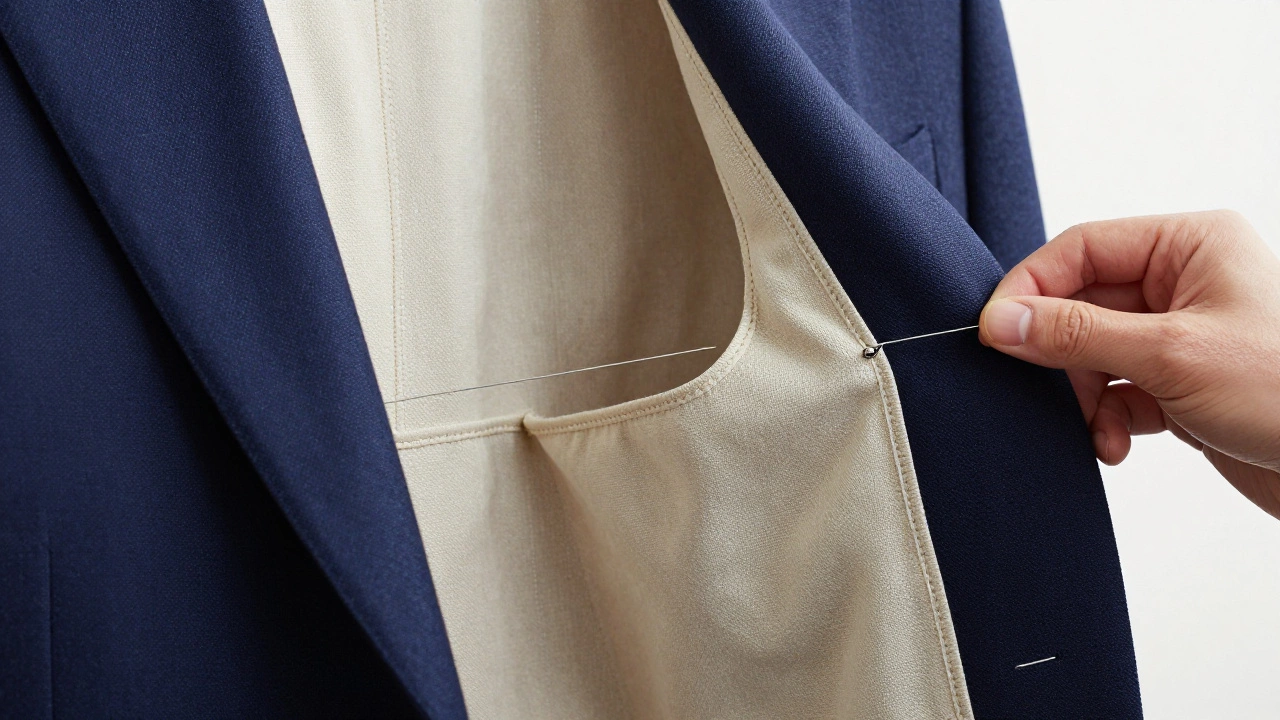
If you cut a suit jacket open, you'd find a layer of material between the outer fabric and the inner lining. This is the "skeleton" that gives the jacket its shape. In cheap suits, this layer is glued on. This is called Fused Construction, a method where a synthetic interfacing is bonded to the fabric using heat and adhesive. It's fast and cheap, but it makes the jacket stiff and prone to "bubbling" after a few trips to the dry cleaner.
Expensive suits use Full Canvas, a construction technique where a layer of horsehair canvas is stitched between the fabric layers. Because it's stitched, not glued, the canvas can move. Over time, the canvas actually molds to your body's specific shape. This is why a high-end suit feels more comfortable the longer you own it. The labor cost of stitching a canvas by hand is astronomical compared to running a piece of fabric through a heat press, which is why you see such a massive jump in price.
| Feature | Fused (Budget) | Half-Canvas (Mid-Range) | Full Canvas (Luxury) |
|---|---|---|---|
| Interfacing | Glued/Bonded | Canvas in chest, fused bottom | Stitched horsehair throughout |
| Breathability | Low (Glue blocks air) | Moderate | High |
| Lifespan | Short (Bubbling occurs) | Medium | Long (Decades with care) |
| Price Point | $ | $$ | $$$ |
The Labor of the Human Hand
Mass-produced suits are cut by machines and sewn by workers in factories who might only handle one sleeve or one pocket all day. But a high-end suit involves a master Tailor, a professional who specializes in the cutting, fitting, and sewing of custom clothing.
Think about the buttonholes. On a cheap suit, they are zig-zagged by a machine. On a luxury suit, they are hand-sewn with a silk thread. This isn't just for show; a hand-sewn buttonhole is stronger and has a distinct, raised look that machines can't replicate. Then there's the "pick stitching"-those tiny visible stitches along the lapel edge. In expensive suits, these are done by hand to keep the edge from rolling. When you pay $3,000 for a suit, you aren't paying for the wool alone; you're paying for the 40 to 60 hours of a highly skilled person's life spent meticulously manipulating fabric with a needle.
The Bespoke Experience
The absolute peak of pricing is Bespoke, the most expensive level of custom tailoring where a unique pattern is created from scratch for one specific individual. This is fundamentally different from "Made-to-Measure," where they just tweak a standard template to fit your chest and waist.
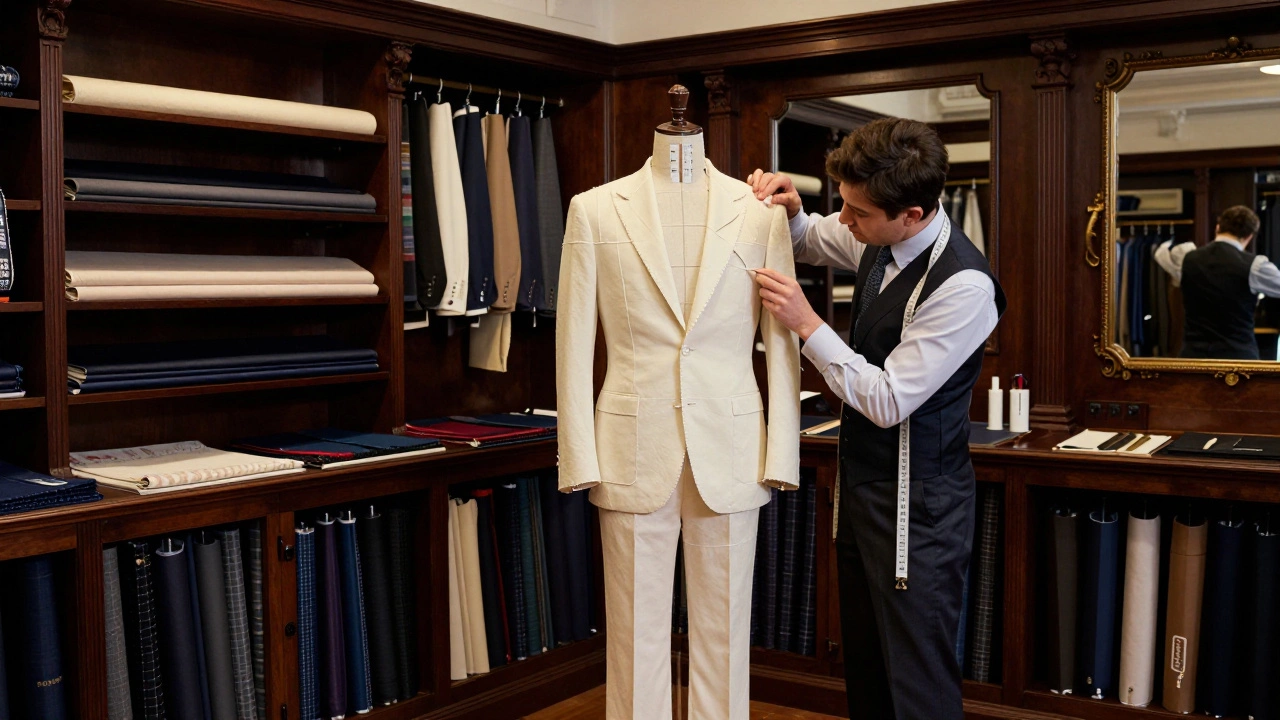
In a bespoke process, you have multiple fittings. The first is usually a "basted fitting," where the suit is loosely held together by white thread. The tailor literally rips the suit apart and pins it back together while you're wearing it to ensure the drape is perfect. This process eliminates the need for the wearer to adapt to the suit; instead, the suit is an exact architectural map of the wearer's body. The cost reflects the risk and the time. If a tailor makes one wrong cut on a piece of $200-a-yard fabric, that's a costly mistake. That level of precision and accountability is baked into the price.
Where You Can Actually Save Money
You don't need a $5,000 suit to look like a million bucks. The smartest way to spend your money is to buy a mid-range Half-Canvas Suit and spend the extra money on a local tailor for alterations. A cheap suit that fits perfectly will always look better than an expensive suit that is too big in the shoulders.
Focus on the "critical points" of fit: the shoulder seam should sit exactly where your arm meets your shoulder, and the trousers should have a slight break or no break at all. If you invest in a suit with a decent wool blend and then pay a professional to taper the waist and hem the pants, you've effectively hacked the luxury look without the luxury price tag.
Is a more expensive suit always better?
Not necessarily. Beyond a certain point, you are paying for brand prestige and extreme luxury fabrics that are actually less durable for daily wear. A Super 180s wool suit is incredibly soft but will wear out much faster than a sturdy Super 110s wool suit if you wear it to the office every day.
What is the difference between Made-to-Measure and Bespoke?
Made-to-Measure uses a pre-existing base pattern that is adjusted to your measurements. Bespoke starts from a completely blank slate; a new, unique paper pattern is drawn specifically for your body, allowing for total customization of every line and angle.
Why does dry cleaning cost so much for suits?
Suits are complex garments with internal structures (like the canvas). Harsh chemicals and heat can shrink the wool or melt the glue in fused suits. Professional cleaners use specific solvents and steaming techniques to clean the fabric without ruining the structure of the jacket.
Can I tell if a suit is canvassed just by looking at it?
Yes, use the "pinch test." Grasp the fabric of the jacket between the button and the bottom edge. If you can pull the outer fabric away from the inner lining and feel a separate piece of fabric floating in between, it's canvassed. If it feels like one thick, bonded piece, it's fused.
Are synthetic blends ever a good choice?
Synthetic blends (like wool-polyester) are better for people who travel constantly or work in high-stress environments where the suit gets a lot of abuse. They wrinkle less and are generally more rugged, though they lack the breathability and prestige of 100% wool.
Next Steps for the Savvy Buyer
If you're looking to upgrade your wardrobe, don't start with the most expensive option. Start by identifying your needs. If you need a "workhorse" suit for daily use, look for a 100% wool suit in a Super 100s or 110s range with a half-canvas construction. This gives you the best balance of durability and style.
For those venturing into custom territory, try a Made-to-Measure service first. It's a great way to learn what fits your body before committing thousands of dollars to a full bespoke experience. Finally, always prioritize the fit over the brand. A $300 suit tailored to your exact proportions will always outclass a $3,000 suit that doesn't fit.