Evening Outfit Planner & 60-30-10 Visualizer
Select Your Palette
Dress or Suit
Shoes, Jacket, or Belt
Jewelry, Clutch, or Nails
Visual Balance Preview
Main
Support
Accent
Styling Verdict
Your outfit follows the classic 60-30-10 rule perfectly. The dominant black base allows the gold shoes to stand out without overwhelming the look, while the silver accent adds a subtle touch of brightness.
Have you ever received an invitation that simply says "three-color dress code" and immediately felt a spike of anxiety? You aren't alone. It sounds like a simple instruction, but for many people, it feels like a trap waiting to happen. Pick the wrong shade, add a fourth accessory, or misinterpret the rule, and you risk standing out in the worst possible way.
The truth is, this specific dress code isn't just about limiting your wardrobe options. It’s a design choice made by hosts-usually for weddings, galas, or corporate retreats-to create a visually cohesive atmosphere. When everyone adheres to a strict palette, the event photos look stunning, and the vibe feels curated rather than chaotic. But knowing *how* to follow it without looking like you're wearing a uniform requires a bit of strategy.
Decoding the Rule: What Actually Counts as a "Color"?
The biggest mistake people make is thinking "color" means any distinct hue they can see. In the world of fashion styling and event planning, the definition is much stricter. To keep your outfit compliant, you need to understand how stylists categorize colors.
First, let's talk about neutrals. Black, white, cream, ivory, and sometimes nude or beige are often treated as "base" tones rather than active colors. If the host specifies "Black, White, and Gold," black and white usually count toward your limit, but if they say "Pastels only," then white might be excluded or included depending on the strictness. Generally, in a three-color rule, neutrals do count unless explicitly stated otherwise.
Second, consider shades. Is navy blue different from royal blue? For a casual party, maybe not. For a strict three-color code, yes. However, most hosts allow tonal variations within one family. Wearing a dark emerald green dress with a lighter sage green belt usually counts as one color because they belong to the same hue family. This is a crucial loophole that allows you to add depth to your outfit without breaking the rules.
| Item | Counts as a Color? | Notes |
|---|---|---|
| Base Dress/Suit | Yes | This is your primary color block. |
| Shoes | Yes | Unless they match your base exactly (then it's 1). |
| Jewelry | Yes | Metallics (gold/silver) often count as separate colors. |
| Cling/Clutch | Yes | Must match one of the other two colors. |
| Tonal Accessories | No | A darker shade of your main color doesn't add to the count. |
Choosing the Right Palette for Evening Events
Since we are focusing on evening wear, the lighting plays a huge role in how your colors appear. Under warm candlelight or dim chandeliers, bright neon colors can look harsh and washed out. Instead, opt for rich, saturated tones that reflect light beautifully.
If the invitation leaves the specific colors up to you, or if you are interpreting a vague "formal three-color" request, here are three winning combinations that work for almost any evening occasion:
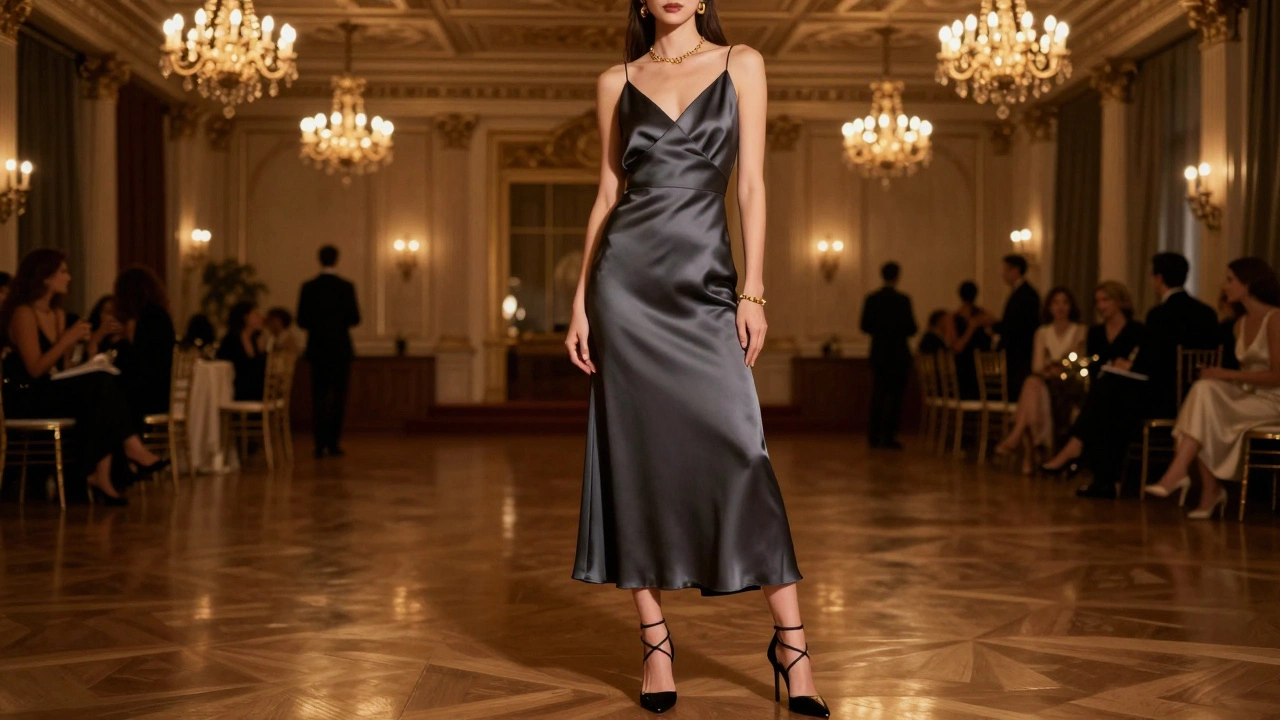
- Monochrome + Metallic: A deep charcoal grey dress, black heels, and gold jewelry. This is sophisticated, slimming, and impossible to mess up.
- Complementary Contrast: A navy blue gown, silver accessories, and a black clutch. Navy and silver are a classic pairing that screams elegance.
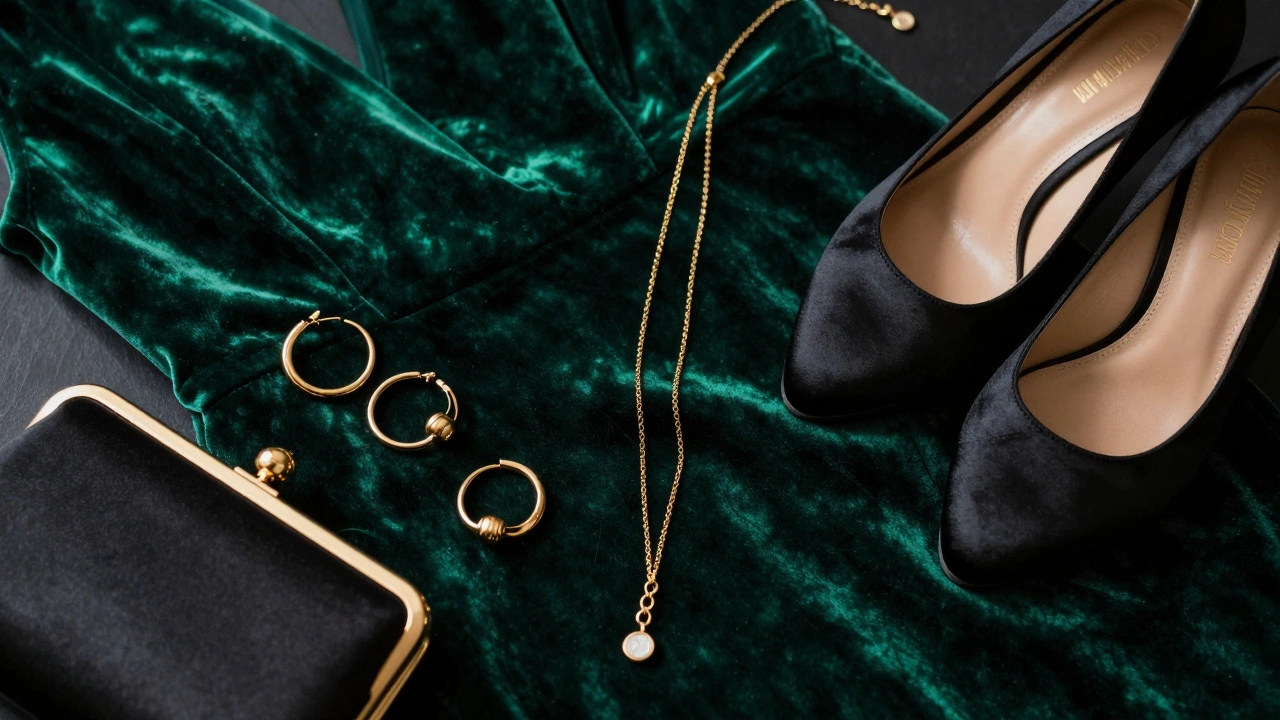
- Jewel Tones: Emerald green, black, and gold. Jewel tones like ruby, sapphire, and emerald look expensive against skin in low light.
Avoid pastels for evening events unless the theme specifically calls for them. Pale pink or baby blue can disappear in evening photos, making you look underdressed compared to guests in richer hues.
Styling Strategies: How to Wear Three Colors Without Looking Busy
Having three colors doesn't mean you have to split your outfit into three equal parts. That’s a recipe for visual clutter. The key is hierarchy. One color should dominate, one should support, and one should accent.
Think of the 60-30-10 rule used in interior design. Let 60% of your look be your main garment (the dress or suit). Let 30% be your secondary element (shoes or a jacket). Let the final 10% be your accent (jewelry, a scarf, or nail polish).
For example, if your palette is Red, Black, and Silver:
- 60% Red: A striking red cocktail dress.
- 30% Black: Black strappy heels and a black belt or bodice detail.
- 10% Silver: Simple silver hoop earrings and a delicate necklace.
This approach ensures you follow the rule while maintaining a polished, intentional look. If you try to do 33% red, 33% black, and 33% silver, you’ll look like a traffic cone. Balance is everything.
Common Pitfalls to Avoid
Even experienced shoppers trip up on these details. Here is what to watch out for to ensure you don't accidentally break the code.
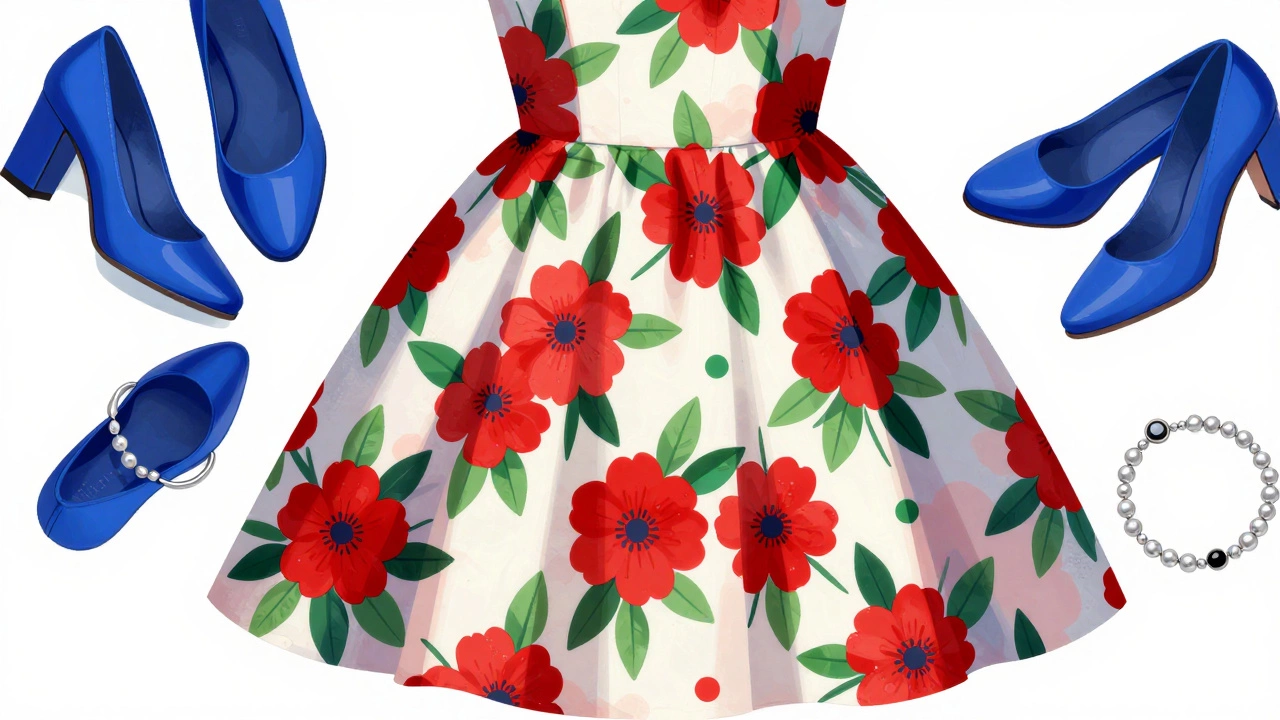
The Pattern Trap: Patterns are tricky. A floral dress with red flowers, green leaves, and a white background technically has three colors already. If you add black shoes and gold jewelry, you’re suddenly at five colors. If you choose a patterned piece, treat the entire pattern as one "color block" only if the colors within it are tonal. Otherwise, pick the dominant color of the pattern and build your rest of your outfit around that single hue, keeping accessories neutral.
Metallic Mismatching: Don’t mix gold and silver unless you are very skilled at styling. In a three-color constraint, mixing metals adds complexity and can look accidental. Stick to one metal tone for all jewelry and hardware on your bag or shoes. If your dress has gold buttons, wear gold jewelry.
Ignoring Shoes: Many people forget that shoes are a major color block. If you wear a full-length gown, your shoes might be hidden, allowing you to get away with a "secret" fourth color. But for cocktail dresses or suits where ankles are visible, your shoe color must be accounted for in your three.
Navigating Specific Event Types
The application of the three-color rule changes slightly depending on the type of event. Understanding the context helps you decide how strictly to adhere to the letter of the law versus the spirit of it.
Weddings: This is where the rule is most common. Couples often want a specific aesthetic for their photos. If the invite says "Blush, Cream, and Sage," stick to it religiously. Do not wear hot pink instead of blush. Do not wear olive green instead of sage. The difference matters in group shots. Also, never wear white (or anything close to it) unless the bride explicitly tells you to. Even if white is part of the palette, guests should avoid it to prevent upstaging the couple.
Corporate Galas: Here, professionalism meets style. Darker palettes are safer. Navy, black, and grey are standard. Bright colors can be distracting in a business setting. Use the third color sparingly-a pop of burgundy in a tie or a silk scarf can show personality without being unprofessional.
Themed Parties: If the theme is "Roaring Twenties" with a three-color code of Black, Gold, and White, you have more leeway with textures. Sequins, feathers, and velvet can play with light and shadow, adding interest even if the color count remains low. Focus on texture when your color options are limited.
What If You Don't Own the Right Pieces?
You don't need to buy a whole new wardrobe to follow a three-color dress code. Often, you already own the basics; you just need to swap out the accents.
Start with your largest item. If you have a little black dress, you’ve got color #1 covered. Now look at your closet for shoes. Do you have nude pumps? That’s color #2. Do you have a gold bracelet? That’s color #3. Done.
If you lack a specific color, consider accessories. A colored shawl, a statement belt, or even bold lipstick can introduce a third color without requiring a major purchase. Nail polish is also a great hack. If your outfit is monochrome (black dress, black shoes), painting your nails a contrasting color (like deep red) can technically count as your second or third color if you want to add flair, though purists might argue it’s too small to count. It’s a safe bet for creative interpretation.
Final Tips for Confidence
When in doubt, less is more. It is better to wear two colors perfectly than three colors poorly. If you struggle to find a third item that fits, stick to a two-color palette. A black dress with silver jewelry is always chic. Adding a random blue clutch just to hit the number three will likely ruin the harmony.
Also, check the lighting. Take a photo of your outfit in natural daylight and then in a dim room. Does the color still look good? Does it clash with your skin tone? Sometimes a color looks great on the hanger but washes you out under evening lights. Adjust accordingly.
Remember, the goal of the dress code is not to restrict you, but to help you blend into a beautiful collective aesthetic. By understanding the rules and using smart styling tricks, you can look effortless, elegant, and completely appropriate for any evening event.
Does black count as a color in a three-color dress code?
Yes, black almost always counts as a color. While some people consider it a neutral, in the context of strict dress codes, it is treated as a distinct hue. If your outfit is all black, you are using one color. If you add red shoes and gold jewelry, you are using three.
Can I wear patterns if there is a three-color limit?
You can, but it is risky. Each distinct color in a pattern counts toward your total. A floral print with red, green, and yellow uses up all three slots. If you wear that, your shoes, jewelry, and bag must match one of those existing colors. Solid colors are much easier to manage.
Do metallics like gold and silver count as separate colors?
Yes, metallics are considered distinct colors. Gold is not the same as yellow, and silver is not the same as grey. They reflect light differently and serve as accents. Mixing gold and silver usually adds two colors to your count, so stick to one metal tone to save space in your palette.
Is it okay to wear tonal variations of the same color?
Generally, yes. Wearing a navy blue dress with a midnight blue belt is typically counted as one color because they are in the same hue family. This allows you to add dimension and texture without violating the three-color rule. Just avoid combining vastly different shades like pastel blue and electric blue.
What if I can't find a third color to complete my outfit?
It is perfectly fine to wear fewer than three colors. A two-color outfit is often more elegant and cohesive than a forced three-color combination. Focus on quality fabrics and fit rather than hitting an arbitrary number. Simplicity is always stylish.