Workplace Footwear Compliance Checker
Not sure if your shoes are okay for work? Answer these questions to get an instant compliance score and specific advice.
Select your footwear details above and click "Check Compliance" to see if your choice is safe and professional.
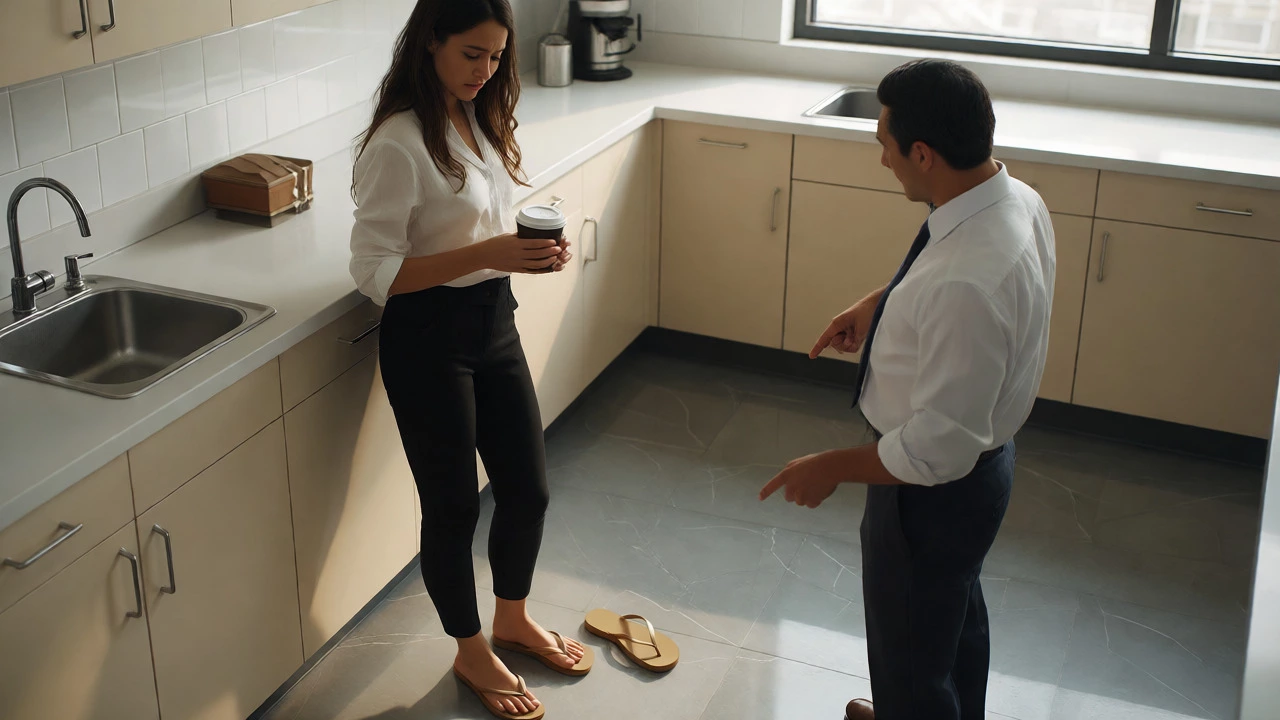
You’re standing in the breakroom, coffee in hand, when your manager walks by and points at your feet. "Those flip flops have to go," she says. You feel a mix of embarrassment and frustration. After all, it’s hot, you’re comfortable, and you’re just sitting at a desk. But here is the thing: that casual summer staple is one of the most controversial items in modern workplace footwear policies.
It isn’t just about looking stuffy or enforcing outdated norms. There are hard reasons why many companies ban flip flops, ranging from serious safety hazards to subtle hygiene issues that affect everyone around you. Whether you work in an office, a retail store, or a warehouse, understanding the logic behind these rules can save you from awkward conversations with HR and potential injury.
The Safety Argument: More Than Just Stubbed Toes
If you think flip flop bans are only about aesthetics, you are missing the biggest factor: risk management. In industries like healthcare, manufacturing, and hospitality, open-toe shoes are strictly prohibited for good reason. According to OSHA (Occupational Safety and Health Administration) guidelines, protective footwear must cover the entire foot to prevent injuries from falling objects, spills, or sharp debris.
Consider a nurse rushing down a hospital corridor. If a vial of medication drops on their foot, closed-toe shoes provide a barrier. A flip flop offers almost none. The same applies to construction sites or kitchens where hot oil or heavy tools might land on your toes. Even in a standard office, tripping hazards exist. Flip flops lack secure fastening; they can slip off easily, causing you to trip over cables or uneven flooring. This instability increases the likelihood of ankle twists or falls, which are leading causes of minor workplace accidents.
Beyond immediate physical danger, there is long-term health impact. Flip flops offer zero arch support. Walking in them forces your toes to grip the sole to keep the shoe attached, altering your natural gait. Over time, this can lead to plantar fasciitis, tendonitis, or knee pain. When employees are in pain, productivity drops, and sick days rise. Companies aren’t just protecting you from dropping a hammer; they are trying to keep your musculoskeletal system healthy enough to perform your job effectively.
Hygiene and Professional Perception
Let’s talk about smell. It’s not polite to mention, but it’s real. Feet sweat. In enclosed shoes, socks absorb some moisture. In flip flops, that sweat sits directly on the rubber or foam sole, creating a breeding ground for bacteria and fungi. In a climate-controlled office with recycled air, odors can travel surprisingly far. Your colleagues are close enough to notice if your feet aren’t fresh, and that distraction impacts professional interactions.
Then there is the visual aspect of professionalism. Dress codes vary wildly. A tech startup in Toronto might allow jeans and sneakers, but even they often draw the line at beachwear. Flip flops signal leisure. They remind people of the pool, the beach, or lazy Sundays. When you wear them to work, you subconsciously signal that you are not fully engaged in the professional environment. This matters most in client-facing roles. If you are meeting a new client, showing up in thongs can undermine your authority before you even speak. It suggests a lack of seriousness or attention to detail.
However, context is king. If you work in a creative agency or a coastal business, the rules might be looser. But even then, there is a difference between a high-quality leather sandal and a $5 plastic flip flop. The latter rarely passes the 'professional' sniff test in any setting other than a literal beach bar.

Dress Code Nuances: What Actually Counts as "Shoes"?
Not all open footwear is created equal. Many employees confuse flip flops with sandals, thinking both are equally banned. This is a common mistake. Most modern office dress codes distinguish between the two based on structure and coverage.
| Feature | Flip Flops | Closed-Toe Sandals | Loafers/Slip-ons |
|---|---|---|---|
| Coverage | Minimal (toes exposed) | Partial (toes covered, heel open) | Full (entire foot covered) |
| Safety Rating | Low (OSHA non-compliant in many sectors) | Medium (depends on industry) | High (generally accepted everywhere) |
| Support Level | None to Low | Moderate (if structured) | High (with proper insoles) |
| Professional Perception | Casual/Beach | Smart Casual | Business Casual/Formal |
As you can see, the gap between a flip flop and a structured sandal is significant. If your office allows sandals, look for ones with a back strap. This simple addition prevents slipping and provides stability. It also looks more intentional. A leather slide with a slight heel or platform reads as a fashion choice. A rubber thong reads as laziness.
Another gray area is "smart casual." Some workplaces define this loosely, leaving room for interpretation. If you are unsure, err on the side of caution. Wear closed-toe shoes until you observe what senior leadership wears. Or better yet, ask HR directly. Getting written clarification beats guessing and getting sent home to change.
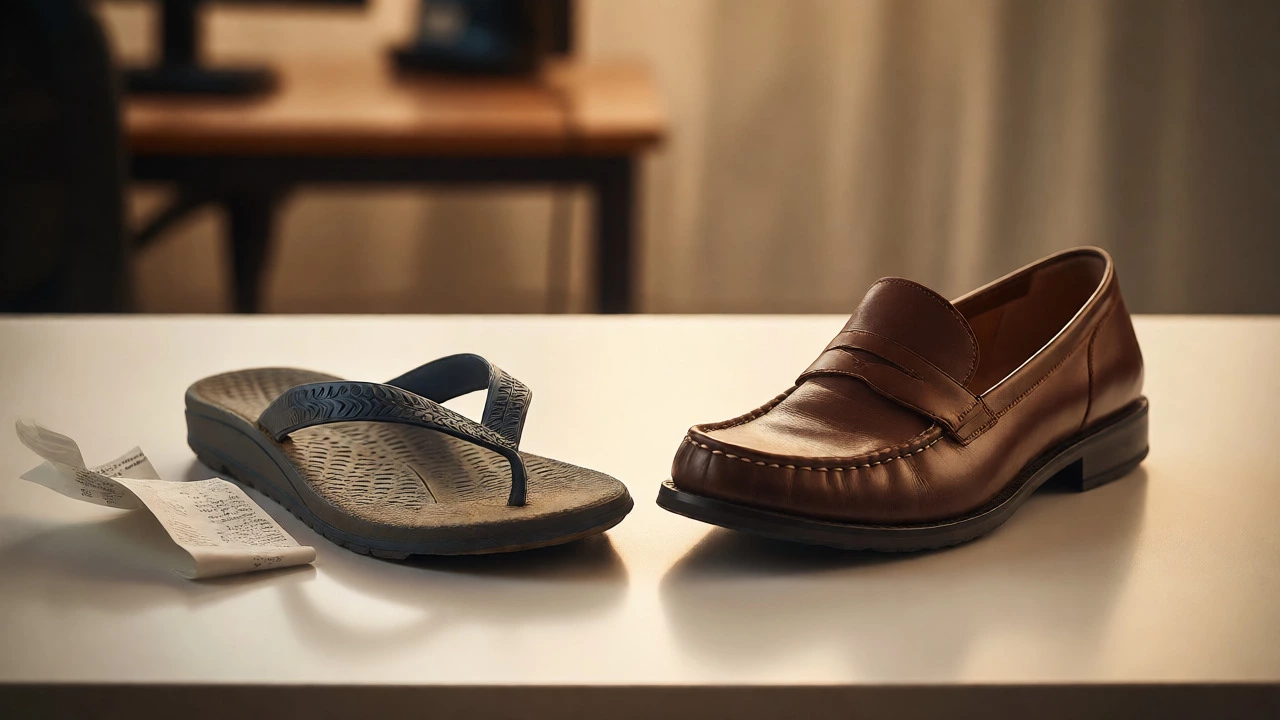
The Economic Reality: Cost vs. Comfort
One reason flip flops remain popular is cost. You can grab a pair for ten dollars at any drugstore. Proper ergonomic work shoes can cost upwards of $100. For hourly workers who stand for eight hours, this is a genuine financial burden. However, consider the amortized cost. Cheap flip flops wear out quickly, especially the straps. They may last a month or two under daily use. A quality pair of supportive shoes lasts years.
Furthermore, poor footwear leads to medical costs. Treating plantar fasciitis or chronic back pain can cost hundreds or thousands of dollars in co-pays and physical therapy sessions. Investing in decent work shoes is actually a saving strategy in disguise. Many employers now offer stipends for work-appropriate footwear, recognizing that employee comfort correlates with retention and performance. Check your benefits package; you might already have access to funds you haven’t used.
How to Navigate the Policy Without Sacrificing Comfort
If you hate wearing stiff shoes all day, you don’t have to suffer. Here are practical strategies to stay compliant while keeping your feet happy:
- The Commuter Swap: Keep a pair of flip flops or slippers in your car or under your desk. Drive or walk to work in your comfortable beach shoes, then switch into your required work shoes upon arrival. This gives you the best of both worlds.
- Invest in Orthopedic Inserts: Standard loafers or oxfords can be rigid. Adding memory foam or gel insoles transforms cheap shoes into cloud-like comfort. Brands like Dr. Scholl’s or custom orthotics from a podiatrist make a huge difference.
- Choose Breathable Materials: If you must wear closed-toe shoes, look for mesh uppers or perforated leather. These allow airflow, reducing sweat and odor without violating dress codes.
- Rotate Your Shoes: Don’t wear the same pair every day. Alternating between two pairs allows the materials to dry out completely, extending their life and maintaining hygiene.
Remember, the goal isn’t to punish you. It’s to create an environment where everyone feels safe, respected, and focused. By adapting your footwear choices, you show respect for your workplace culture and your own well-being.
Are flip flops ever allowed in offices?
Yes, but usually only in very casual environments like creative agencies, tech startups, or businesses located near beaches. Even then, they often need to be clean, intact, and free of visible wear. Always check your specific employee handbook first.
Why do hospitals ban flip flops specifically?
Hospitals prioritize infection control and safety. Flip flops expose skin to bodily fluids, chemical spills, and dropped instruments. Closed-toe, fluid-resistant shoes are mandatory to protect staff from pathogens and physical injury.
Can I wear sandals instead of flip flops?
Often, yes. Structured sandals with back straps and closed toes (or covered heels) are frequently acceptable in business-casual settings. Avoid beach-style slides with no backing unless your office explicitly permits them.
What should I do if my boss sends me home for wearing flip flops?
Stay calm. Ask for a copy of the dress code policy. If you weren’t aware of the rule, apologize and request to work remotely or take unpaid leave for the rest of the day if necessary. Use this as a chance to buy appropriate shoes immediately.
Do flip flops cause long-term foot problems?
Prolonged use can contribute to plantar fasciitis, Achilles tendonitis, and altered gait patterns due to lack of arch support and toe gripping. While occasional use is fine, daily reliance on unsupportive footwear increases injury risk.