Hoodie Comfort Calculator
How comfortable is your hoodie in current conditions?
Based on the article: 70 degrees isn't one temperature - it depends on fabric, activity, and other factors
It’s 70 degrees outside. The sun is out, birds are chirping, and you’re standing in front of your closet wondering if a hoodie is a bad idea. You’ve heard people say it’s too warm. You’ve also seen others walking around in hoodies like it’s no big deal. So what’s the truth? Should you wear a hoodie in 70-degree weather? The answer isn’t simple - and that’s okay.
70 Degrees Isn’t One Temperature
When people say it’s 70 degrees, they’re talking about air temperature. But that’s not the whole story. Humidity, wind, sun exposure, and your own body heat all change how that number feels. A 70-degree day in Arizona with dry air and a breeze feels totally different than 70 degrees in Atlanta with 80% humidity and no wind. Your hoodie will feel lighter in one and suffocating in the other.
Think about it this way: if you’ve ever worn a hoodie after a workout and your body was still warm, you know how quickly fabric traps heat. At 70 degrees, your body is already working to stay cool. A hoodie adds insulation - which might be fine if you’re moving, but not if you’re sitting still in direct sunlight.
What Hoodies Are Actually Made Of
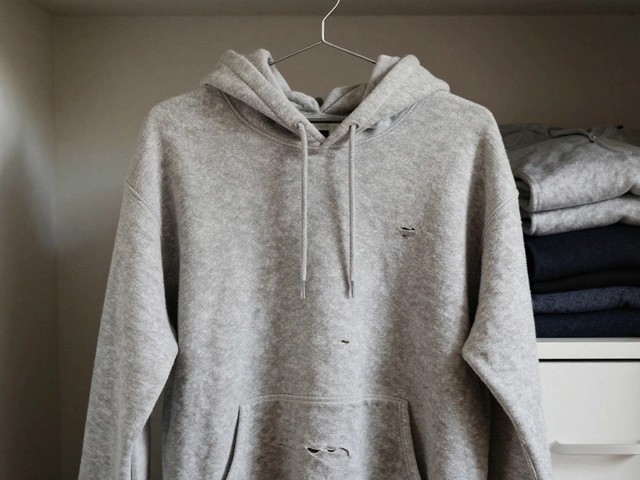
Not all hoodies are created equal. A thick cotton fleece hoodie from winter will feel heavy and hot at 70 degrees. But a lightweight cotton jersey hoodie? That’s a different story. Many brands now make hoodies with thinner weaves, moisture-wicking fabrics, and even mesh panels. These are designed for layering in mild weather - not for snowstorms.
Check the label. If it says “performance cotton,” “brushed jersey,” or “lightweight fleece,” it’s built for comfort in temperatures like 70. If it says “100% heavyweight cotton” or “winter weight,” it’s probably too much. The difference isn’t just in thickness - it’s in how the fabric moves air and sweat.
Activity Matters More Than Temperature
Here’s the real key: what are you doing? If you’re walking to the store, running errands, or sitting at a café, a hoodie might make you overheat. But if you’re hiking, biking, or playing pickup basketball, your body is generating heat. In that case, a hoodie can help regulate your temperature - especially if you start sweating and then slow down.
Many athletes wear hoodies during warm-ups, even in 70-degree weather. Why? Because they know their body will warm up fast. The hoodie keeps muscles loose and prevents sudden chills when they stop moving. Once they’re warmed up, they take it off. That’s smart layering, not stubbornness.

Style and Social Norms Are Real
Let’s be honest - sometimes you wear a hoodie because you like how it looks. It’s cozy. It hides a bad hair day. It matches your jeans. And in many places, 70-degree weather doesn’t mean everyone is in tank tops. In cities like Portland, Seattle, or even parts of New York, hoodies are a year-round staple. People wear them with shorts, sandals, and flip-flops. It’s not about temperature - it’s about personal style.
There’s no dress code police. If you feel good in a hoodie at 70 degrees, you should wear it. But know this: if you’re in a high-end restaurant, a job interview, or a formal event, a hoodie might send the wrong signal - no matter the weather.
How to Decide: A Quick Checklist
Still unsure? Use this simple checklist before you pull on that hoodie:
- Is the hoodie lightweight? - Look for under 12 oz. weight. If it’s bulky or stiff, skip it.
- Are you moving? - If you’ll be active, a hoodie can help. If you’ll be sitting, avoid it.
- Is the sun strong? - Direct sun + hoodie = heat trap. Choose shade or skip it.
- Is the humidity high? - Above 60%? A hoodie will feel sticky. Go for breathable fabrics or skip it.
- Do you have a plan to remove it? - Can you easily take it off and carry it? If not, it’s a risk.
Alternatives to Consider
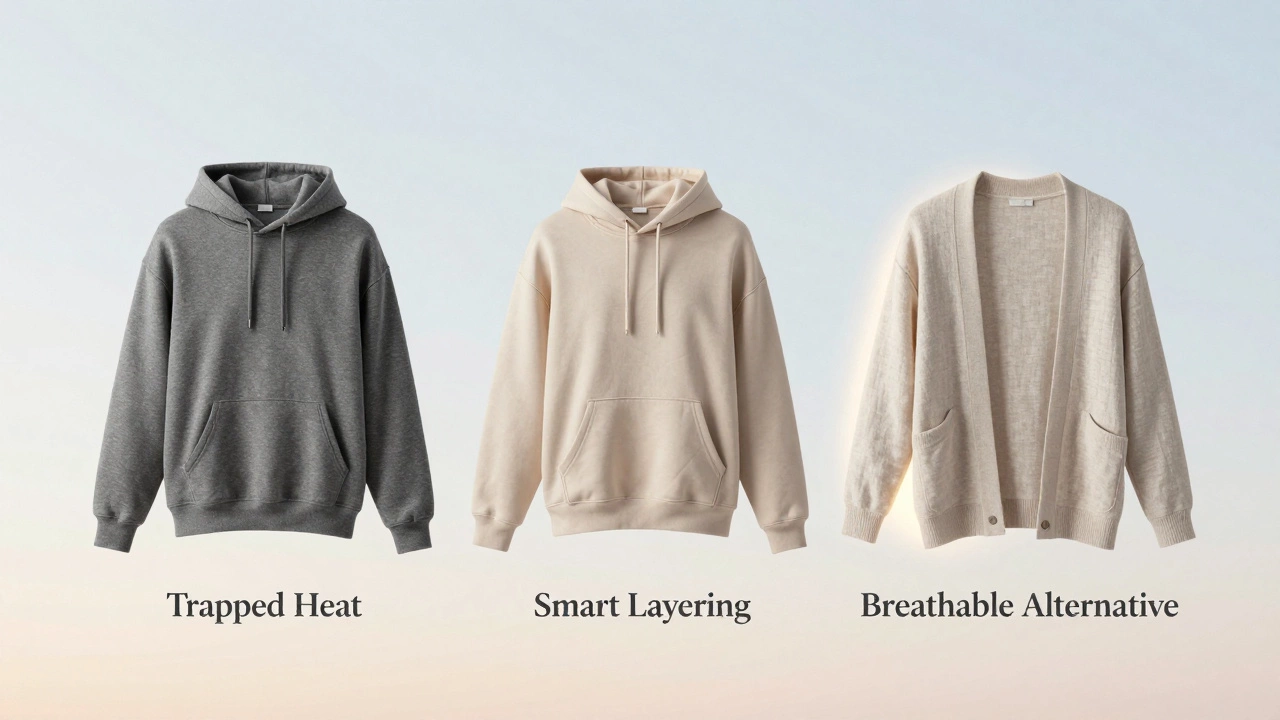
If you want the hoodie vibe without the heat, try these:
- Lightweight zip-up jacket - Lets you vent heat easily.
- Open-front cardigan - Same cozy feel, zero insulation.
- Performance vest - Adds style without trapping heat.
- Unbuttoned button-down - Throw it over a tee for that laid-back look.
These options give you the aesthetic of a hoodie without the bulk. They’re perfect for when you want to look put-together but still feel relaxed.
Real People, Real Experiences
People wear hoodies in 70-degree weather every day - and they’re not all wrong. A college student in Austin wears her favorite hoodie to class because it’s soft and has pockets. A barista in Chicago layers a thin hoodie under his apron to stay warm during early shifts. A dad in Minnesota wears one while walking his dog at dusk, even in spring.
They all chose based on their needs, not a rule. There’s no universal temperature threshold for hoodies. It’s about fit, fabric, function, and feeling.
So should you wear a hoodie in 70-degree weather? Yes - if it’s the right hoodie, you’re moving, the air isn’t humid, and you’re okay with looking a little casual. No - if you’re sitting still, sweating, or trying to impress someone.
Weather doesn’t dictate your wardrobe. You do.
Is 70 degrees too hot for a hoodie?
Not necessarily. 70 degrees isn’t hot enough to rule out hoodies entirely - it depends on the fabric, your activity level, and the humidity. A lightweight hoodie made for layering is perfectly fine. A thick winter hoodie? Probably not.
What’s the best fabric for a hoodie in warm weather?
Look for lightweight cotton jersey, brushed poly blends, or moisture-wicking fabrics. Avoid heavyweight fleece or 100% thick cotton. Brands like Uniqlo, Everlane, and Lululemon make hoodies designed for mild temps - check the weight (under 12 oz) and care label for terms like "lightweight" or "breathable."
Can I wear a hoodie to work in 70-degree weather?
It depends on your workplace. In casual offices, a slim-fit, solid-color hoodie might be fine. In corporate or client-facing roles, it’s usually too informal. If you’re unsure, opt for a blazer over a tee instead - it gives the same relaxed vibe without the hoodie stigma.
Do hoodies make you sweat more in warm weather?
Yes, if the hoodie traps heat and doesn’t let sweat evaporate. Thick, non-breathable fabrics prevent your body from cooling naturally. That’s why you feel clammy. Choose a hoodie with loose weave, mesh lining, or moisture-wicking tech to reduce this effect.
What’s the ideal temperature range for wearing a hoodie?
Most people find hoodies most comfortable between 50 and 65 degrees. But with the right fabric and activity level, 70 degrees can work - especially if you’re moving or the air is dry. The key isn’t the number on the thermometer - it’s how the hoodie interacts with your body and environment.