Hoodie Fit & Fabric Calculator
Your Details
Enter your details to get personalized hoodie recommendations.
There is a moment of panic that every wardrobe owner knows well. You pull on your favorite hoodie a casual pullover or zip-up sweatshirt with a hood, look in the mirror, and wonder: "Does this look intentional, or did I just borrow clothes from my teenager?" The debate between tight and loose fits has shifted dramatically over the last decade. In 2015, a fitted silhouette was king. Today, the pendulum has swung hard toward volume and drape.
The truth is, there is no single correct answer. Whether a hoodie should be tight or loose depends entirely on what you are trying to achieve-comfort, style, layering capability, or body proportion balancing. Getting the fit wrong can make you look sloppy when you meant to look relaxed, or boxy when you meant to look athletic. Let’s break down exactly how each fit works, who it suits, and how to choose the right one for your specific needs.
The Case for the Oversized Silhouette
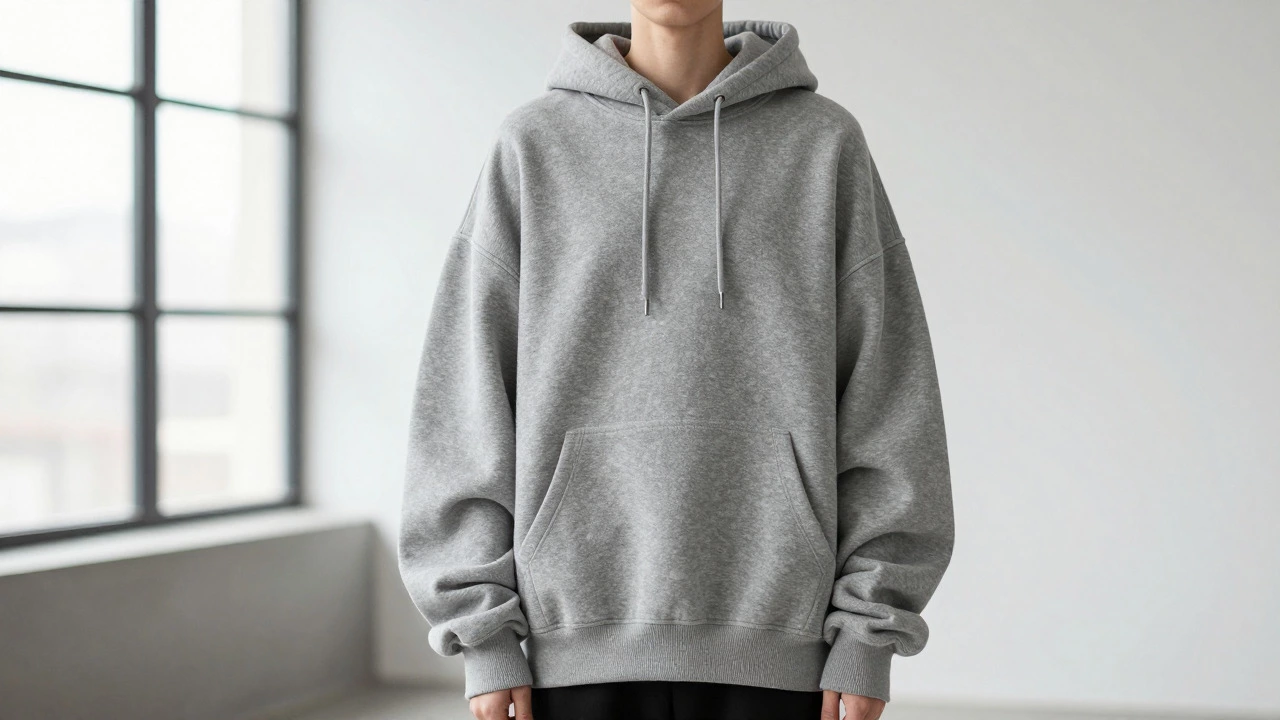
In the current fashion landscape, particularly within streetwear culture a subculture focused on casual clothing, sneakers, and urban aesthetics, the oversized hoodie is not just an option; it is often the default expectation. This style prioritizes drape, movement, and a sense of nonchalance.
An oversized hoodie typically features dropped shoulders, where the seam falls below the actual shoulder bone, creating a slouchy aesthetic. The body of the garment hangs loosely, often extending past the hips. This cut offers several distinct advantages:
- Superior Comfort: There is zero restriction on movement. It feels like a blanket you can wear.
- Layering Potential: You can easily throw a t-shirt, flannel, or even a light jacket underneath without feeling constricted.
- Trend Alignment: For those aiming for a modern, youthful, or artistic vibe, volume signals that you are aware of current trends.
However, the risk with oversized fits is the "swimming" effect. If the hoodie is too large relative to your frame, it can swallow you whole, making you look smaller or frailer than you are. The key to pulling off an oversized look is intentionality. The fabric must have enough weight (usually heavy cotton fleece) to hold its shape. A thin, cheap oversized hoodie will wrinkle and cling awkwardly, looking messy rather than stylish.
The Appeal of the Slim and Fitted Cut
While volume dominates social media, the slim-fit hoodie remains a staple for practicality and specific aesthetics. A slim-fit hoodie follows the contours of your torso more closely. The sleeves end near the wrist bone, and the hem sits at the natural waistline or just below.
This fit is ideal for several scenarios:
- Athletic Activities: If you are using your hoodie for warm-ups before a workout, a tight fit prevents excess fabric from getting in the way or catching on equipment.
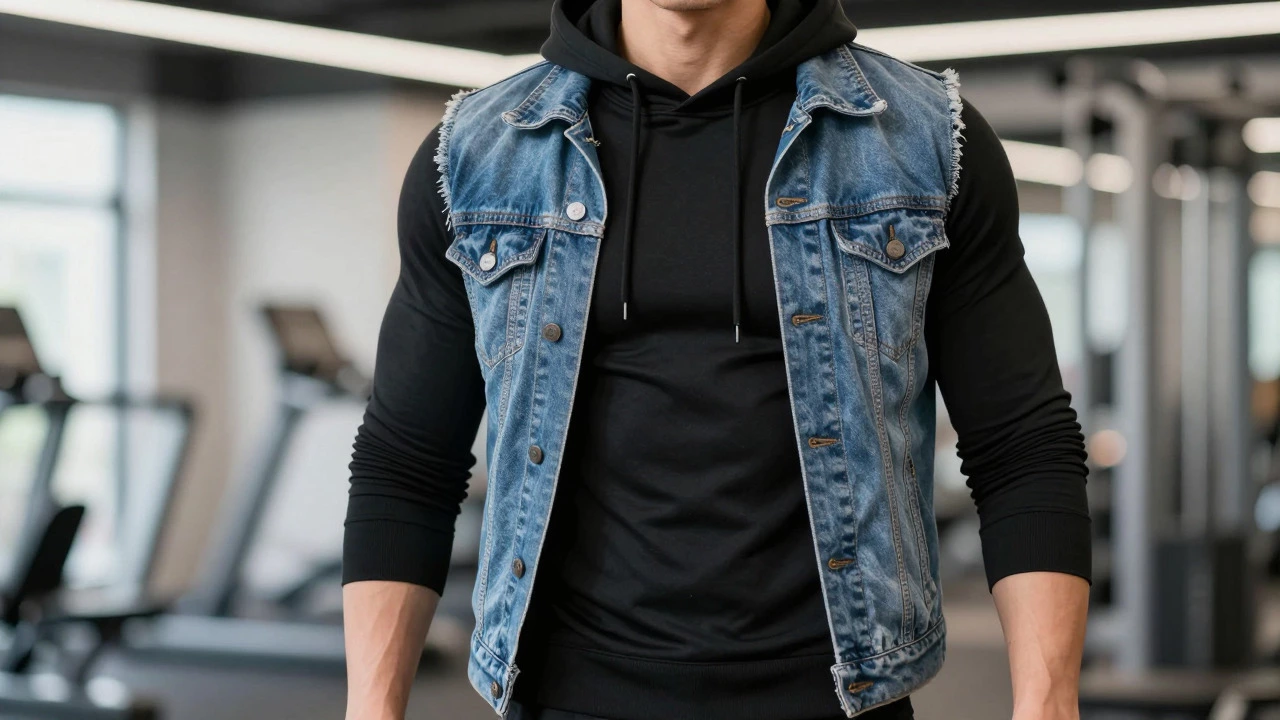
- Clean Lines: A fitted hoodie looks sharper under open button-down shirts, denim jackets, or leather jackets. It creates a streamlined profile that doesn’t add bulk to your upper body.
- Professional Casual: In creative workplaces where hoodies are acceptable, a tailored fit appears more put-together and less like loungewear.
The downside? Comfort can suffer if the material lacks stretch. Many slim-fit hoodies use rigid cotton blends that restrict arm movement. Additionally, as fabrics shrink after washing, a "regular" fit can quickly become uncomfortably tight. If you choose a slim fit, ensure the fabric contains a percentage of elastane or polyester to maintain mobility.
Understanding Body Proportions and Fit
Your body type plays a massive role in determining whether a tight or loose hoodie works for you. Fashion rules about body types are often debated, but some principles of visual balance remain consistent.
| Body Type | Recommended Fit | Why It Works |
|---|---|---|
| Slim / Ectomorph | Oversized or Relaxed | Adds visual weight and structure, preventing a washed-out look. |
| Athletic / Mesomorph | Regular or Slight Oversize | Shows off shoulder width while allowing room for muscle mass. |
| Heavier Build / Endomorph | Structured Regular Fit | Avoids adding unnecessary bulk; keeps the silhouette clean. |
If you have broad shoulders, an oversized hoodie can emphasize that strength, creating a powerful V-shape. If you have narrow shoulders, a super-tight hoodie might make you look top-heavy, while a moderately loose one can create the illusion of broader shoulders through the drop-seam design. Conversely, if you carry weight around your midsection, a very tight hoodie will highlight it, whereas a structured regular fit skims over it without adding extra volume.
Fabric Weight Matters More Than Size
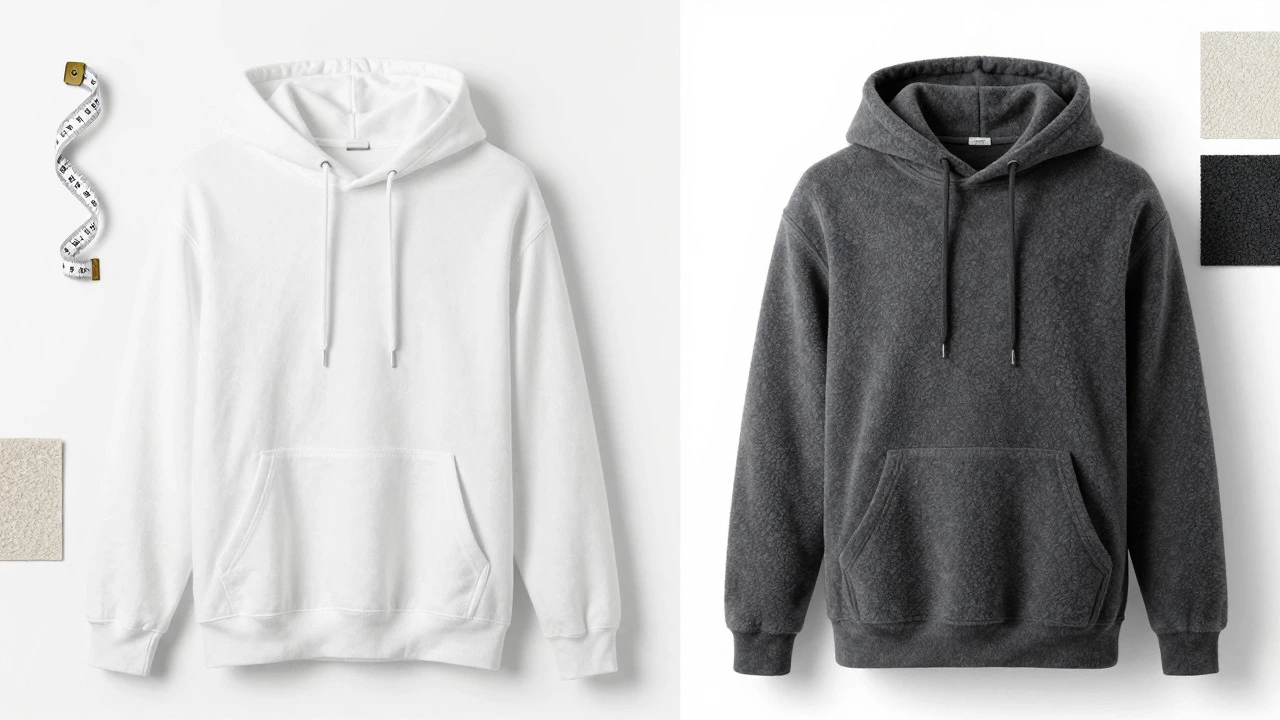
You cannot discuss hoodie fit without discussing GSM (grams per square meter). This metric determines the thickness and heaviness of the fabric. A common mistake is buying a size based on the brand's chart without considering the fabric weight.
A lightweight hoodie (200-300 GSM) behaves differently than a heavyweight one (400+ GSM). Lightweight fabrics drape softly and conform to the body, meaning a "loose" size might still look somewhat fitted because the fabric clings. Heavyweight fabrics stand away from the body due to their stiffness. An oversized heavyweight hoodie creates a boxy, architectural shape.
For a true oversized look, aim for a GSM of 350 or higher. This ensures the hoodie holds its shape and doesn't collapse into wrinkles. For a slim fit, lighter weights (250-300 GSM) with added stretch are preferable to avoid a restrictive feel.
How to Test the Fit Before Buying
Since online shopping makes it impossible to try things on, you need reliable heuristics to judge fit from photos or descriptions. Here is a quick checklist to determine if a hoodie will work for you:
- Check the Shoulder Seam: Look at product images. If the seam aligns with the edge of your shoulder, it’s a regular fit. If it drops 2-4 inches down your arm, it’s oversized.
- Measure Your Chest: Take a tape measure around the fullest part of your chest. Add 2-4 inches for a regular fit, 6-8 inches for a relaxed fit, and 10+ inches for an oversized look.
- Consider Sleeve Length: In 2026, longer sleeves are trendy. Even a regular-fit hoodie may have slightly elongated sleeves to cover the knuckles, adding to the relaxed vibe.
- Read the Material Composition: Look for keywords like "heavyweight," "French Terry," or "Fleece." Avoid 100% cotton if you want stretch; look for blends with polyester or spandex.
Styling Tips for Each Fit
Once you have chosen your fit, styling becomes easier if you understand the proportions.
For Oversized Hoodies: Balance the volume on top with fitted bottoms. Skinny jeans, tailored joggers, or straight-leg trousers work best. Avoid baggy pants with a baggy hoodie unless you are intentionally going for a full streetwear silhouette, which requires careful coordination to avoid looking sloppy. Keep accessories minimal-a simple cap or backpack complements the laid-back vibe.
For Slim-Fit Hoodies: These act as a base layer. Pair them with wider-leg pants to create contrast. Since the hoodie is close to the body, you can experiment with textures. Wear a textured knit hoodie under a smooth denim jacket, or a sleek cotton hoodie under a wool coat. The goal here is to show off the clean lines of the hoodie without letting it disappear under bulky layers.
Common Mistakes to Avoid
Even with the right knowledge, pitfalls exist. One major error is ignoring the hood itself. On an oversized hoodie, the hood should be large enough to comfortably fit over a hat or thick hair. On a slim-fit hoodie, a giant, floppy hood looks disproportionate and cheapens the look. Ensure the hood size matches the body fit.
Another mistake is washing new hoodies incorrectly. Cotton shrinks. If you buy a hoodie that is already tight, one hot wash could render it unwearable. Always wash in cold water and air dry if possible, especially for premium heavyweight pieces. This preserves the fit and extends the life of the garment.
Finally, don't force a trend that doesn't suit your lifestyle. If you spend most of your day sitting at a desk, an extremely oversized hoodie might bunch up uncomfortably. If you are always on the move, a tight hoodie might restrict you. Prioritize how you live over what looks good in a magazine photo.
What is the difference between a regular fit and an oversized hoodie?
A regular fit hoodie follows the natural lines of your body with shoulder seams sitting at the edge of your shoulder. An oversized hoodie features dropped shoulders, a wider body, and longer sleeves, designed to hang loosely away from the body for a relaxed, voluminous look.
Are tight hoodies going out of style in 2026?
Tight hoodies are less dominant in high-fashion streetwear but remain popular for athletic wear and smart-casual layering. While oversized is the current trend, slim fits are making a comeback for those seeking a cleaner, more tailored aesthetic.
How do I know if my hoodie is too big?
Your hoodie is likely too big if the shoulder seams fall more than 4-5 inches down your arm, the neck hole gapes widely exposing your collarbone excessively, or the hem covers your entire buttocks. These signs indicate the garment is swallowing your frame rather than draping on it.
Can I wear an oversized hoodie to work?
In creative or casual office environments, yes. To keep it professional, choose a heavyweight, structured fabric in a neutral color. Pair it with tailored trousers or chinos and clean shoes. Avoid graphic prints or distressed hems for a workplace-appropriate look.
Do hoodies shrink after washing?
Yes, especially those made from 100% cotton. Hot water and high heat drying cause significant shrinkage. To maintain the fit, wash in cold water and tumble dry on low or air dry. Pre-shrunk cotton minimizes this risk but does not eliminate it entirely.