Denim Fit & Style Recommender
Your Recommendation:
Why this works for you:
Styling Guide
Recommended Brands
Here is the short answer: Yes, absolutely. But you probably shouldn't wear the same skinny jeans you bought at twenty-five. The goal isn't to look like a teenager; it's to look sharp, modern, and-most importantly-comfortable enough to actually enjoy your day.
We often hear that aging means giving up on style. That’s nonsense. In fact, as we hit our sixties, seventies, and beyond, our style should become more intentional. We stop chasing trends blindly and start curating a wardrobe that works for our current bodies and lifestyles. Skinny jeans, however, sit in a tricky spot. They are undeniably popular, but they can also be restrictive, unforgiving, and sometimes just plain uncomfortable if not chosen correctly.
This guide cuts through the noise. We will look at why the traditional skinny jean might be fighting against you now, what alternatives exist that offer that sleek silhouette without the pain, and how to pull off a modern denim look that commands respect rather than confusion.
The Problem with "Skinny" After 60
Let’s be honest about anatomy. At 65, your body is likely different than it was at 35. Maybe you carry a bit more weight around the midsection. Maybe your knees aren’t as flexible, making the act of pulling on tight pants a daily workout. Or perhaps you simply value comfort because you’re active, traveling, or just tired of feeling constrained.
Traditional skinny jeans are denim trousers cut very close to the leg from hip to ankle, typically made from rigid cotton with minimal stretch. The issue isn't just the fit; it's the fabric. Many skinny jeans use stiff, non-stretch denim to hold their shape. This material doesn't breathe well and restricts movement. If you have circulation issues, joint stiffness, or just want to sit comfortably in a restaurant chair without your waistband digging into your stomach, standard skinny jeans are a bad investment.
Furthermore, there is a stylistic element. A super-skinny leg can make the lower half of your body look disproportionately small compared to your torso, especially if you are wearing a structured jacket or a bulkier sweater. It can create an unbalanced silhouette that draws attention to areas you might prefer to downplay.
The Better Alternative: Slim-Tapered and Straight-Leg Fits
You don't need to swing all the way to baggy carpenter jeans to avoid the skinny look. The sweet spot for most men (and women) over 60 is the slim-tapered or straight-leg fit. These cuts offer a modern, clean line without the constriction.
| Fit Type | Leg Opening | Comfort Level | Best For |
|---|---|---|---|
| Skinny | Very Narrow (14-16 inches) | Low (Restrictive) | Trend-focused youth styles; rarely recommended for 60+ |
| Slim-Tapered | Narrow (17-18 inches) | High (With stretch) | Modern, sharp look; fits nicely over dress shoes or sneakers |
| Straight | Moderate (19-20 inches) | Very High | All-day comfort; classic aesthetic; versatile layering |
| Relaxed/Wide | Wide (21+ inches) | Maximum | Casual weekends; warmer weather; prioritizing airflow |
The slim-tapered jean is your best friend here. It follows the natural line of your leg but narrows slightly towards the ankle. This prevents the fabric from bunching up over your shoes-a common issue with straight legs-and gives you that polished, put-together appearance. Look for brands that specifically market "active stretch" or "elastane blends." You want at least 2% elastane (or Lycra) in the fabric. This tiny amount of synthetic fiber allows the denim to move with you, not against you.
Fabric Matters More Than Fit
If you decide to try a skinnier fit, the fabric is non-negotiable. Avoid 100% cotton if you prioritize comfort. Instead, look for Stretch denim which is a blend of cotton and synthetic fibers like elastane or spandex designed to provide flexibility and recovery. Modern manufacturing has improved this technology significantly. High-quality stretch denim retains its shape after washing and doesn't sag at the knees.
Consider the weight of the denim too. Heavyweight denim (14 oz and above) is durable but stiff. Lightweight denim (under 10 oz) is softer and drapes better, which is often more flattering for a mature frame. It moves with your body rather than creating a rigid block of color.
Styling Tips: How to Wear Denim Over 60
Wearing jeans at 65 is less about the jeans themselves and more about how you balance the rest of your outfit. Here are three practical rules to keep your look sophisticated:
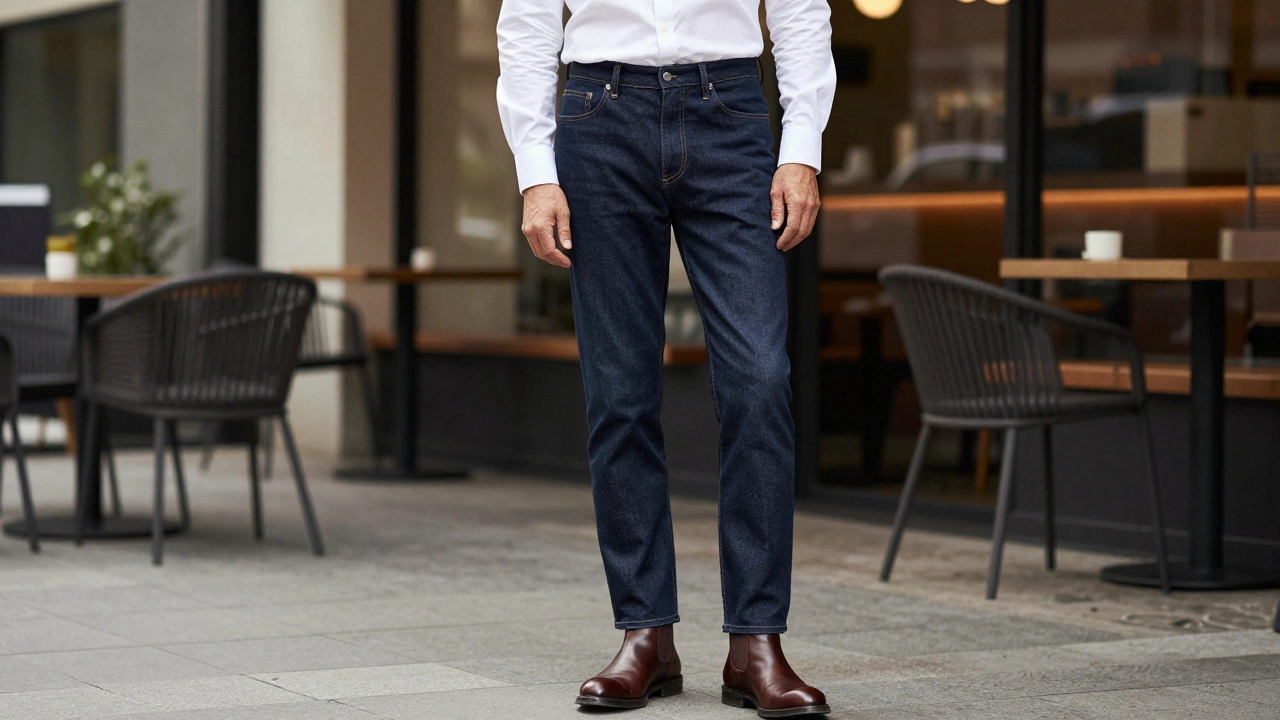
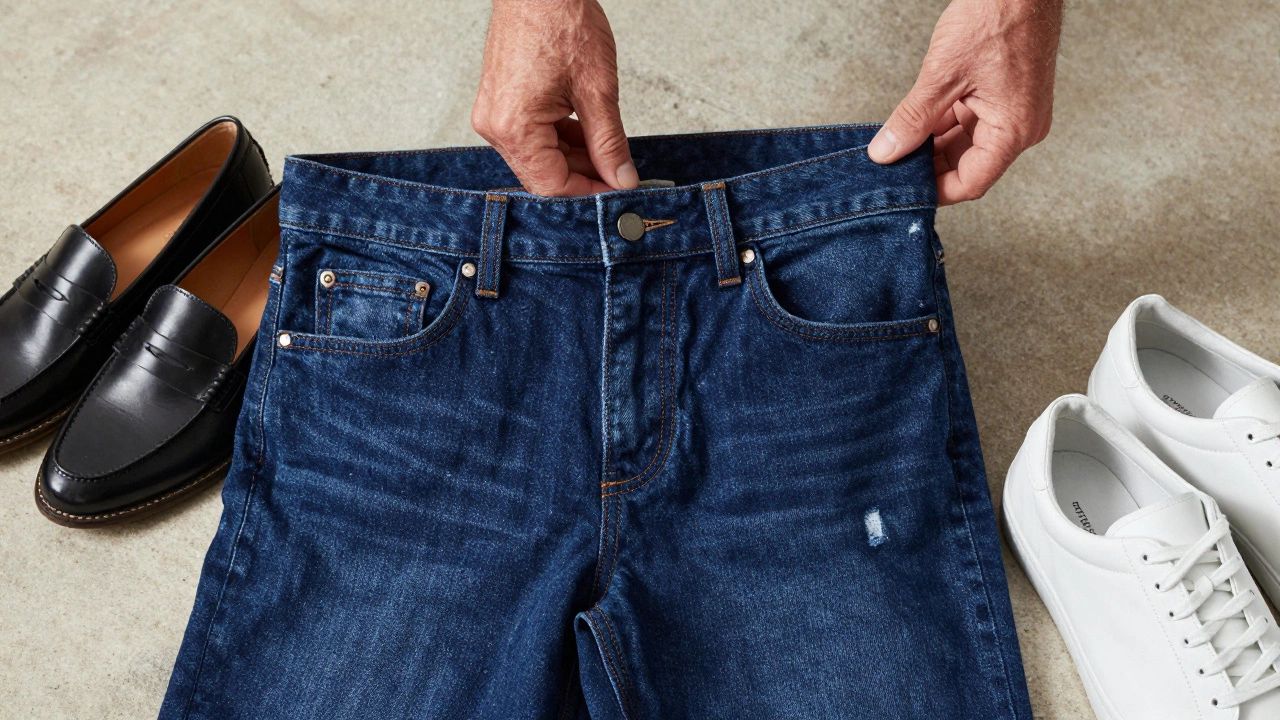
- The Shoe Rule: Your shoes dictate the vibe. Skinny or slim-tapered jeans look great with clean white sneakers, loafers, or Chelsea boots. Avoid bulky athletic running shoes with very tight jeans; the contrast can look awkward. If you wear straight-leg jeans, almost any shoe works, including desert boots and casual oxfords.
- The Top Half Balance: Since jeans are casual, elevate the top half. A crisp button-down shirt, a high-quality polo, or a fine-gauge merino wool sweater instantly smartens up denim. Avoid graphic tees with loud logos unless you are going for a specific retro look. Solid colors or subtle patterns work best.
- The Jacket Layer: A blazer or a structured field jacket over jeans creates a "smart-casual" hybrid that is perfect for dinner dates, family gatherings, or casual Fridays. Darker washes of denim (indigo or black) pair better with jackets than light-wash or distressed styles.
Avoid excessive distressing. Rips, frays, and heavy fading can date your look quickly and sometimes signal a lack of care. Clean, solid-color denim is timeless. It says, "I know who I am," rather than, "I'm trying to look cool." Confidence is the best accessory, and well-fitting, clean clothes project confidence.
Brands That Get It Right
Not all denim is created equal. Some brands cater specifically to the mature demographic, understanding the need for room in the thigh and seat while maintaining a tapered leg. Others are mainstream brands with excellent "active" lines.
- Levi's 511 Slim: A step away from the 501 original. It’s slimmer but not skin-tight. Look for the "Flex" version for added stretch.
- Lee Relaxed Taper: Lee often provides a bit more room in the rise and thigh, which is helpful if you have broader hips or a larger midsection.
- Uniqlo EZ Stretch Jeans: Affordable and incredibly comfortable. Their stretch technology is among the best in the mass-market sector.
- Goodman & Brothers: A brand focused on menswear for older gentlemen. They offer tailored fits that respect the changing male physique.
- Dockers Alpha Khakis (in denim):** Dockers is known for comfort. Their denim lines often feature moisture-wicking fabrics and four-way stretch, ideal for travel.
When shopping, always check the return policy. Sizing varies wildly between brands. A 34-inch waist in one brand might be a 36 in another. Don't assume your old size still applies.
Common Mistakes to Avoid
Even with the right jeans, small styling errors can undermine your look. Here are pitfalls to sidestep:
- Too Short or Too Long: Hemming your jeans is worth the cost. Jeans that pool around your ankles look sloppy and can get caught in doorways or car pedals. A clean break or a slight crop looks intentional and sharp.
- Ignoring the Rise: The "rise" is the distance from the crotch seam to the waistband. Low-rise jeans can dig into your hips and create muffin-top effects. Mid-rise or high-rise options sit more comfortably on your natural waist and provide better support.
- Over-accessorizing: Keep it simple. A good leather belt that matches your shoes is enough. You don't need chains, excessive pins, or loud patches. Let the quality of the fabric speak for itself.
Conclusion: It’s About You, Not the Trend
So, should a 65-year-old wear skinny jeans? Technically, yes. But practically? Probably not the ones you remember from the 2010s. Opt for the slim-tapered or straight-leg alternative. Prioritize stretch fabrics. Focus on fit, hem length, and pairing them with elevated tops.
Fashion at this stage of life is about autonomy. You’ve earned the right to dress in a way that feels good to you. If you love the look of a narrow leg, find a pair that lets you walk, sit, and dance without discomfort. If you prefer ease, go for a relaxed straight leg. The goal is to feel confident when you look in the mirror. That confidence shines through no matter what brand label is on your back pocket.
Are skinny jeans appropriate for formal events over 60?
Generally, no. Skinny jeans are inherently casual. For formal events, opt for dress trousers or chinos. If the event is "smart casual," dark-wash slim-tapered jeans paired with a blazer and loafers can work, but avoid distressed or light-wash denim.
How do I find jeans if I have a larger belly?
Look for "mid-rise" or "high-rise" jeans with stretch. Avoid low-rise cuts, which dig in. Brands like Lee and Levi's offer "relaxed fit" thighs with a tapered leg, providing room where you need it while keeping the silhouette neat. Elastic waistbands or hidden expandable waists are also excellent options for comfort.
What color jeans are most flattering for older adults?
Dark indigo, navy, and black are the most versatile and flattering. They are slimming, easy to dress up or down, and hide minor stains better than light washes. Light washes can sometimes clash with mature skin tones or appear too casual for many settings.
Is it okay to wear jeans to a wedding at age 65?
Only if the invitation specifies "casual" or "smart casual." Never wear jeans to a black-tie or formal wedding. For a casual outdoor wedding, dark, clean, slim-fit jeans with a button-down shirt and a sport coat are acceptable. When in doubt, choose chinos or dress pants instead.
How often should I replace my jeans?
Replace them when they lose their shape, fade excessively, or develop holes you don't want. With proper care (washing inside out in cold water, air drying), a good pair of stretch jeans can last 2-3 years. If the waistband stretches out permanently or the knees bag out, it's time for a new pair.