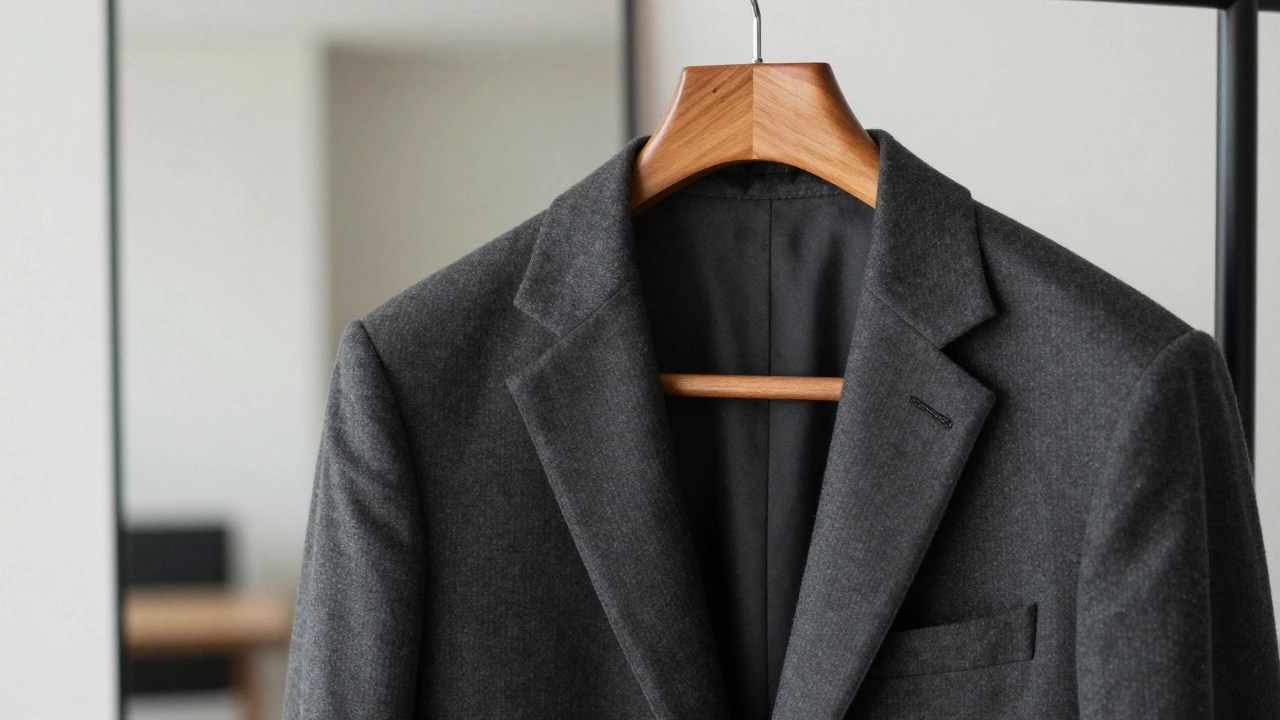
Suit Value Analyzer
Select the specifications of the suit you are considering to see if it's a good deal.
Analysis Result
Pros:
Cons/Risks:
You stand in front of the mirror. The jacket fits perfectly across the shoulders. The trousers break just right at the shoe. But then you look at the price tag: $400. Your brain immediately screams "sticker shock." Is this a rip-off? Are you being played by marketing gurus who know exactly how to exploit your desire to look sharp? Or is this actually a steal?
The short answer is no. In fact, in today’s market, $400 is often the sweet spot where decent construction meets reasonable pricing. It is rarely "too much" unless you are buying from a brand that charges premium prices for thin polyester blends and poor stitching. To understand why, we need to strip away the brand hype and look at what you are actually paying for: fabric, labor, and fit.
What You Are Actually Paying For
When you buy a suit a set of outer clothes made of the same fabric and designed to be worn together, typically consisting of a jacket and trousers or a jacket and skirt, you are not just buying cloth. You are buying engineering. A well-made suit requires precision cutting, complex sewing patterns, and significant manual labor. At the $400 mark, you should expect specific standards. If you are getting less than that, you are overpaying.
First, look at the fabric. A $400 suit should use natural fibers. Wool is the gold standard because it breathes, resists wrinkles, and drapes nicely against your body. Synthetic fabrics like polyester trap heat and shine under lights, making you look sweaty and cheap. If the label says "100% Polyester" or "Polyester Blend," walk away. That suit should cost $150-$200. At $400, you want wool, wool blends with high wool content (80%+), or perhaps linen or cotton for seasonal wear.
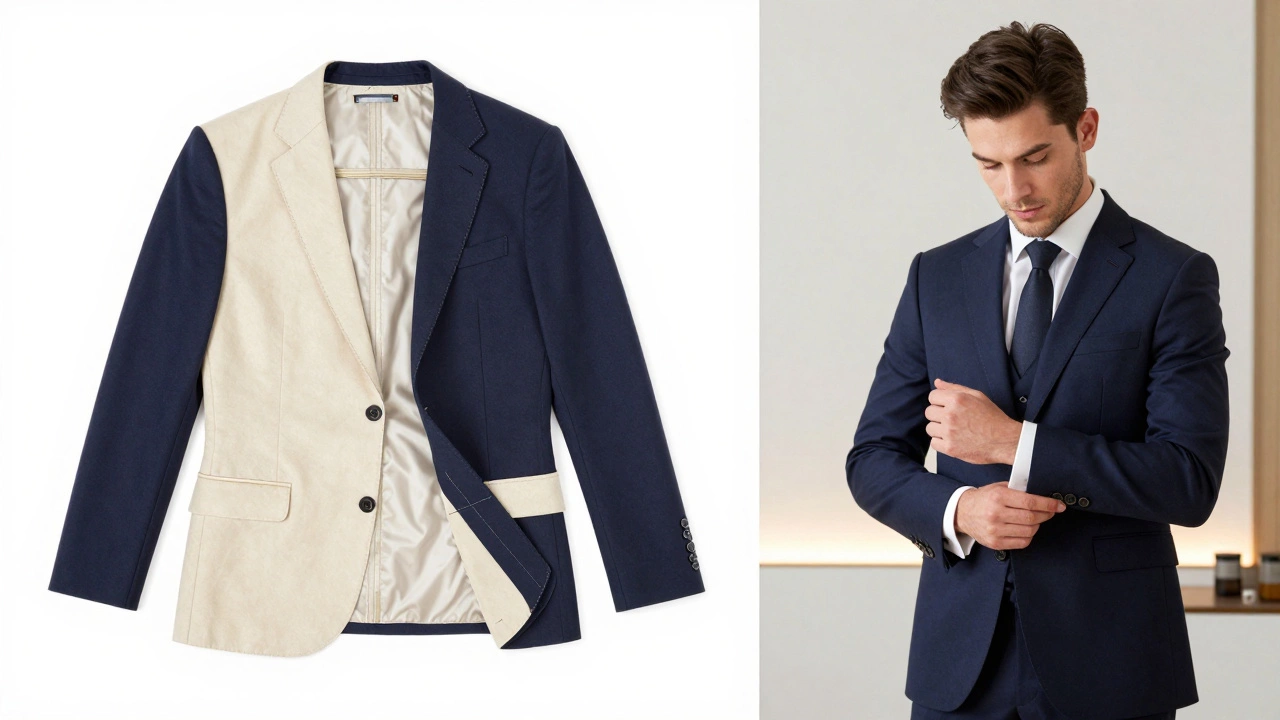
Second, consider the construction. This is where the money goes. Cheap suits are fused. They use glue to attach the inner lining to the outer fabric. Over time, that glue bubbles and cracks, ruining the silhouette. Better suits are half-canvassed or fully canvassed. Canvas is a layer of material stitched between the fabric and lining that allows the jacket to move with your body. At $400, you should find half-canvassed options from reputable brands. This structure ensures the lapels roll naturally rather than lying flat and stiff like cardboard.
The Price Tiers Explained
To judge if $400 is fair, you have to see where it sits on the ladder. Here is a breakdown of what different price points usually get you in 2026.
| Price Range | Fabric Type | Construction | Fit Expectation |
|---|---|---|---|
| $100 - $200 | Polyester / Low-grade Blends | Fused (Glued) | Boxy, generic shapes; requires heavy alteration |
| $200 - $350 | Wool Blends / Entry-level Wool | Fused to Basic Half-Canvas | Decent off-the-rack fit; some brands offer modern cuts |
| $350 - $600 | Mid-weight Wool / Tropical Wool | Half-Canvas / Full Canvas | Better drape; refined details; durable |
| $600 - $1,200 | Super 120s-150s Wool / Linen / Silk | Full Canvas / Bespoke Elements | Excellent fit; premium mills (VBC, Loro Piana) |
| $1,500+ | Luxury Fibers / Hand-finished | Bespoke / Made-to-Measure | Custom fit; heirloom quality |
As you can see, $400 lands squarely in the mid-tier. It is above the fast-fashion traps but below the luxury bespoke realm. This is the zone where smart shoppers live. You are paying for durability and a professional appearance without breaking the bank.
Off-The-Rack vs. Made-To-Measure
One major factor influencing whether $400 is "too much" is how the suit is sourced. Most people buy off-the-rack (OTR). These are pre-made sizes: Slim, Regular, Athletic. Even if you pick the perfect size, your body is unique. Your arms might be longer than average, or your chest broader. An OTR suit will always require alterations.
If you buy a $400 OTR suit, budget an extra $50-$100 for a tailor. You will likely need to take in the waist, shorten the sleeves, and taper the trousers. Without these tweaks, even a $1,000 suit looks bad. So, when evaluating the $400 price tag, think of it as $300 for the garment and $100 for the customization. Suddenly, it feels like a better deal.
Alternatively, some online retailers offer "Made-To-Measure" (MTM) suits starting around $400-$500. With MTM, they start with a base pattern and adjust measurements based on your inputs. However, be cautious. At this price point, MTM often means automated adjustments rather than true craftsmanship. The fabric quality might also be lower to compensate for the labor. Generally, a well-tailored $400 OTR suit beats a poorly constructed $500 MTM suit from an unknown brand.
Brand Hype vs. Actual Value
This is where most people get burned. Brand names carry weight. If a famous designer puts their logo on a jacket, the price jumps from $400 to $900. But does the quality double? Rarely. Often, these brands outsource production to the same factories that make cheaper lines. You are paying for the marketing budget, the celebrity endorsements, and the store location in a high-end mall.
Look for brands that focus on value rather than prestige. Brands like Suitsupply, Indochino (higher end lines), or department store private labels (like J.Crew or Bonobos during sales) often hit the $400 mark with honest materials. Check the inside label. Does it mention the mill? VBC (Vitale Barberis Canonico) is a great benchmark. If a $400 suit uses VBC fabric, it is a fantastic buy. If it lists no origin and vague terms like "Premium Fabric," scrutinize it closely.
How to Spot a Bad Deal at Any Price
Even within the $400 range, some deals are worse than others. Here is a quick checklist to ensure you aren’t wasting money:
- Check the Buttons: Are they plastic or horn? Horn buttons feel heavier and have a unique grain. Plastic buttons are lightweight and uniform. While not definitive, horn buttons suggest higher care in detail.
- Inspect the Lining: Run your hand inside. Is it smooth Bemberg (cupro) lining? This breathes well. Cheap polyester linings stick to your shirt and cause static.
- Look at the Stitching: Count stitches per inch. More stitches mean stronger seams. Look for clean edges with no loose threads. Baggy stitching indicates rushed factory work.
- Test the Drape: Hold the jacket up. Does it fall straight down, or does it bunch up? Good wool has weight and hangs cleanly. Thin synthetic fabric flutters and wrinkles instantly.
- Examine the Lapel Roll: Bend the lapel gently. It should curve naturally. If it snaps back stiffly or folds sharply like paper, it is heavily fused and will bubble soon.
When 0 IS Too Much
There are scenarios where spending $400 is a mistake. First, if you only need a suit for one event, like a wedding you are attending once, rent it. Renting costs $100-$150 and saves you the hassle of storage and cleaning. Second, if the suit is entirely synthetic. There is no excuse for charging $400 for 100% polyester. Third, if the fit is terrible off the rack and requires structural changes (like moving shoulder pads). Tailors can fix waists and lengths, but they cannot easily fix shoulders. If the shoulders pinch, do not buy it, regardless of price.
Making the Suit Last
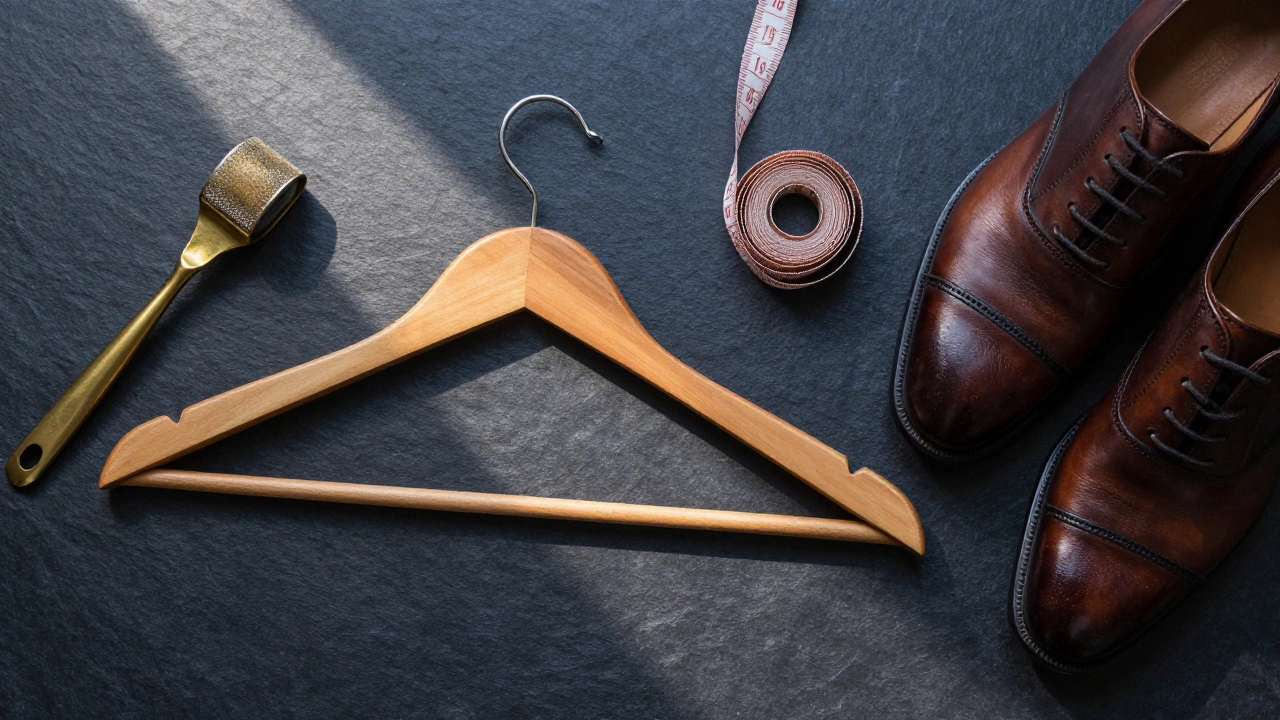
If you decide to spend $400, treat the investment right. Dry cleaning strips natural oils from wool, causing it to dry out and crack over time. Only dry clean when necessary-once or twice a year at most. Between wears, hang the suit on a wide wooden hanger to let it breathe. Use a lint roller to remove dust. Rotate your suits; never wear the same one two days in a row. The fibers need time to recover their shape.
With proper care, a $400 wool suit can last five to ten years. That breaks down to roughly $10-$20 per wear if you wear it regularly. Compare that to a $150 suit that pills after six months, and the math favors the higher initial investment.
Can I find a good suit for less than $400?
Yes, but you have to shop strategically. During seasonal sales, brands like J.Crew, Uniqlo U, or Banana Republic often drop wool-blend suits to the $250-$350 range. Online retailers like Amazon Essentials or H&M Premium Selection sometimes offer entry-level wool suits for under $300. However, inspect the construction carefully. You may sacrifice canvas lining for fused construction, which reduces longevity.
Is a $400 suit worth it for a first-time buyer?
Absolutely. A $400 suit strikes the best balance between quality and risk. It is high enough quality to look professional in interviews or business settings, but low enough that if you outgrow it or change your style, you haven’t lost a fortune. It teaches you about fit and fabric without the pressure of a luxury purchase.
Should I buy a suit online or in-store?
For a $400 suit, try it on in-store if possible. Fit is subjective, and sizing varies wildly between brands. A "Slim" in one brand might be "Regular" in another. If you must buy online, choose a retailer with free returns and easy exchanges. Always measure yourself accurately and compare those numbers to the brand’s specific size chart, not generic sizing.
What is the difference between Super 100s and Super 150s wool?
The number refers to the fineness of the wool fiber. Super 100s is durable, wrinkle-resistant, and ideal for daily wear. Super 150s is softer and shinier but more delicate and prone to wrinkling. For a $400 suit intended for regular use, Super 100s-120s is the smarter choice. Higher numbers add cost without adding practicality for everyday wear.
Do I need to match my shoes and belt to the suit?
While not a strict rule, matching leather accessories creates a cohesive, polished look. Dark brown shoes and belt pair well with navy or grey suits. Black shoes and belts work best with charcoal or black suits. Avoid wearing black shoes with light grey or blue suits, as it can look disjointed. Brown is generally more versatile and forgiving for most suit colors.