School Uniform Policy Impact Estimator
Based on research regarding enclothed cognition, socioeconomic signaling, and administrative enforcement, adjust the sliders below to see how a uniform policy might impact your specific school environment.
Key Findings
- Bullying: Shifts target from clothes to other traits.
- Focus: Reduces decision fatigue in mornings.
- Grades: Weak direct link; indirect via climate.
- Identity: Requires balance to avoid rebellion.
Projected Outcomes
Walk into any school board meeting in Toronto or New York, and you’ll hear the same heated debate. One parent argues that school uniforms are mandatory standardized attire designed to promote equality and reduce distractions in educational settings essential for discipline. Another insists they suppress individuality and do nothing to stop bullying. The question isn’t just about fashion; it’s about whether forcing students to wear identical clothes actually changes how they act.
The short answer is complicated. Uniforms don’t magically fix bad behavior, but they can create an environment where focus shifts from clothing to learning. To understand if uniforms improve behavior, we need to look past the slogans and examine the data on discipline, social dynamics, and mental health.
The Psychology of Conformity and Identity
When a student puts on a uniform, they are stepping into a specific role: that of a learner. This psychological shift is known as "enclothed cognition." Research suggests that what we wear affects our cognitive processes. A uniform signals professionalism and seriousness. For many students, especially those who struggle with self-esteem, removing the pressure to keep up with fast fashion trends reduces anxiety.
However, identity suppression is a real concern. Adolescence is a time when young people define themselves. If a uniform is too restrictive, it can lead to rebellion rather than compliance. You might see more subtle forms of non-conformity, like altering the uniform or focusing intensely on accessories. The key lies in the implementation. Schools that allow some personal expression within the uniform guidelines often see better behavioral outcomes than those with rigid, military-style dress codes.
Impact on Bullying and Social Hierarchy
One of the strongest arguments for uniforms is the reduction of socioeconomic signaling. In schools without uniforms, brand names become currency. Kids with expensive sneakers get status; kids with worn-out shoes get targeted. This creates a visible hierarchy that fuels bullying.
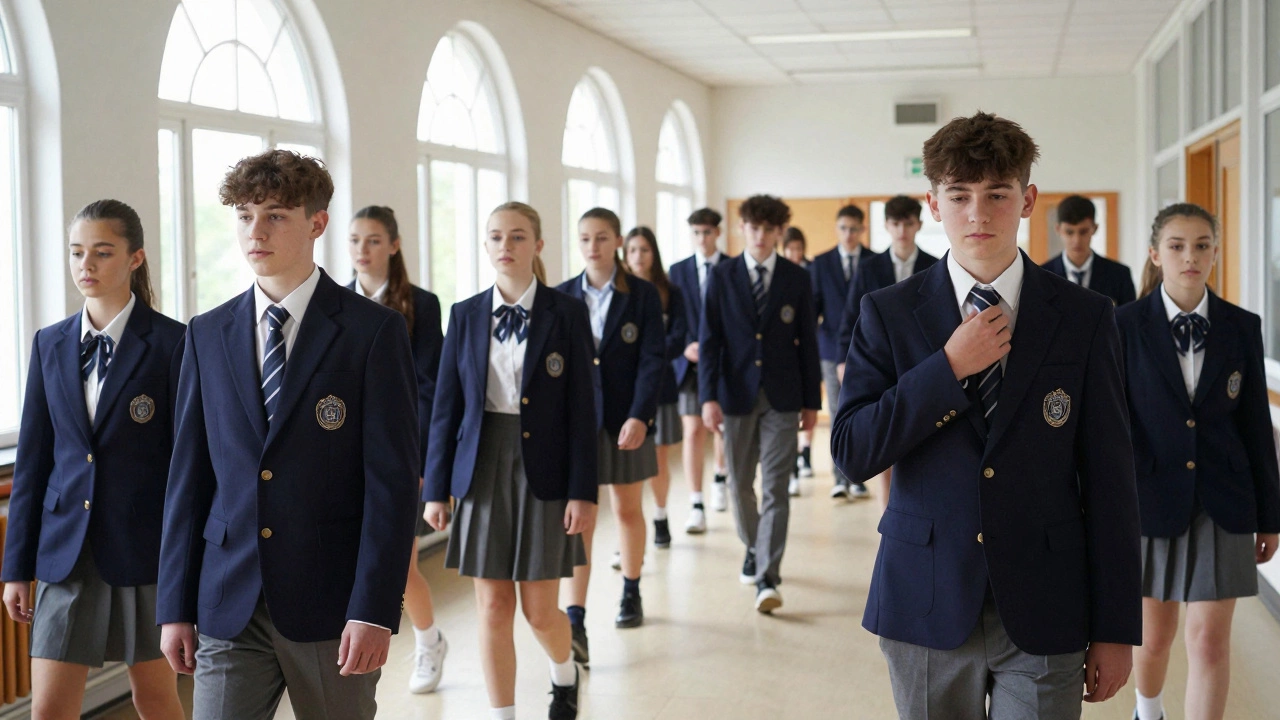
Bullying is unwanted aggressive behavior among school-aged children involving a real or perceived power imbalance often rooted in these visible differences. When everyone wears the same navy blazer or polo shirt, it becomes harder to judge wealth at first glance. Studies from the UK and Australia have shown that schools with strict uniform policies report fewer incidents of theft and vandalism related to clothing envy.
But let’s be realistic. Uniforms don’t eliminate bullying; they just change its target. Bullies will find other ways to distinguish victims-academic performance, physical appearance, or social skills. While uniforms remove one weapon from the bully’s arsenal, they are not a cure-all for toxic social environments.
Discipline and Rule Enforcement
From an administrative perspective, uniforms make rule enforcement easier. It’s simple to identify a student out of place. If a student is wearing jeans instead of slacks, the violation is obvious. This clarity can reduce arguments between teachers and students about dress code infractions.
However, this ease of enforcement can also lead to over-policing. Schools may spend disproportionate time disciplining minor uniform violations rather than addressing serious behavioral issues like harassment or cheating. Some educators argue that this creates a culture of compliance rather than respect. Students learn to follow rules because they fear punishment, not because they understand the value of community standards.
The most effective schools use uniforms as part of a broader behavioral framework. They pair dress codes with restorative justice practices and clear expectations for conduct. In this context, the uniform acts as a reminder of shared values, not just a tool for control.
Academic Performance and Focus
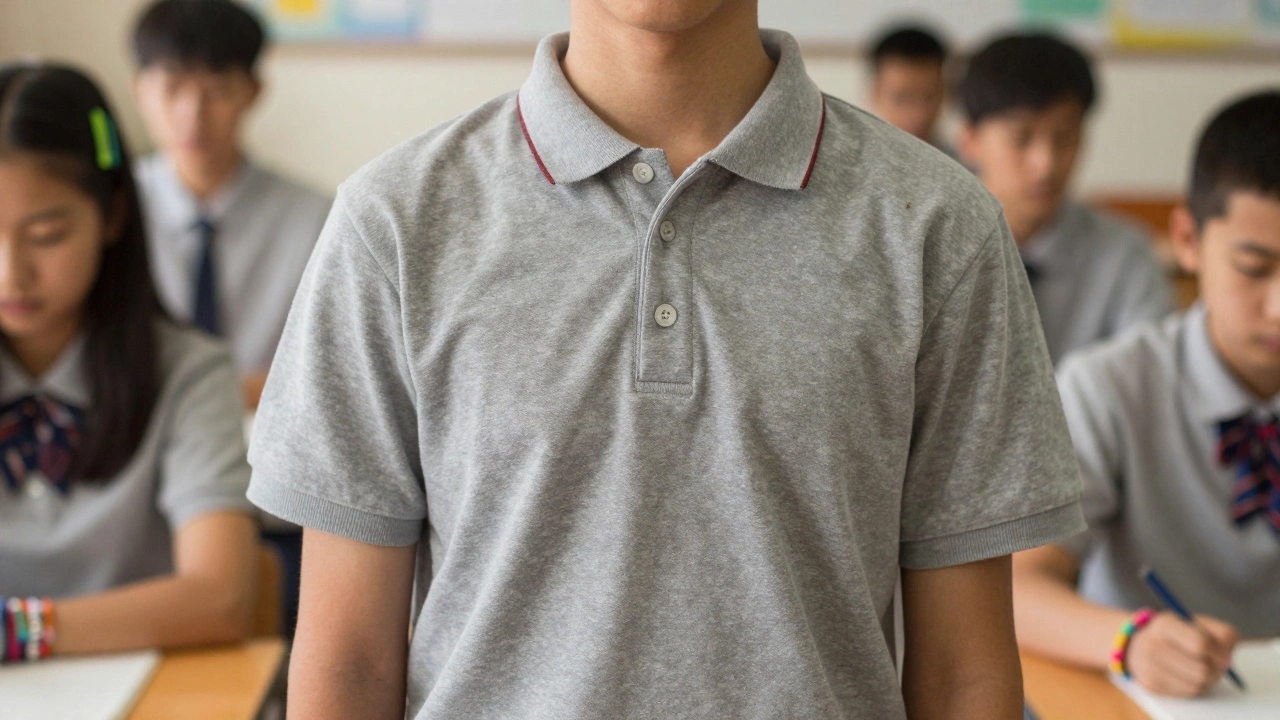
Does wearing a uniform help you learn? Indirectly, yes. By reducing morning decisions about what to wear, students save mental energy. This concept, known as "decision fatigue," suggests that limiting trivial choices preserves willpower for more important tasks. For younger students, this means arriving at school ready to engage rather than worrying about whether their outfit fits in.
Furthermore, classrooms with uniforms often feel more structured. Teachers report less distraction from flashy clothing or inappropriate slogans. This structured environment can benefit students who thrive on routine and predictability. However, the correlation between uniforms and higher test scores is weak. Academic success depends far more on teaching quality, resources, and home support than on what a student wears on their back.
Cultural and Economic Considerations
We cannot discuss uniforms without addressing cost and cultural sensitivity. For low-income families, buying specific branded uniforms can be a significant financial burden. Many schools try to mitigate this by offering second-hand programs or subsidies, but the stigma of wearing hand-me-downs remains.
Cultural and religious accommodations are also critical. A uniform policy must allow for hijabs, turbans, kippahs, and other religious garments. When schools fail to accommodate these needs, they send a message of exclusion that damages trust and increases behavioral tensions. Inclusive policies that respect diversity while maintaining a standard look tend to foster greater unity.
| Aspect | Schools With Uniforms | Schools Without Uniforms |
|---|---|---|
| Morning Routine Stress | Lower (fewer choices) | Higher (daily decision fatigue) |
| Socioeconomic Visibility | Reduced (brands hidden) | High (wealth displayed via clothing) |
| Bullying Targets | Shifted to non-clothing traits | Focused on fashion/status symbols |
| Administrative Enforcement | Easier (clear violations) | Harder (subjective judgments) |
| Student Individuality | Limited (conformity enforced) | High (self-expression encouraged) |
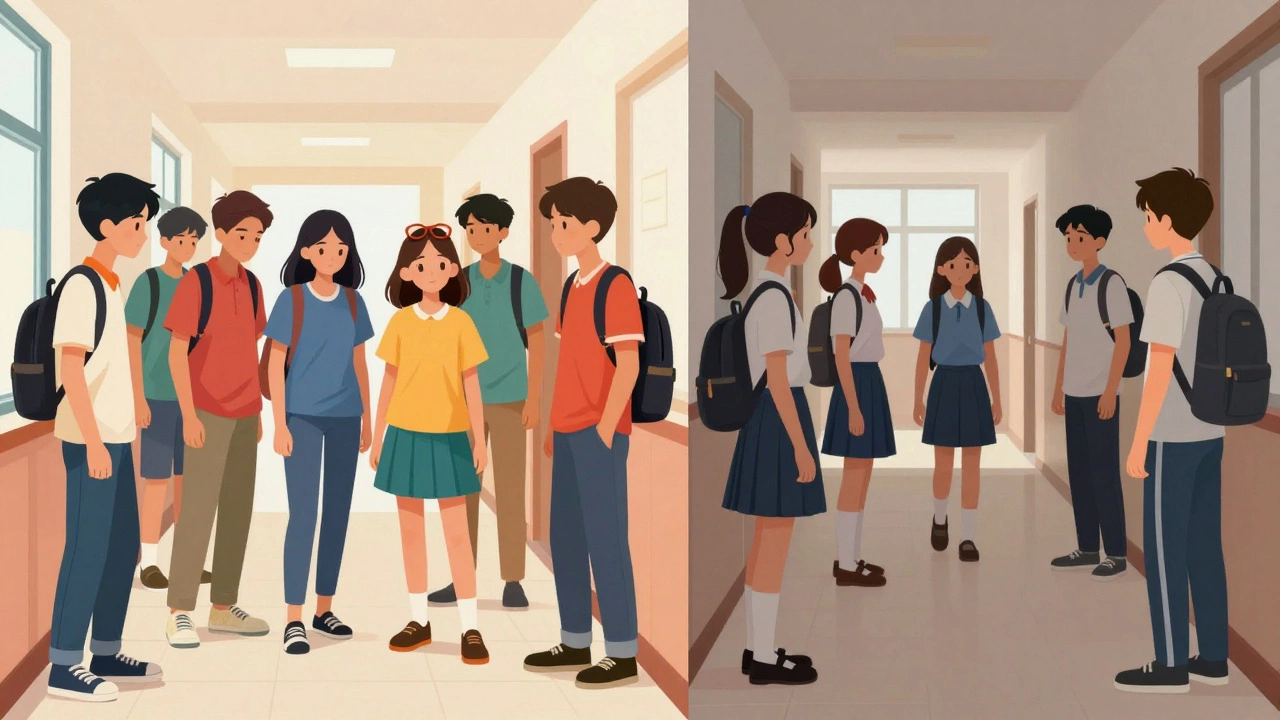
Real-World Evidence from Global Studies
Data from various countries offers mixed results. In Japan, where uniforms are deeply ingrained in culture, they are associated with high levels of discipline and group cohesion. However, Japanese students also face immense academic pressure, making it hard to isolate the uniform’s effect.
In the United States, studies have been inconsistent. Some districts report improved attendance and reduced disciplinary referrals after implementing uniforms. Others see no change. The difference often comes down to community buy-in. If parents and students feel heard during the policy creation process, compliance improves. If the policy feels imposed from above, resistance grows.
A notable study published in the Journal of Educational Psychology found that uniforms had a negligible direct effect on academic achievement but a moderate positive effect on school climate. This suggests that while uniforms won’t raise test scores, they can make schools feel safer and more orderly.
Alternatives to Mandatory Uniforms
If your goal is to improve behavior without enforcing conformity, consider alternatives. Dress codes that prohibit offensive graphics or overly revealing clothing can maintain decorum while allowing personal style. "Theme days" or flexible dress periods can give students autonomy while keeping the overall environment respectful.
Some schools adopt a "uniform-lite" approach, requiring only a specific color palette or logo patch. This balances identity with flexibility. The best approach depends on your school’s values and community needs. There is no one-size-fits-all solution, which is ironic given the topic.
Do school uniforms actually stop bullying?
Uniforms reduce bullying related to clothing brands and socioeconomic status. However, they do not eliminate bullying entirely. Bullies may shift their targets to other attributes like academics, appearance, or social skills. Uniforms are a partial solution, not a complete fix.
How do uniforms affect student focus in class?
By removing the daily stress of choosing outfits and reducing distractions from flashy clothing, uniforms can help students focus better. This is linked to reduced decision fatigue and a more structured classroom environment.
Are school uniforms expensive for families?
Yes, specialized uniforms can be costly. However, many schools offer subsidies, second-hand programs, or affordable generic options. Over time, some families find uniforms cheaper than buying multiple trendy outfits that go out of style quickly.
Do uniforms suppress student individuality?
To some extent, yes. Uniforms limit outward self-expression through clothing. However, students often express individuality through hairstyles, accessories, and extracurricular activities. Schools can balance this by allowing limited personalization within the uniform guidelines.
What is the evidence linking uniforms to better grades?
The link between uniforms and higher grades is weak. Most research shows that uniforms improve school climate and discipline rather than directly boosting academic performance. Teaching quality and resources play a much larger role in grades.