Suit Quality Checker
Check Your Suit's Quality
Identify expensive suits by examining key details. This tool evaluates quality based on fabric, construction, stitching, lining, and other factors.
Fabric Quality
Construction
Stitching
Lining
Buttons
Fit
When you see a man in a suit, you might notice how sharp he looks-but do you know what makes one suit worth $2,000 and another $400? It’s not just the brand. The difference between a cheap suit and an expensive one shows up in the details you can’t always see at first glance. If you’ve ever wondered how to spot an expensive suit without asking the price tag, here’s what to look for.
Look at the Fabric
The fabric is the foundation. Expensive suits use wool from specific regions, like Super 120s, 130s, or even 150s. These numbers refer to the fineness of the wool fiber-higher numbers mean thinner, softer, and more luxurious threads. A Super 150 suit feels light and flows slightly when you move. It drapes better and wrinkles less. You’ll find this in suits from Italy, England, or Australia. Cheaper suits often use polyester blends or low-grade wool that feels stiff, shiny, or even scratchy. Run your fingers along the lapel. If it feels smooth and has a subtle sheen without looking plastic, you’re on the right track.
Check the Construction
There are three main ways a suit is built: fused, half-canvassed, and full-canvassed. Fused suits glue the lining to the outer fabric. They’re cheap to make and hold up for a year or two before they start to bubble. Half-canvassed suits use a layer of horsehair canvas from the chest to just below the waistline. Full-canvassed suits use that same canvas across the entire front. This canvas gives the suit structure, lets it mold to your body over time, and allows it to breathe. An expensive suit will almost always be full-canvassed. You can test this by pinching the lapel between your thumb and index finger. If you feel a layer of padding that moves independently from the outer fabric, it’s canvassed. If it feels like one solid piece, it’s fused-and probably not worth the price.
Examine the Stitching
Look at the seams. On a high-end suit, you’ll see small, even stitches-usually 8 to 12 per inch. The stitching on the lapel should follow the natural curve of the chest, not look like it was pressed flat by a machine. Check the inside of the jacket. A well-made suit has clean, hand-finished edges. You might see tiny stitches holding the lining in place, not just glued or stapled. The buttons? They’re often made of horn or mother-of-pearl, not plastic. And they’re sewn on with a shank-a small loop underneath-that lets the button sit slightly away from the fabric so it doesn’t pull when you button it.
Feel the Lining
Most cheap suits use synthetic lining-usually polyester-that traps heat and doesn’t breathe. An expensive suit uses silk or Bemberg, a high-quality cupro fabric made from cotton waste. It’s smooth, cool to the touch, and lets air flow through the suit. Try slipping your hand inside the jacket. If it feels slippery and cool, that’s a good sign. If it feels sticky or rough, it’s probably a cheaper material. The lining should also be cut with extra room in the arms and back so the suit doesn’t pull or bunch when you move.
Look at the Fit
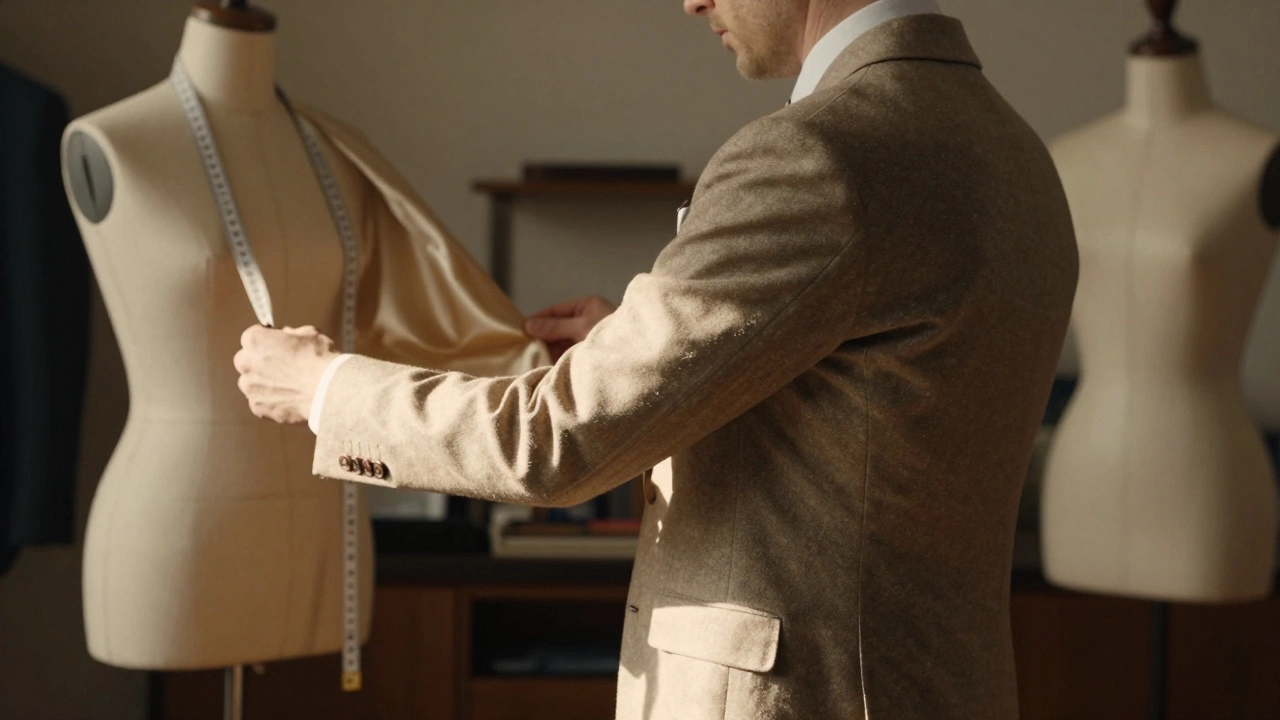
An expensive suit isn’t just tailored-it’s custom-fitted. Off-the-rack suits come in standard sizes, but a high-end suit is built around your body. The shoulders should sit exactly where your shoulder bones end. If the jacket pulls or gaps when you raise your arms, it’s not right. The sleeves should end right at the base of your thumb, showing about a quarter inch of shirt cuff. The pants should break slightly at the top of your shoe, not pool on the ground or look too short. A suit that fits this well isn’t accidental. It’s the result of multiple fittings, often with a tailor who takes measurements in 12 to 15 places.
Details That Matter
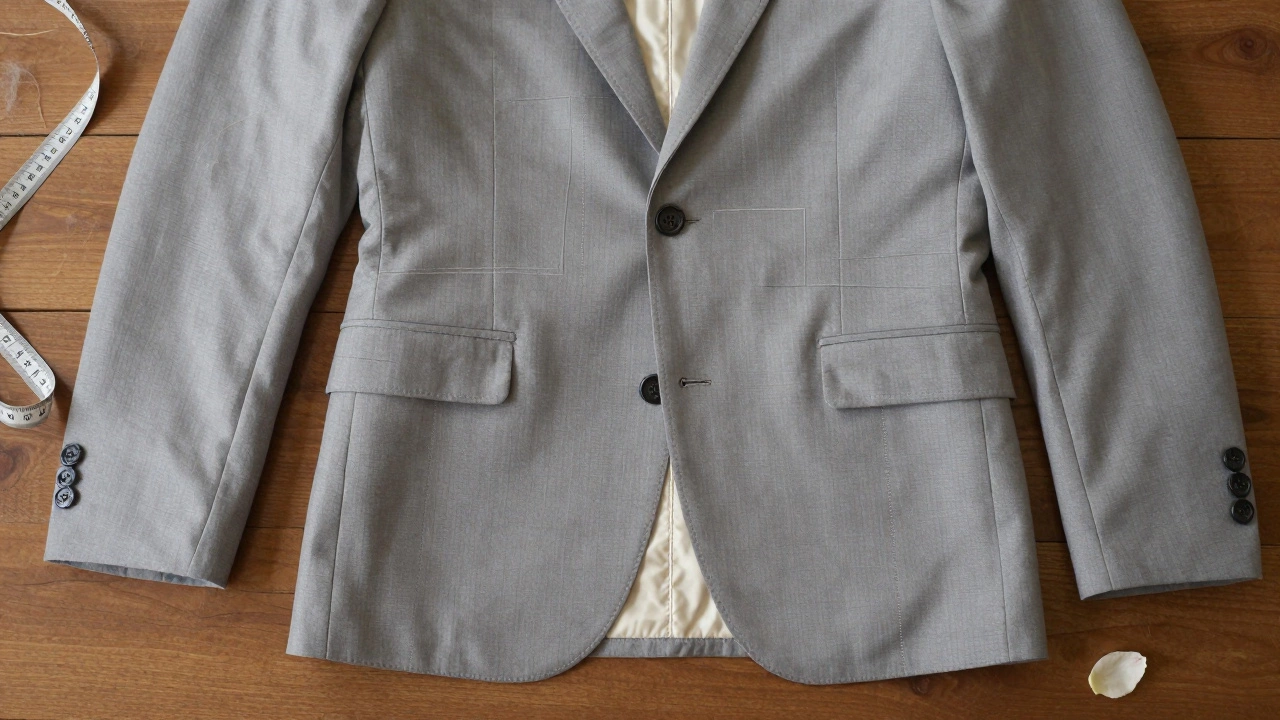
Small things reveal big truths. Check the pocket flaps-they should be hand-stitched, not glued. The inner pocket lining? It should be made of the same fabric as the suit, not a cheap polyester scrap. The back of the jacket should have a center vent or double vents, never a single vent on a suit meant for formal wear. The buttons on the sleeves? A real tailor’s suit has functional buttons-meaning you can unbutton them. If they’re sewn shut, it’s a sign the suit was made for looks, not wear.
Also, look at the inside of the lapel. Many high-end suits have a small loop on the left side, called a boutonniere hole. It’s not just for show-it’s meant for a flower. That tiny detail shows the maker expected this suit to be worn for events, not just office days.
Compare the Weight
Heavy doesn’t mean better. A good suit weighs between 7 and 10 ounces per square yard. Anything heavier than that is often just extra fabric stuffed in to make it look more expensive. Lighter doesn’t mean cheap, either. A Super 150 wool suit can weigh less than 8 ounces and still feel substantial because of how tightly the fibers are spun. Hold the suit in your hands. A cheap suit feels dense and stiff. A quality suit feels balanced-solid, but not heavy. It moves with you, not against you.
Where It’s Made
Country of origin matters, but not because of stereotypes. Italy, England, and Japan have centuries of tailoring tradition. A suit labeled "Made in Italy" could still be mass-produced in a factory. But if it says "Handmade in Naples" or "Tailored in London," it’s more likely to be crafted by artisans who train for years. Look for brands that name their ateliers or tailors. Companies like Zegna, Tom Ford, or smaller houses like Kiton or Cerruti don’t hide where they make their suits. If the label just says "Imported," dig deeper.
Price Isn’t Everything
You don’t need to spend $5,000 to get a great suit. Some excellent options exist between $800 and $1,500. The key is knowing what to look for. A suit that checks the boxes on fabric, construction, stitching, and fit will last you 10 to 15 years. A cheap suit might look fine on a mannequin, but after two seasons of wear, it’ll sag, bubble, and lose its shape. An expensive suit ages like fine leather-it gets better with time.
What You’re Really Paying For
You’re not just buying fabric and thread. You’re paying for time. A single bespoke suit can take 60 to 100 hours of labor. That includes pattern-making, cutting, basting, fitting, and hand-stitching. You’re paying for expertise-the tailor who’s seen 500 chest shapes and knows how to adjust for posture, shoulder slope, and even how you sit at your desk. You’re paying for materials sourced from mills that have been operating since the 1800s. And you’re paying for durability. A $2,500 suit worn once a week lasts longer than three $400 suits combined.
| Feature | Cheap Suit | Expensive Suit |
|---|---|---|
| Fabric | Polyester blend, low-grade wool | Super 120s-150s wool, natural fibers |
| Construction | Fused (glued lining) | Full-canvassed (horsehair canvas) |
| Stitching | Machine-stitched, uneven | Hand-finished, 8-12 stitches per inch |
| Lining | Synthetic polyester | Silk or Bemberg cupro |
| Buttons | Plastic, sewn shut | Horn or mother-of-pearl, functional |
| Fit | Standard sizes, poor drape | Custom measurements, tailored silhouette |
What to Do Next
If you’re shopping for a suit, don’t rush. Try on at least three. Compare how the lapel feels under your fingers. Check the sleeves. Move your arms. Sit down. See how the jacket wrinkles. Ask if it’s canvassed. Don’t be afraid to ask for the fabric origin. A good tailor or salesperson won’t mind explaining it. And if you’re serious about building a wardrobe, consider a made-to-measure option. It’s cheaper than bespoke but still gives you real customization.
Can you tell if a suit is expensive just by looking at it?
Yes, but you need to know what to look for. The fabric, stitching, and construction are visible if you examine them closely. Look for hand-stitched details, natural fibers, and how the suit moves when worn. A cheap suit looks stiff and flat; an expensive one drapes naturally and feels alive.
Is a $1,000 suit worth it?
Absolutely-if it’s made with real canvas, quality wool, and hand-finished details. Many suits in that price range from brands like SuitSupply, Indochino, or even J.Crew’s premium line offer excellent value. The key is skipping fast fashion brands and focusing on construction, not logos.
Do expensive suits last longer?
Yes. A well-made suit can last 15 years or more with proper care. Cheaper suits start to bubble, stretch, or lose shape after 1-2 years. The difference comes down to materials and how it’s built. A full-canvassed suit holds its shape because the canvas moves with your body, not against it.
Can you fix a cheap suit to make it look expensive?
You can improve fit with tailoring, but you can’t change the fabric or construction. If the suit is fused or made of polyester, no amount of tailoring will make it feel luxurious. Tailoring helps, but it doesn’t turn a low-quality suit into a high-quality one.
What’s the best way to care for an expensive suit?
Brush it after wearing to remove lint and dust. Hang it on a wide, wooden hanger. Let it rest for 24 hours between wears so the fabric recovers. Dry clean only when necessary-once every 10-12 wears max. Steam it lightly if it wrinkles. Never put it in the dryer or wash it at home.
Final Thought
An expensive suit isn’t about showing off. It’s about confidence that comes from knowing you’re wearing something built to last, move with you, and look better the more you wear it. It’s not magic-it’s craftsmanship. And once you feel the difference, you’ll never settle for less.