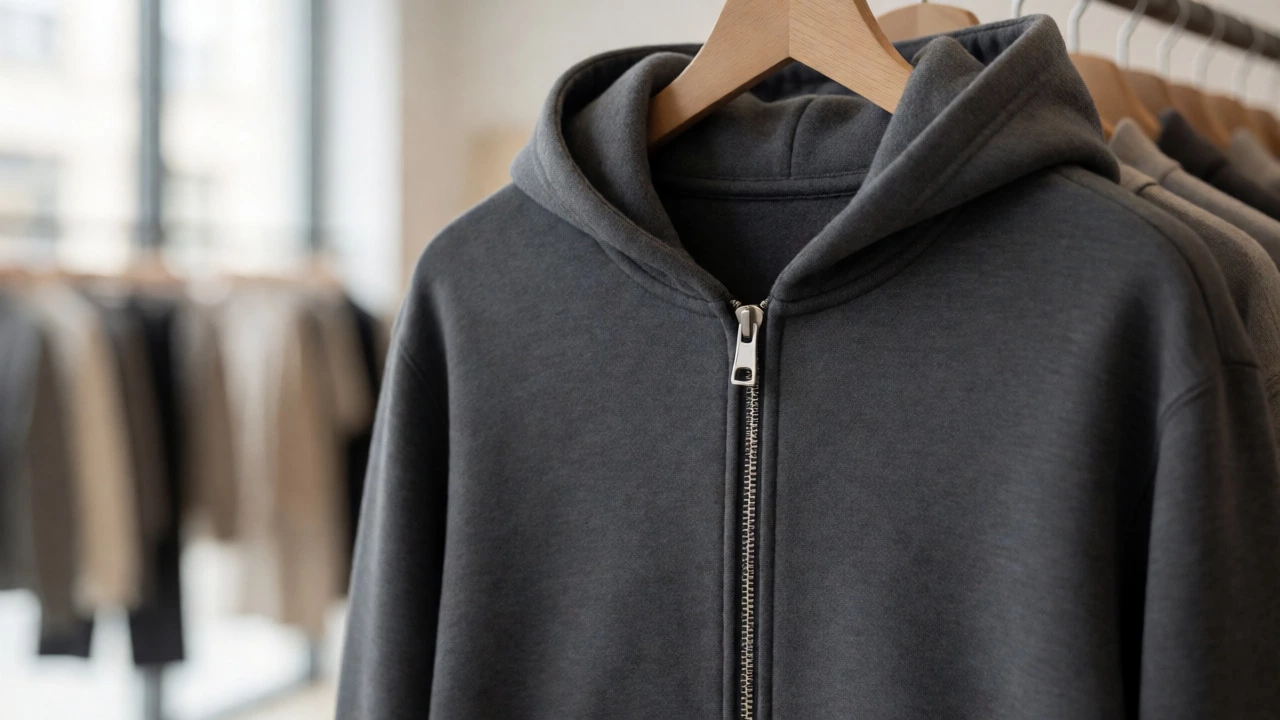
Hoodie Identifier & Style Guide
Confused by terms like "full-zip," "track top," or "quarter-zip"? Select the features of your garment below to get the precise industry-standard name and style advice.
Result Name
High ConfidenceKey Features Detected:
Select options on the left to identify your garment.
You’re standing in a clothing store, holding a fleece garment with a hood and a zipper running down the front. You want to buy it, but you hesitate. Is this technically a zip-up hoodie? Or should you call it a track jacket? Maybe a zip-front sweatshirt? The confusion is real because these terms often overlap in casual conversation, yet they mean different things to designers, retailers, and style-conscious shoppers.
Here’s the quick answer: In most modern contexts, especially in North America, a "zip-up hoodie is a type of hooded sweatshirt featuring a full-length front zipper." However, depending on where you are or who you ask, it might also be called a "full-zip hoodie," a "zip-front sweatshirt," or even loosely referred to as a "track top" if it has athletic styling. Knowing the precise name helps you find exactly what you want online, understand fit differences, and avoid buying a windbreaker when you wanted cozy fleece.
The Core Definition: What Makes It a Zip-Up?
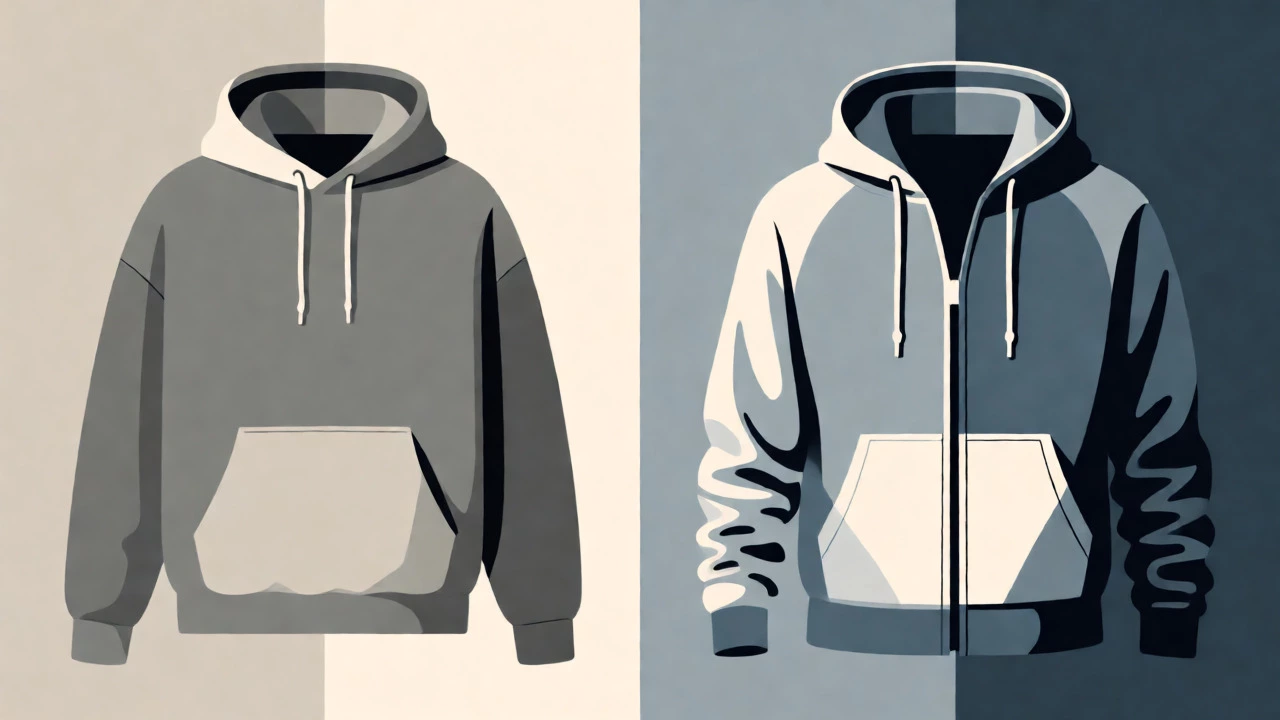
To clear up the naming mess, we need to look at the anatomy of the garment. A standard hoodie (often called a "pullover") has no opening at the front; you pull it over your head. A zip-up hoodie changes one critical component: the closure. Instead of a continuous fabric panel, there is a vertical zipper that runs from the hem to the neckline.
This single change alters the garment's function. You can wear it open like a jacket, partially zipped for ventilation, or fully closed for warmth. Because of this versatility, the term "hoodie" alone sometimes excludes zip-ups in strict fashion circles, which prefer the term "zip-up" or "full-zip" to distinguish them from pullovers. If you search for "hoodie" on major retail sites, you will usually see both pullovers and zip-ups mixed together. But if you type "zip-up hoodie," you filter specifically for the zipped variety.
Why does the name matter? Search algorithms treat these as distinct sub-categories. If you want a lightweight layer for running, searching for a "track jacket" yields different results than searching for a "fleece zip-up." Understanding the nomenclature saves you time and ensures you get the right fabric weight and fit.
Regional and Brand-Specific Names
Language varies by geography and brand culture. While "zip-up hoodie" is the universal e-commerce standard, other terms pop up depending on context.
- Full-Zip Hoodie: This is the most common synonym used by brands like Nike, Adidas, and Champion. It emphasizes that the zipper goes all the way down, unlike a "quarter-zip" or "half-zip" which only opens partway.
- Zip-Front Sweatshirt: You’ll see this term more in formal retail catalogs or older department stores. It describes the construction method rather than the style vibe. It sounds less trendy but is technically accurate.
- Track Top: Often confused with zip-up hoodies, a true track top usually lacks a hood or has a detachable one. Originating from athletic warm-up gear, track tops are typically made of smoother polyester rather than heavy cotton fleece. If your "zip-up" has a hood and soft fleece interior, it’s not a traditional track top.
- Hooded Jacket: Some outdoor brands use this term for heavier, weather-resistant zip-ups. These aren’t typical gym hoodies; they are technical outerwear designed for rain or wind.
In Canada and the UK, the term "hoodie" is universally understood regardless of the closure type. However, in high-fashion contexts, a "zip-up" might be dismissed as "casual athleisure," whereas a "jacket" implies structure. Always check the product description for keywords like "fleece-lined," "cotton blend," or "polyester shell" to confirm what you’re actually getting.
Zip-Up vs. Pullover: Which One Do You Need?
Now that we know what it’s called, let’s talk about why you’d choose one over the other. This isn’t just about semantics; it’s about utility. I’ve worn hundreds of these over the years in Toronto’s unpredictable weather, and the choice between a zip-up and a pullover comes down to three factors: temperature regulation, layering, and durability.
A zip-up hoodie excels at temperature control. On a mild autumn day, you can leave it unzipped for airflow. As the wind picks up, you zip it halfway. If you’re entering a heated office, you can unzip it completely without pulling it off your head. This makes it superior for transitional seasons or environments with fluctuating temperatures.
Pullovers, on the other hand, offer better insulation when sealed. Without a zipper gap, there’s less draft penetration. They also tend to have fewer points of failure. Zippers break. Pull tabs snap. A pullover is a simpler machine-just fabric and stitching. If you prioritize longevity and maximum warmth for static activities (like sitting on a bench watching a game), a pullover might serve you better.
| Feature | Zip-Up Hoodie | Pullover Hoodie |
|---|---|---|
| Versatility | High (Open/Closed options) | Low (Fixed closure) |
| Durability | Moderate (Zipper risk) | High (Fewer components) |
| Layering | Easier to put on/off over shirts | Can bunch up when removing |
| Warmth | Good (if zipped tight) | Excellent (no gaps) |
| Style Vibe | Athletic / Streetwear | Casual / Cozy |
Fabric Matters: Not All Zip-Ups Are Created Equal
The name "zip-up hoodie" covers a wide range of materials. Just because it has a zipper doesn’t mean it’s comfortable. When shopping, ignore the name and look at the fabric content tag. This is where many buyers get burned.
Cotton Fleece: The gold standard for comfort. Look for "brushed back" or "loopback" cotton. This material is soft, breathable, and absorbs sweat. Brands like Champion or local Canadian manufacturers often use heavyweight cotton blends (80% cotton, 20% polyester) to prevent shrinking while maintaining softness.
Polyester Blends: Common in cheaper fast-fashion zip-ups. Polyester wicks moisture better than cotton but traps heat and odors. If you plan to wear your zip-up to the gym, a synthetic blend might dry faster. For daily wear, however, pure cotton or high-cotton blends feel significantly better against the skin.
Terry Cloth: Less common now, but some vintage-style zip-ups use terry cloth (like a towel). It’s durable but heavy when wet. Avoid this if you live in a rainy climate unless you have a waterproof shell over it.
Pro Tip: Check the GSM (grams per square meter) if listed. A good quality winter hoodie ranges from 350-450 GSM. Anything under 300 GSM will feel thin and flimsy, more like a light sweater than a substantial hoodie.
Styling Your Zip-Up: Beyond the Gym
Once you’ve identified your "full-zip hoodie," how do you wear it? The stigma that hoodies are only for lounging or working out died years ago. Today, a well-fitted zip-up is a staple in smart-casual wardrobes.
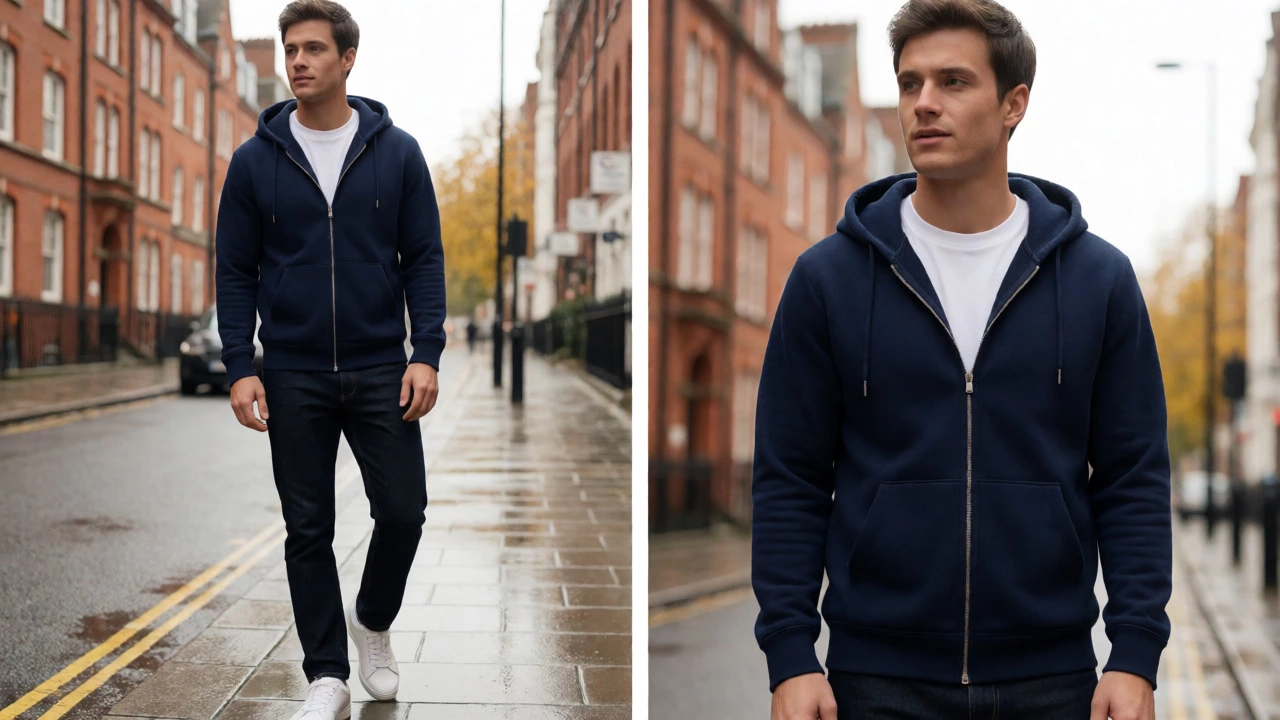
For a clean look, pair a neutral-colored zip-up (black, grey, navy) with dark denim jeans and white sneakers. Keep the zipper half-open to reveal a plain white t-shirt underneath. This creates a layered effect without looking bulky. Avoid wearing graphic tees with busy logos under a patterned hoodie; simplicity wins.
If you’re dressing up slightly, swap jeans for chinos or tailored trousers. Choose a zip-up with minimal branding and a slim fit. The key is avoiding the "baggy" look. A zip-up that is too large looks sloppy; one that is too tight restricts movement and highlights the zipper strain. Aim for a fit that allows you to move your arms freely without excess fabric pooling at the waist.
Women’s styling offers similar flexibility. A cropped zip-up hoodie pairs perfectly with high-waisted leggings or bike shorts for an athleisure look. Longer, oversized zip-ups work well over dresses or skirts, adding a relaxed edge to feminine outfits. Experiment with colors-pastels soften the sporty vibe, while bold colors make a statement.
Common Misconceptions About Hoodie Terminology
People often mix up related garments. Here is a breakdown to keep your definitions straight:
- Sweatshirt: A broad category including pullovers and crewnecks. It does not necessarily have a hood. If it has a hood, it’s a hoodie.
- Cardigan: A knitted sweater with buttons or a zipper. It usually lacks a hood and is made of wool or knit fabric, not fleece.
- Anorak: A lightweight, water-resistant jacket, often with a hood but rarely lined with fleece. It’s for wind/rain protection, not warmth.
- Quarter-Zip: A sweater or hoodie with a short zipper (only 10-15 inches long). It’s easier to layer but harder to ventilate fully compared to a full-zip.
Remember, if it has a hood and a full-length zipper, you are safe calling it a zip-up hoodie. If it has a hood but no zipper, it’s a pullover hoodie. If it has a zipper but no hood, it’s a sweatshirt or track jacket. Clarity starts with these basic distinctions.
Is a zip-up hoodie considered formal wear?
Generally, no. Zip-up hoodies are categorized as casual or business casual at best. However, minimalist designs in premium fabrics (like cashmere blends or structured cotton) can pass in creative workplaces. Avoid wearing them to traditional business meetings or formal events.
Why do my zip-up hoodies shrink after washing?
Most shrinkage occurs due to heat. Cotton fibers contract when exposed to high temperatures in dryers or hot wash cycles. To prevent this, wash your hoodie in cold water and air dry it, or tumble dry on low heat. Pre-shrunk cotton labels help, but proper care is still essential.
What is the difference between a track jacket and a zip-up hoodie?
The main difference is the hood and fabric. Track jackets are typically made of smooth polyester or nylon, often lack hoods (or have detachable ones), and are designed for athletic performance. Zip-up hoodies feature a fixed hood and are usually made of softer, warmer fleece or cotton blends intended for comfort and casual wear.
Can I wear a zip-up hoodie over a collared shirt?
Yes, this is a popular smart-casual look. Ensure the hoodie fits well around the neck so the collar doesn't bunch up uncomfortably. Tuck the shirt in for a cleaner silhouette, and choose a solid-colored hoodie to balance the visual complexity of the collar.
Are expensive zip-up hoodies worth the money?
Often, yes. Higher-priced hoodies typically use higher GSM fabrics, better stitching (double-stitched seams), and more durable zippers (YKK brand). Cheap hoodies often pill quickly, fade after few washes, and have zippers that snag. Investing in one high-quality piece often costs less over time than replacing multiple cheap versions.