Trainer Selector Quiz
Question 1: What is your primary movement pattern?
Question 2: How far do you typically go per session?
Question 3: Do you experience any foot or joint pain?
Your Recommended Trainer Type
Why this choice?
Key Features to Look For
You stand in front of a wall of colorful boxes, overwhelmed by options that all look vaguely similar. You just want a pair of trainers that won't hurt your feet or break the bank. But here is the catch: not all trainers are created equal. Using a heavy basketball shoe for a 5K run can wreck your knees, while wearing lightweight running shoes on a hiking trail will leave you with blisters and no ankle support. The confusion usually stems from ignoring one critical fact: trainers are engineered for specific movements.
To save you from bad purchases and sore arches, we need to strip away the marketing fluff. There are four distinct categories of athletic footwear that cover 90% of daily needs. Understanding these types isn't just about fashion; it's about biomechanics. Let's break down exactly what each type does, who needs them, and how to spot the difference at a glance.
Running Shoes: Built for Forward Motion
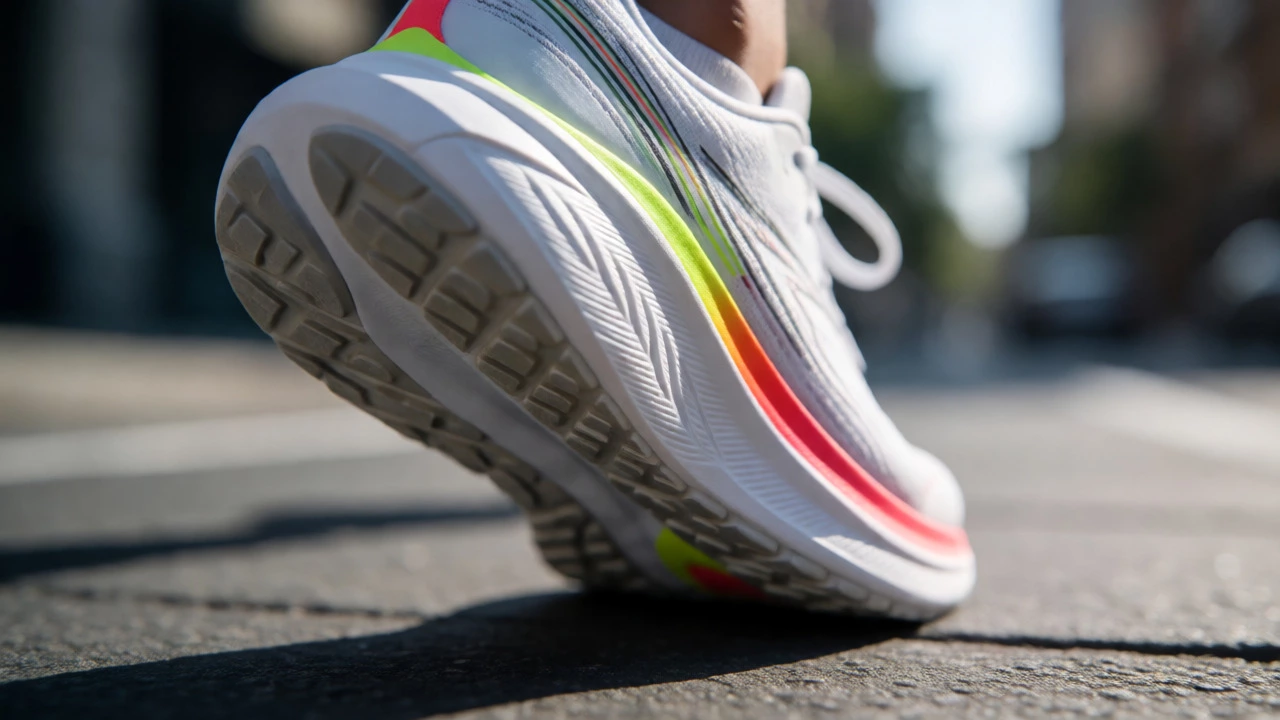
If you plan to hit the pavement or treadmill regularly, you need running shoes. These are designed exclusively for linear movement-moving straight forward. Unlike other athletic shoes, running shoes prioritize cushioning and energy return over lateral stability. Why? Because when you run, you land on your heel or midfoot and roll forward. Your foot doesn't move side-to-side much.
The core feature here is the midsole foam. Brands like Nike use ZoomX foam, Adidas uses Boost, and Hoka uses thick EVA compounds. This material compresses under impact and springs back, reducing the stress on your joints. Running shoes also have a higher drop (the height difference between the heel and toe), which encourages a forward lean. If you try to play tennis in running shoes, you'll likely roll an ankle because the sole is too soft and the sides lack structural support.
| Attribute | Specification | Purpose |
|---|---|---|
| Movement Type | Linear (Forward) | Efficiency in straight lines |
| Cushioning | High to Maximum | Absorb repetitive impact |
| Weight | Light (200g - 300g) | Reduce fatigue over distance |
| Sole Flexibility | High (Toe bend) | Natural gait cycle |
Gym Training Shoes: Stability for Multi-Directional Work
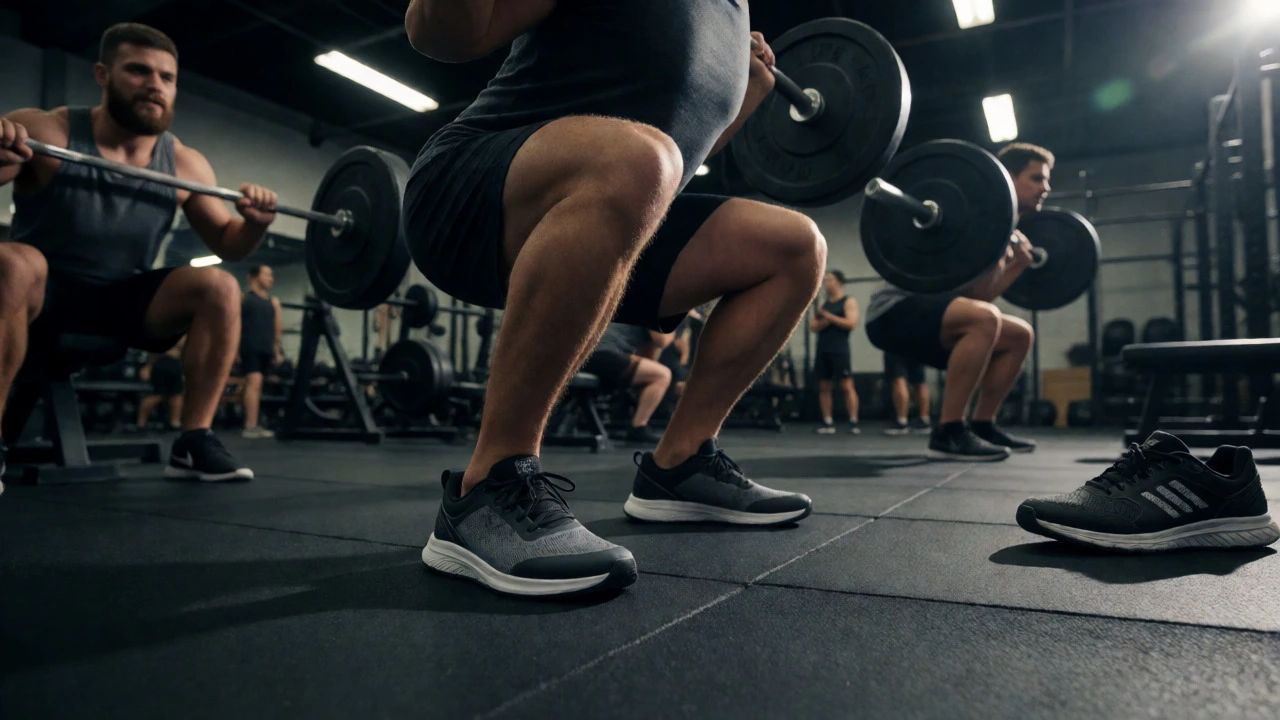
Now, let's talk about the generalist. Training shoes (often called cross-trainers) are built for the chaotic environment of a weight room or HIIT class. In these settings, you aren't just moving forward. You're doing lunges, box jumps, lateral shuffles, and lifting heavy barbells. This requires a completely different engineering approach.
First, the sole is flat and wide. This provides a stable base so you don't wobble during squats or deadlifts. Second, the upper part of the shoe is reinforced. When you do a lateral shuffle, your foot pushes against the inside of the shoe. If the mesh is too thin, the shoe collapses, and you lose power. Third, the heel is often slightly elevated but firm, unlike the squishy heel of a runner. This helps with depth in squats without compromising balance.
People often make the mistake of running in cross-trainers. They are heavier and less flexible, which makes long distances feel sluggish. Conversely, trying to lift weights in running shoes is dangerous. The compressed foam creates instability, increasing the risk of injury when handling heavy loads. If your workout involves more than just jogging, you need this category.
Lifestyle Sneakers: Style Meets Casual Comfort
Not every shoe needs to be a performance tool. Lifestyle sneakers dominate the market by volume. Think of the classic Converse Chuck Taylors, Vans Old Skools, or Adidas Stan Smiths. These shoes prioritize aesthetics and casual comfort over athletic performance.
The construction is simpler. Often, they feature vulcanized rubber soles or basic foam inserts. They lack the advanced motion control technologies found in performance gear. However, they excel in durability for urban environments and versatility for outfit pairing. You can wear them to a coffee shop, a casual office, or a night out without looking like you just came from the gym.
Here is the trap: many people assume "casual" means "comfortable for all day." It doesn't. Flat-soled lifestyle shoes offer minimal arch support. Walking 10,000 steps in flat canvas shoes can lead to plantar fasciitis if you don't add orthotic insoles. Use these for social settings and short walks, not for marathon days or intense exercise.
Walking Shoes: Designed for Endurance and Support
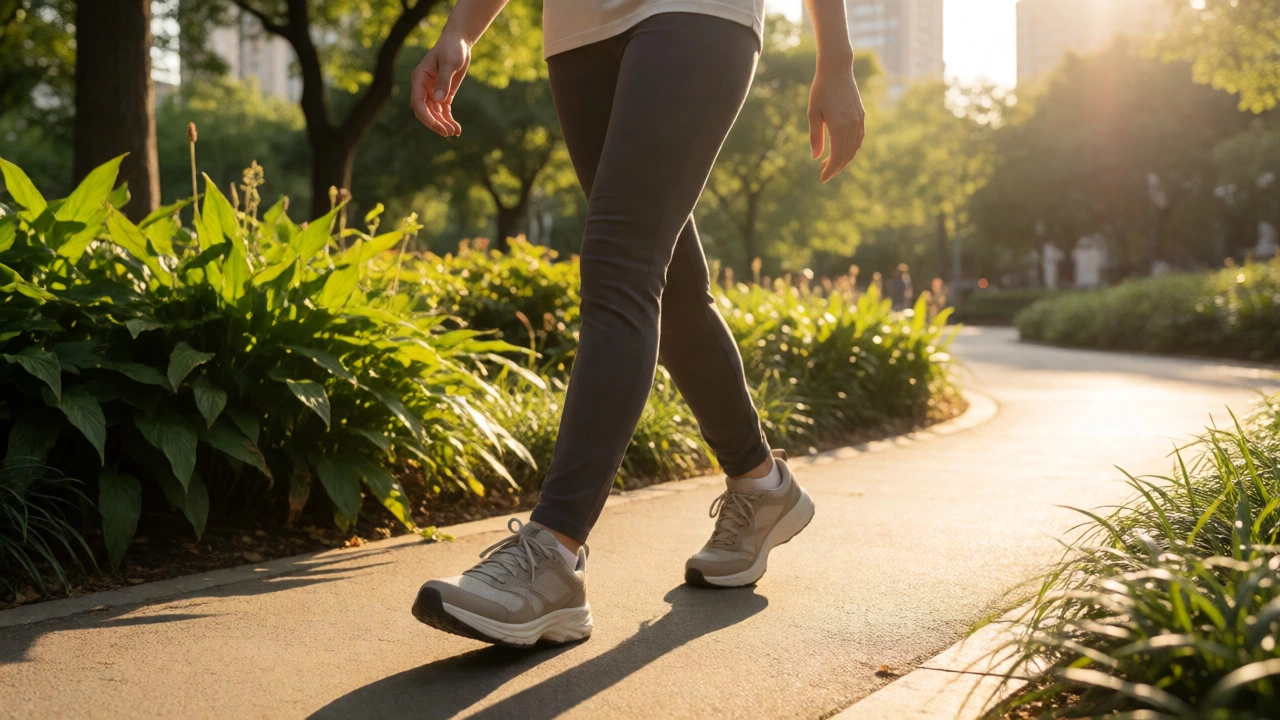
Finally, we have walking shoes. While they look similar to running shoes, the biomechanics of walking are different. When you walk, your heel strikes first, rolls through the midfoot, and pushes off from the toe. The impact force is lower than running, but the duration of contact with the ground is longer.
Walking shoes typically have a more flexible forefoot to accommodate this rolling motion. They also tend to have wider toe boxes to allow toes to splay naturally, preventing bunions and black toenails. Cushioning is moderate-enough to protect joints over hours of standing or walking, but not so thick that it feels unstable. Brands like New Balance and Skechers specialize here, offering models with memory foam that molds to the foot shape over time.
If you work on your feet all day or enjoy long weekend hikes on paved trails, walking shoes are your best bet. They bridge the gap between the structured support of a trainer and the relaxed fit of a sneaker.
How to Choose Based on Your Activity
Choosing the right type comes down to honest self-assessment. Ask yourself three questions:
- What is my primary movement? If it's straight-line cardio, go running. If it's mixed exercises, go training. If it's mostly standing/walking, go walking. If it's mostly sitting/socializing, go lifestyle.
- How far do I go? Under 3 miles per session? Cross-trainers might suffice. Over 5 miles? You need dedicated running shoes.
- Do I have existing pain? Knee pain often requires better cushioning (running). Foot pain often requires better support (walking/training).
Remember, a $200 running shoe won't help you if you only wear them to the grocery store. And a $50 canvas sneaker won't protect your feet during a 10K race. Match the tool to the job.
Frequently Asked Questions
Can I use running shoes for gym workouts?
Generally, no. Running shoes have soft, unstable soles designed for forward motion. During gym exercises like squats, lunges, or lateral movements, this softness causes instability, which can lead to poor form and potential ankle injuries. Dedicated training shoes provide a flat, firm base for stability.
Are lifestyle sneakers bad for my feet?
They aren't inherently bad, but they lack technical features. Most lifestyle sneakers have flat soles with minimal arch support and shock absorption. For short durations, they are fine. For all-day wear or high-step-count days, they may cause fatigue or foot pain unless you add supportive insoles.
What is the main difference between walking and running shoes?
Running shoes are lighter, more cushioned, and have a higher heel-to-toe drop to manage high-impact forces. Walking shoes are more flexible in the forefoot to aid the natural rolling motion of walking and often have a wider toe box for comfort during prolonged periods of low-impact activity.
How long do trainers last?
Performance trainers (running and training) typically last between 300 to 500 miles or 6 to 12 months of regular use. Lifestyle sneakers may last longer visually but lose their structural integrity sooner. Replace them when the tread wears down or the midsole loses its bounce.
Do expensive trainers perform better?
Price often correlates with technology, such as carbon plates in racing shoes or premium foams. However, the most expensive shoe isn't always the best for you. Fit is more important than price. A well-fitting mid-range shoe will outperform an ill-fitting luxury model every time.