Suit Wardrobe Planner
Answer three quick questions to determine your essential suit count and color palette.
Your Recommended Suit Count:
Essential Color Palette
Why This Strategy?
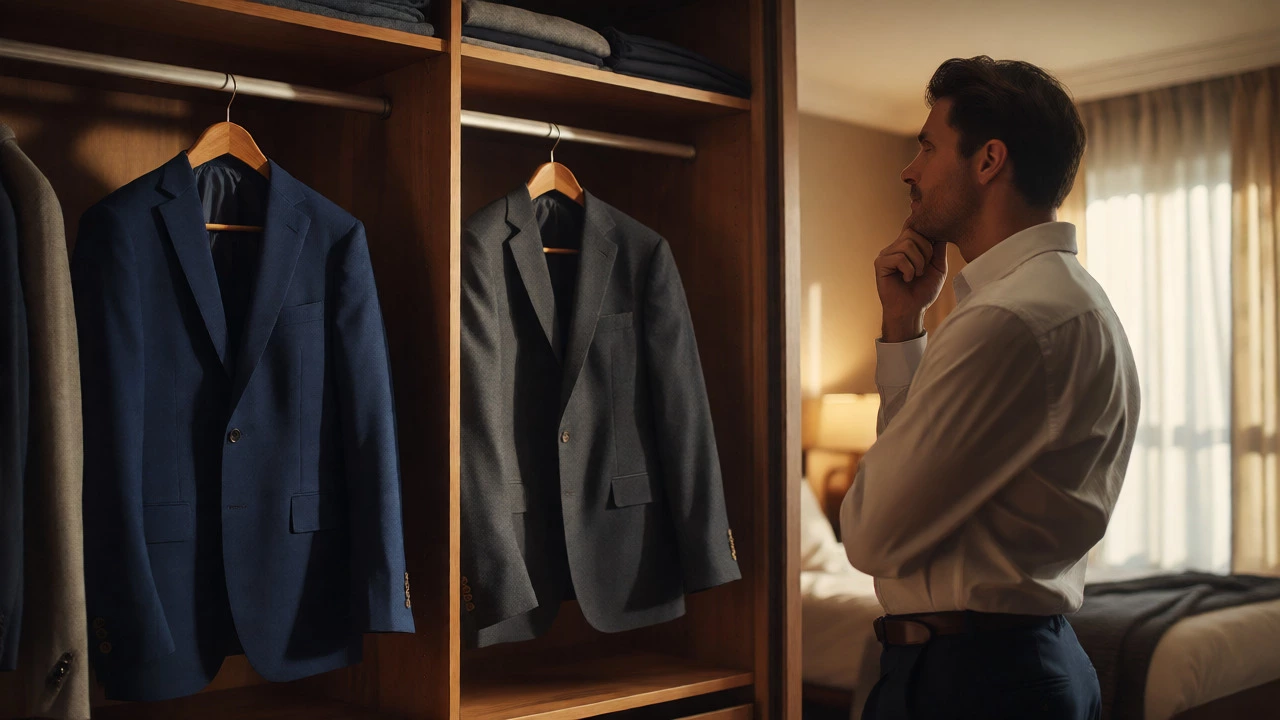
You’re standing in front of your closet, staring at a rack of hangers. Maybe you have one dusty black suit from your college graduation, or perhaps you’re overwhelmed by three identical navy blazers that all fit slightly wrong. It’s a common dilemma: how many suits should a man own? There isn’t a single magic number that works for everyone, but there is a formula based on your lifestyle, job, and budget. Buying too few leaves you scrambling when an unexpected funeral or client dinner pops up. Buying too many wastes money on fabric that never sees the light of day.
The truth is, a functional suit wardrobe isn’t about collecting items; it’s about covering your bases. Most men need between two and five suits to handle 90% of their professional and social obligations. Anything beyond that usually requires a specific reason-like being a lawyer who needs daily variety or attending weekly galas. Let’s break down exactly what you need, why you need it, and how to build a rotation that actually makes sense.
The Baseline: Why Two Suits Are Not Enough
A lot of advice online suggests starting with just one good suit. That’s dangerous advice. A suit is not a t-shirt; it doesn’t dry out overnight after a sweaty commute or a long day of shaking hands. Wool, the most common suit fabric, needs rest. If you wear the same suit two days in a row, the fibers don’t recover their shape, leading to permanent creasing and a shiny appearance under the arms and seat.
Think of your suits like batteries. They need time to recharge. If you only own one suit, you are forced to wear it every workday, which shortens its lifespan significantly. You’ll be sending it to the dry cleaner constantly, exposing it to harsh chemicals that degrade the wool. With two suits, you can alternate, giving each garment 48 hours of air time. This simple habit doubles the life of your clothing and keeps you looking crisp without extra effort.
| Lifestyle Profile | Recommended Count | Primary Use Cases |
|---|---|---|
| The Minimalist | 2 Suits | Occasional interviews, weddings, funerals |
| The Corporate Professional | 3-4 Suits | Daily office wear, client meetings |
| The High-Frequency User | 5+ Suits | Daily wear, travel, varied climates |
Building Your Core Rotation: Navy and Grey
If you are building your wardrobe from scratch, ignore the urge to buy black first. Black suits are often mistaken for formal wear, but they are actually quite severe and can look like a uniform or even mourning attire if worn during the day. Instead, start with Navy Blue. It is the universal neutral of menswear. It works in almost any lighting, flatters most skin tones, and pairs easily with white, blue, or pink shirts.
Your second essential piece should be Charcoal Grey. Charcoal is darker than mid-grey but lighter than black, making it perfect for evening events or serious business meetings where you want to project authority without the starkness of black. Together, navy and charcoal cover roughly 80% of traditional business scenarios. They are versatile enough to be worn as separates-meaning you can wear the jacket with jeans or chinos, expanding their utility far beyond the full suit.
Why these two colors? Because they maximize mix-and-match potential. You aren’t just buying two outfits; you are buying four distinct looks (two full suits, plus two jacket/trouser combinations). This approach saves money and closet space while ensuring you never look repetitive to colleagues.
The Third Suit: Adding Texture and Versatility
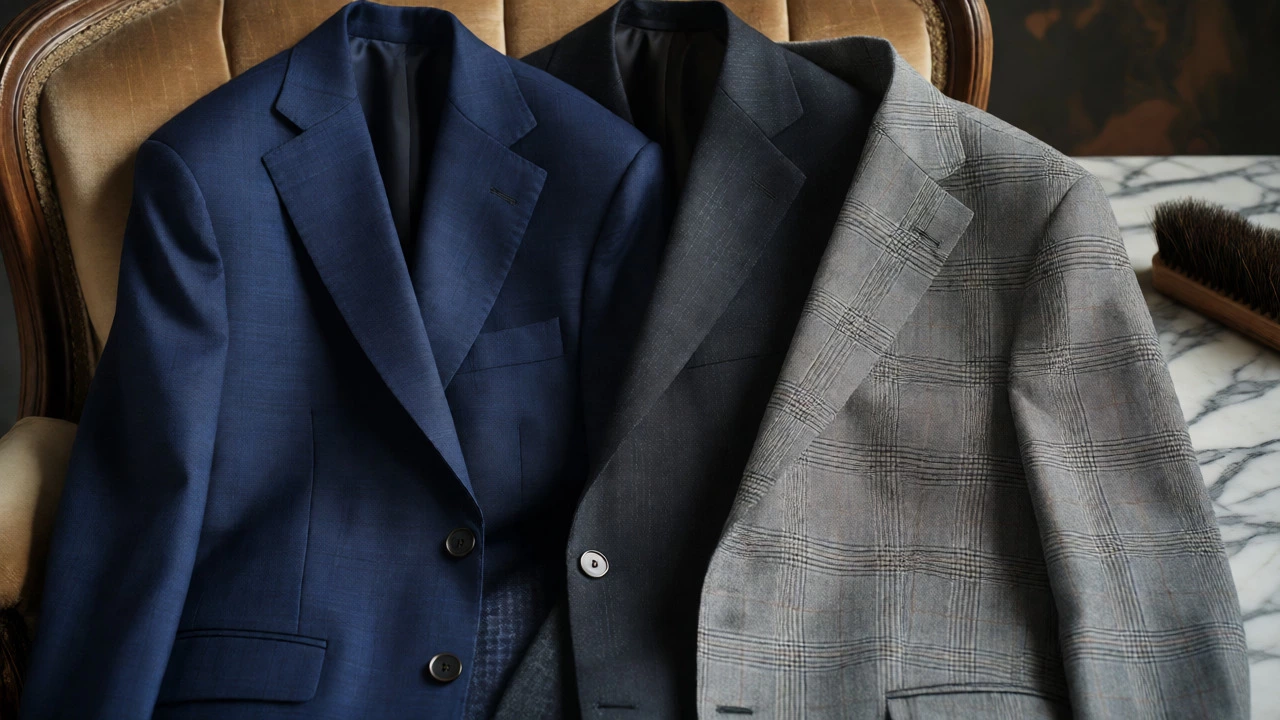
Once you have your navy and charcoal foundations, you might wonder if you need more. For most professionals, the answer is yes-but not necessarily another solid color. Enter the third suit: something with pattern or texture. A Mid-Grey Herringbone or a subtle Windowpane Check adds visual interest without breaking professionalism.
This third suit serves a different psychological purpose. Solid suits can feel corporate and safe. A textured suit shows personality and attention to detail. It’s ideal for creative industries, less formal offices, or weekend weddings. If you live in a warmer climate, this could also be a Light Grey Linen Blend or a tan cotton suit. These fabrics breathe better in summer heat and signal a relaxed confidence.
Don’t underestimate the power of fabric weight here. A heavy wool suit looks bulky in July, while a thin linen suit wrinkles terribly in a rainy March. Matching the fabric to the season extends the usability of your collection. You aren’t just counting suits; you are curating tools for specific weather conditions.
When Do You Need More Than Three?
Some jobs demand more than a basic rotation. If you are in high-stakes sales, law, or finance, you might see the same clients multiple times a week. Wearing the exact same outfit repeatedly can subtly impact perception-it might suggest a lack of resources or poor hygiene habits, even if neither is true. In these cases, moving up to five suits is smart.
With five suits, you gain flexibility. You can dedicate one to travel (a wrinkle-resistant blend), one to hot weather, one to cold weather, and keep your core navy and charcoal for standard days. This setup ensures you always have a clean, rested option available, no matter what the schedule throws at you.
Another factor is maintenance cycles. Dry cleaning takes time. If you send a suit out on Monday, it might not come back until Thursday. Having a buffer of suits prevents you from wearing a dirty one just because the clean ones are at the cleaners. Five suits create a comfortable margin for error.
The Myth of the Black Suit
Let’s address the elephant in the room: does every man need a black suit? Technically, yes, but rarely. In modern Western fashion, a black suit is strictly reserved for very formal events after dark, such as black-tie optional weddings, funerals, or opera nights. It is rarely appropriate for daytime business.
Many men buy a black suit first because it seems "safe" and matches everything. But because it’s so formal, it sits in the closet gathering dust. Unless you attend funerals frequently or work in a strict hospitality role (like hotel management), you can delay purchasing a black suit. Invest in quality navy and grey first. When you do buy black, ensure it has a slim, modern cut. Old-school boxy black suits look dated and cheap, regardless of price tag.
Budgeting and Quality Over Quantity
It’s tempting to buy five cheap suits instead of three high-quality ones. Resist this urge. A $200 suit will likely lose its shape after ten wears, develop shine on the elbows, and require frequent dry cleaning. A $600-$800 half-canvas suit will hold its structure for years, breathe better, and age gracefully.
Here is a realistic spending strategy:
- Suit 1 (Navy): Spend 40% of your budget here. This is your workhorse. Look for Super 110s or 120s wool for durability.
- Suit 2 (Charcoal): Spend 30% of your budget. Similar quality to the first, maybe a slightly heavier weight for winter.
- Suit 3 (Pattern/Texture): Spend 20% of your budget. This is for variety, so it can be a bit cheaper or made of seasonal fabric.
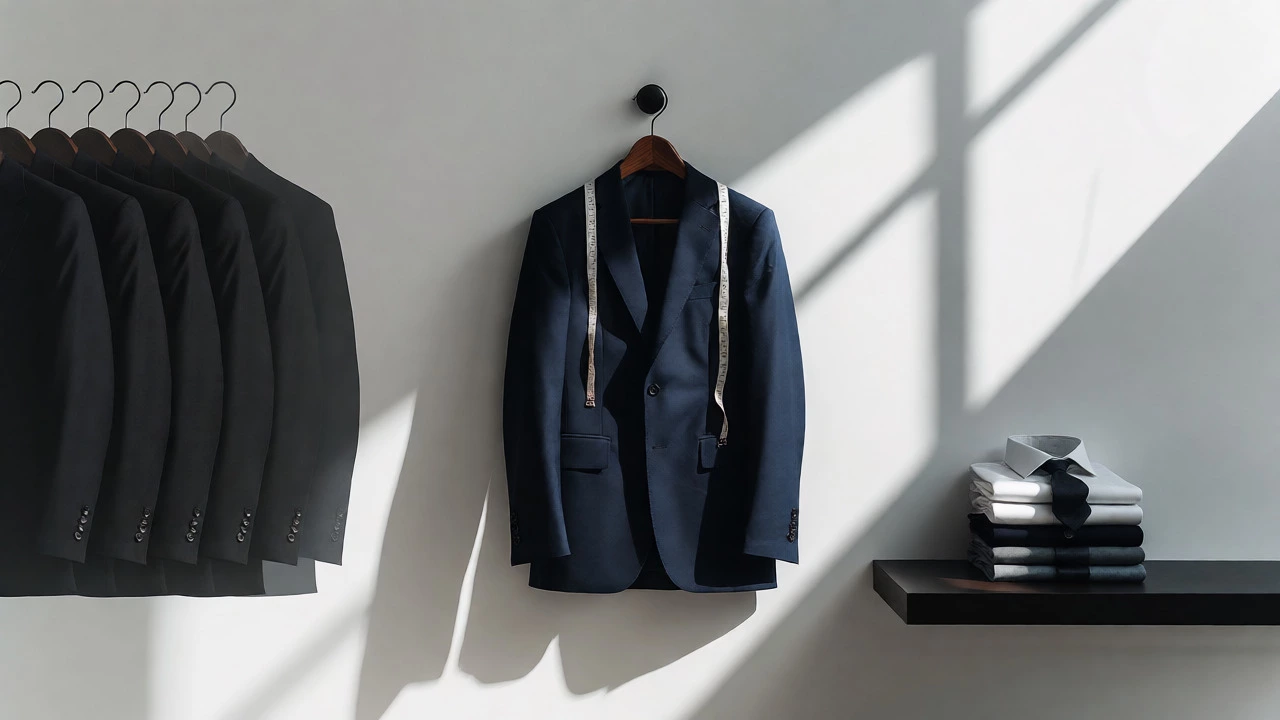
- Alterations: Save 10% for tailoring. A $300 suit tailored perfectly looks better than a $1,000 suit off the rack.
Remember, a suit that fits poorly is wasted money. No amount of brand prestige saves a bad fit. Always budget for alterations when you buy your first two suits. Hemming trousers and adjusting sleeve lengths are non-negotiable steps to looking polished.
Maintenance: Keeping Your Suits Alive
Owning suits is easy; keeping them fresh is hard. To make your small collection last longer, follow these rules:
- Brush after every wear: Use a horsehair brush to remove dust and lint. This prevents dirt from grinding into the fibers.
- Hang properly: Use wide wooden hangers that mimic the shape of your shoulders. Wire hangers distort the jacket’s silhouette.
- Air it out: Never put a worn suit directly into a crowded closet. Hang it in a well-ventilated area for 24 hours before storing it away.
- Clean sparingly: Only dry clean when necessary. Spot clean minor stains immediately. Over-cleaning destroys wool fibers.
By following these steps, you extend the time between professional cleanings, saving money and preserving the fabric. Your two or three suits will perform like five because they stay fresher longer.
Can I wear the same suit two days in a row?
You can, but you shouldn't. Wool needs time to recover its shape and release odors. Wearing the same suit consecutively leads to premature wear, shiny patches, and persistent smells. Aim for at least 24-48 hours of rest between wears.
Is a black suit necessary for every man?
Not necessarily. While useful for funerals and very formal evening events, a black suit is rarely appropriate for daytime business. Navy and charcoal are more versatile for daily wear. Buy a black suit only if your specific social or professional calendar demands it.
What is the best fabric for a starter suit?
Mid-weight wool (Super 100s to 120s) is the best choice. It breathes well, resists wrinkles, and lasts longer than synthetic blends. Avoid polyester-heavy suits as they trap heat and tend to look shiny under artificial lighting.
How much should I spend on my first suit?
Aim for $400-$800 for your first quality suit. Below $300, you often compromise on fit and fabric longevity. Above $1,000, you enter luxury territory that may not offer proportional value for a beginner. Remember to add $50-$100 for tailoring.
Do I need a suit for casual Fridays?
No, unless your office defines casual Friday as 'business casual' requiring a jacket. Usually, chinos and a button-down shirt suffice. However, having a blazer or sport coat allows you to dress up quickly if plans change, offering great versatility.