Shoe Cost & Sustainability Calculator
Your Results
Environmental insight: Leather is biodegradable (25-50 years), while synthetic materials take 30-1,000 years to decompose. Responsible leather choices reduce waste from footwear.
Leather shoes aren’t just a fashion choice-they’re a practical, cultural, and historical staple worn by billions. If you’ve ever wondered why so many people still choose leather over synthetic materials, the answer isn’t just about looks. It’s about performance, tradition, and how leather behaves over time in ways no plastic or fabric can match.
Leather shoes last longer than most alternatives
Most synthetic shoes start to break down after a year or two of regular use. The soles crack, the glue fails, and the upper material stretches or peels. Leather, on the other hand, ages gracefully. A well-made pair of leather shoes can easily last 10, 15, even 20 years with proper care. That’s not marketing hype-it’s fact. Shoe repair shops in cities like Toronto, London, or Tokyo still see people bringing in leather boots from the 1990s to be resoled. The leather hasn’t degraded; it’s just worn thin from use. And because leather is a natural material, it can be repaired, conditioned, and restored. Synthetic materials? Often not. Once they start failing, they’re trash.
Leather breathes. Synthetic materials don’t.
Ever worn cheap sneakers on a hot day and felt your feet turn into sweaty saunas? That’s because most synthetic uppers trap moisture. Leather, especially full-grain or nubuck, is porous. It lets air move in and out, helping your feet stay cooler and drier. That’s why people in warm climates like India, Spain, or Mexico still wear leather sandals and loafers even in summer. It’s not about tradition-it’s about comfort. A study from the University of Leeds in 2022 found that leather footwear reduced foot temperature by an average of 2.3°C compared to synthetic alternatives during 90 minutes of walking in 25°C weather. That difference matters when you’re on your feet all day.
Leather molds to your foot over time
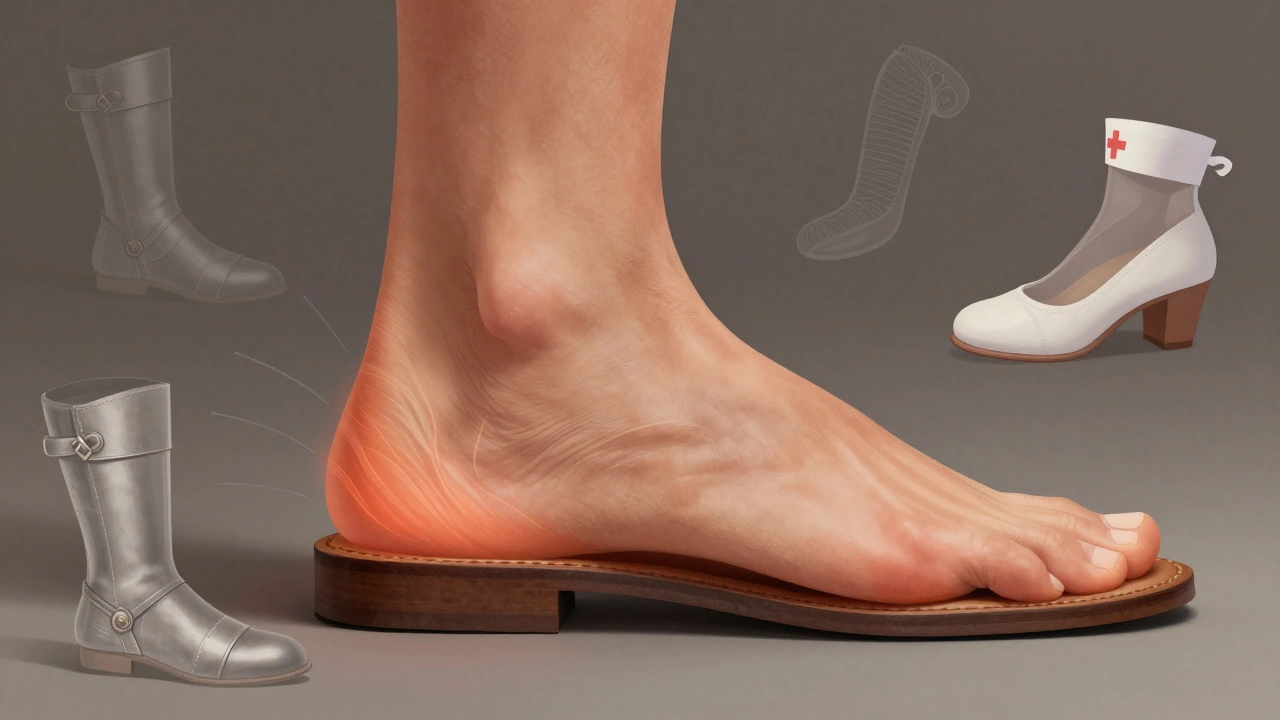
Think of leather shoes like a second skin. When you first wear them, they might feel stiff. But after a few weeks, they start to conform to the shape of your foot. That’s because leather fibers restructure under pressure and heat. You get a custom fit without custom-made prices. Synthetic shoes? They stay rigid. You might get blisters, pressure points, or arch pain because the material doesn’t adapt. People who stand for hours-nurses, teachers, construction workers-often switch to leather shoes because they stop hurting after a few days. That’s not luck. It’s physics.
Leather looks better as it ages
Unlike plastic that fades, peels, or turns yellow, leather develops a patina. That’s the rich, deep color and subtle sheen that comes from exposure to light, oils from your skin, and time. A pair of brown oxfords from 2018 might look dull at first, but after five years of wear, they’ve turned into something unique-almost like a personal artifact. People notice. That’s why leather shoes are still the standard in formal settings, corporate offices, and weddings. You can’t fake that kind of character. A synthetic dress shoe looks cheap after six months. A leather one looks like it belongs on your feet.
Leather has deep cultural roots
Humans have worn leather footwear for over 5,000 years. The oldest known leather shoe, found in Armenia, dates back to 3500 BCE. It was made from a single piece of cowhide, laced up with a cord. Since then, leather has been tied to status, profession, and identity. Roman soldiers wore caligae. Medieval knights wore jackboots. American cowboys wore rugged work boots. In Japan, geta and zori were often made from leather. Even today, in many cultures, leather shoes signal professionalism, respect, or tradition. Wearing them isn’t just about comfort-it’s about signaling something about who you are.
Leather is biodegradable. Most alternatives aren’t.
Here’s something most people don’t think about: what happens when your shoes die? Synthetic shoes made from polyester, PVC, or EVA foam can sit in landfills for 30 to 1,000 years. Leather, if untreated with heavy chemicals, breaks down naturally. A pair of leather shoes left in soil will decompose in about 25 to 50 years. That’s not a reason to buy more leather-just a reason to think about the long-term cost of what you wear. If you’re trying to reduce your environmental footprint, choosing leather over plastic-based synthetics makes sense… as long as it’s responsibly sourced.
Leather is durable enough for extreme conditions
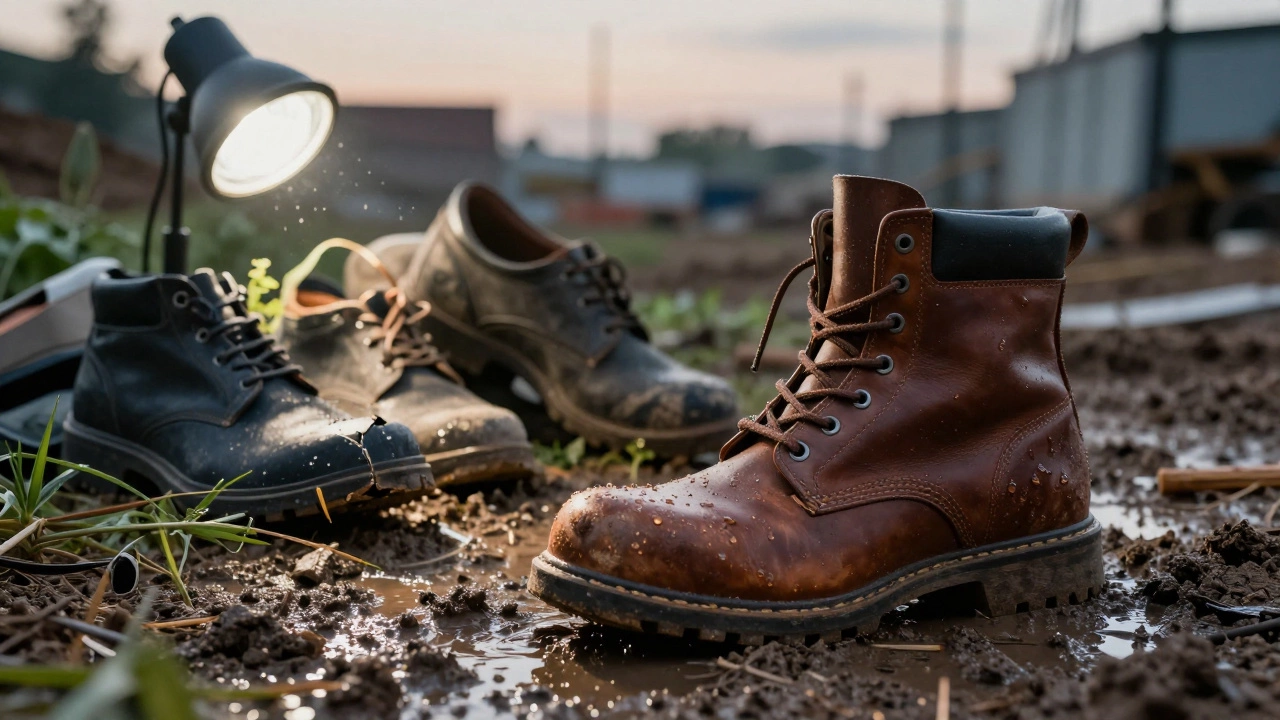
Leather doesn’t melt in heat, crack in cold, or dissolve in rain. That’s why it’s still the material of choice for firefighters, police officers, outdoor guides, and military personnel. A pair of leather work boots can handle mud, snow, oil spills, and sharp rocks. Synthetic boots might look sleek, but they often fail under pressure. In 2023, the U.S. Department of Labor reported that 72% of workers in high-risk trades preferred leather footwear for its resistance to abrasion and punctures. That’s not a coincidence. It’s engineering.
Leather shoes are a smarter investment
Let’s do the math. A $150 pair of synthetic shoes lasts two years. That’s $75 per year. A $400 pair of leather shoes lasts 15 years with occasional resoling ($50 every 3-4 years). That’s $30 per year. Even if you factor in leather conditioner and professional cleaning, you’re still saving money over time. And you’re not throwing away shoes every 12 months. That’s not just smart economics-it’s sustainable living.
Leather shoes still dominate professional environments
Look around any office in New York, Berlin, or Singapore. The majority of men and women in suits are wearing leather shoes. Why? Because they’re quiet, polished, and professional. No squeaky soles. No visible seams. No cheap plastic shine. Even in workplaces that allow casual dress, leather loafers or oxfords are the go-to for people who want to look put-together without trying too hard. Leather says, "I care about details." And in professional settings, that matters.
Leather is naturally water-resistant (when treated right)
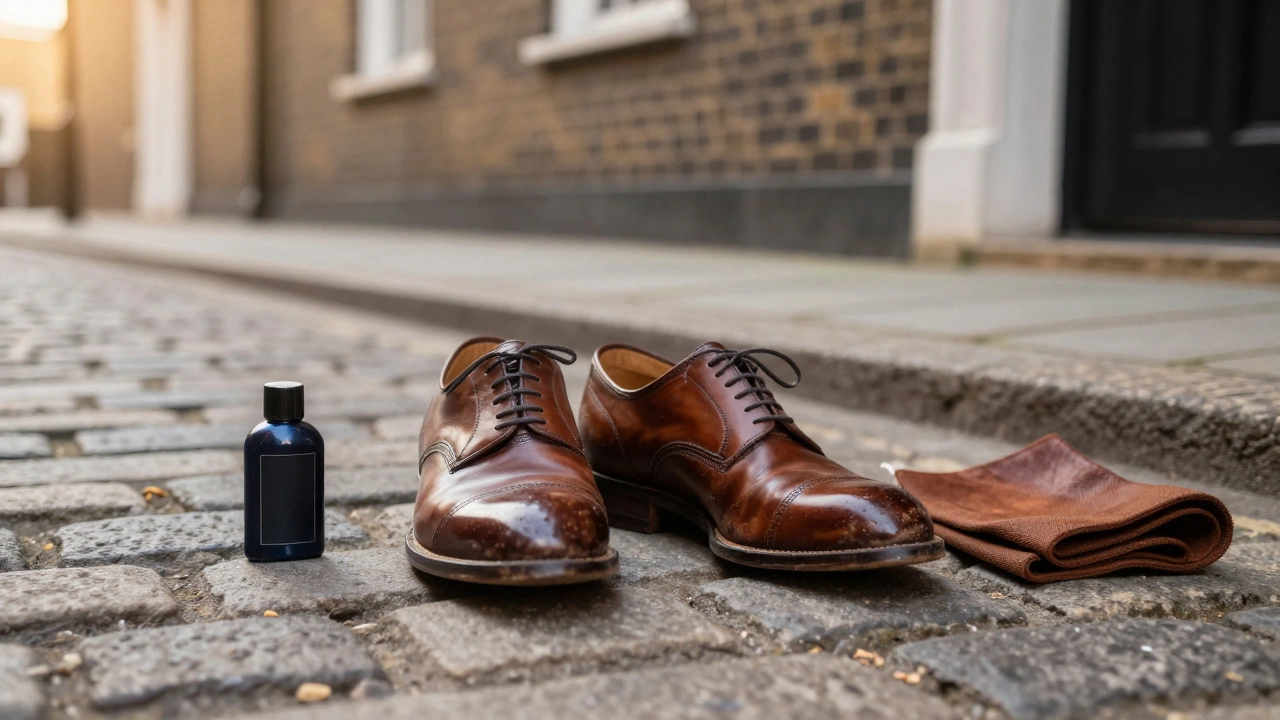
Leather isn’t waterproof by itself-but it’s naturally water-resistant. A good wax or oil treatment makes it shed rain like a duck’s back. Compare that to a synthetic shoe that soaks up moisture like a sponge. In cities with frequent rain like Toronto, Seattle, or London, people who walk to work or commute daily know the difference. A leather shoe that’s been conditioned twice a year will stay dry inside even after walking through puddles. Synthetic shoes? They’ll leave your socks wet and your feet cold.
Leather shoes are tied to craftsmanship
There’s a reason brands like Allen Edmonds, Church’s, or Salvatore Ferragamo still use hand-lasting and Goodyear welting. These are techniques that take 8-12 hours per pair. They’re expensive. But they’re also the reason those shoes can be resoled 5 or 6 times. That level of craftsmanship doesn’t exist in fast fashion. When you wear leather shoes made that way, you’re not just wearing footwear-you’re wearing a piece of skilled labor. And that’s something you can feel.
People wear leather shoes because they work-long-term
It’s not about fashion trends. It’s about function. Leather shoes support your feet. They breathe. They last. They look better with age. They’re repairable. They’re sustainable. And they’re still the most reliable option for people who need their shoes to perform-whether they’re walking 10 miles a day, standing in a kitchen, or walking into a boardroom.
Leather shoes aren’t perfect. They cost more upfront. They need care. But if you’ve ever worn a pair that fit just right and lasted for years, you know why people still choose them. It’s not nostalgia. It’s experience.
Are leather shoes worth the higher price?
Yes, if you plan to wear them regularly. A $300 leather shoe that lasts 15 years costs less per year than a $100 synthetic shoe replaced every two years. Plus, you can resole them, re-heel them, and condition them-extending their life for decades. The upfront cost is higher, but the long-term value is far greater.
Do leather shoes require a lot of maintenance?
Not as much as people think. Brush off dirt after each wear, condition them every 2-3 months with a quality leather balm, and resole them when the soles wear thin. That’s it. You don’t need to polish them daily. Most people over-maintain leather shoes out of habit, not necessity.
Can leather shoes be worn in the rain?
Absolutely, as long as they’re treated. A good waterproofing spray or wax helps repel water. Leather naturally resists moisture better than most synthetics. If they get soaked, let them dry naturally at room temperature-never near a heater. Stuff them with newspaper to hold their shape. They’ll be fine.
Are leather shoes ethical or sustainable?
It depends on the source. Leather is a byproduct of the meat industry, so using it reduces waste. But if the hides come from unsustainable or cruel practices, it’s not ethical. Look for brands that use certified leather (like LWG-certified) or traceable sources. Leather itself is biodegradable, unlike plastic-based synthetics that pollute for centuries.
Why do some people say leather shoes are uncomfortable at first?
Because they’re made to last, not to feel perfect on day one. Leather needs time to soften and mold to your foot. Most people wear them for 2-3 hours a day for a week, and the discomfort fades. If they’re painful from the start, they might be the wrong size or style. Don’t force them-try a different pair.
Do leather shoes work for casual outfits?
Yes. Leather loafers, desert boots, and casual oxfords pair well with jeans, chinos, and even shorts in warmer weather. They add polish without being formal. Many people now wear leather shoes with hoodies or T-shirts because they look intentional-not sloppy.
What to do next if you’re considering leather shoes
If you’ve never owned a good pair of leather shoes, start simple. Buy one pair-maybe a brown or black cap-toe oxford, or a casual loafers. Wear them for a week. Notice how your feet feel after 8 hours. Notice how they look after a month. Compare them to your synthetic shoes. You might be surprised. Leather doesn’t need to be expensive to be good. It just needs to be real.