Shoe Health & Replacement Checker
Check all that apply to your current pair of shoes. We'll analyze the structural integrity and your physical comfort to give you a recommendation.
Our Recommendation:
- Replace shoes when the midsole loses its bounce or support.
- Deep cracks in leather that can't be conditioned are a sign to move on.
- Uneven wear on the soles can lead to chronic knee and hip pain.
- Quality Goodyear-welted shoes can be saved with a resoling.
- Pay attention to "phantom pains" in your arches or ankles.
The Invisible Warning Signs
The most dangerous part of wearing old shoes is that the damage happens where you can't see it. Midsole is the layer of material between the inner sole and the outer sole that provides cushioning and shock absorption. Over time, the materials in the midsole-usually polyurethane or EVA foam-compress. Once that foam "bottoms out," it doesn't bounce back. You might feel like you're walking on concrete even if the outer sole is still thick.
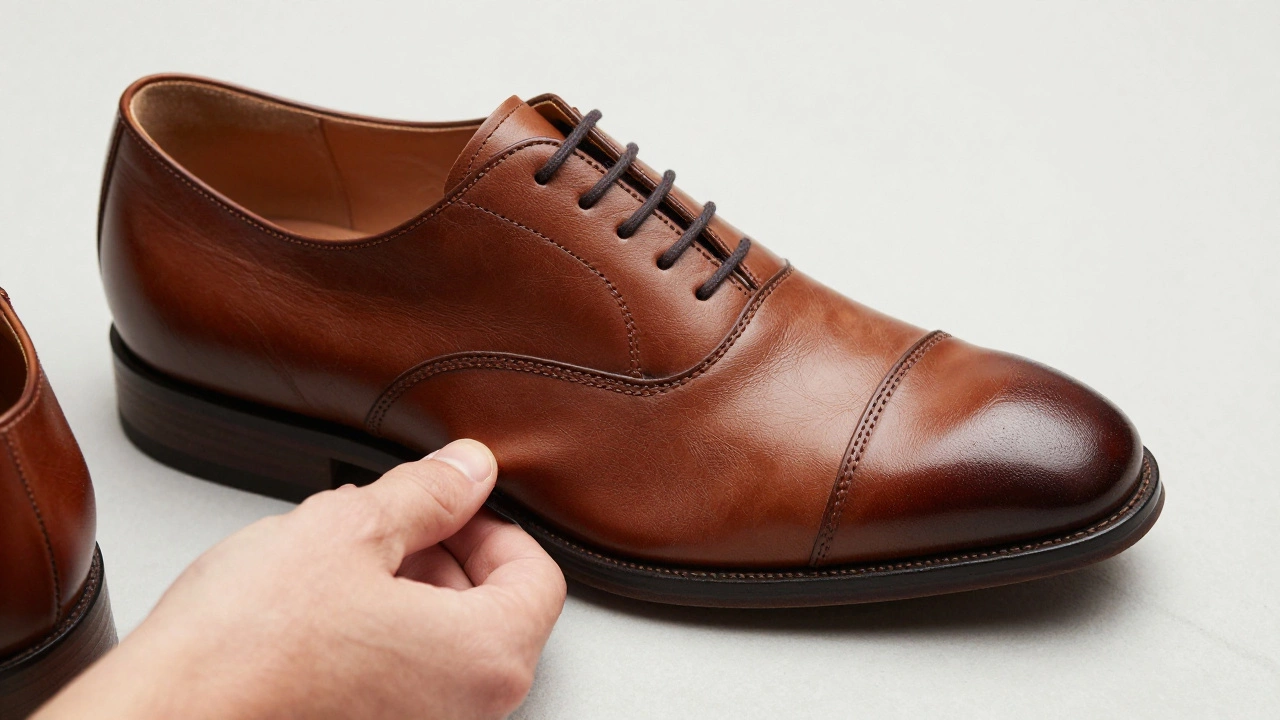
Do the "twist test." Grab the heel and the toe of your shoe and try to twist it. If the shoe twists easily like a piece of wet cardboard, the structural integrity is gone. A healthy shoe should have enough rigidity to support your foot's natural arch. If you've noticed your calves feeling tighter than usual after a short walk, it is a huge red flag that your replace leather shoes cycle is overdue.
Decoding the Sole Wear
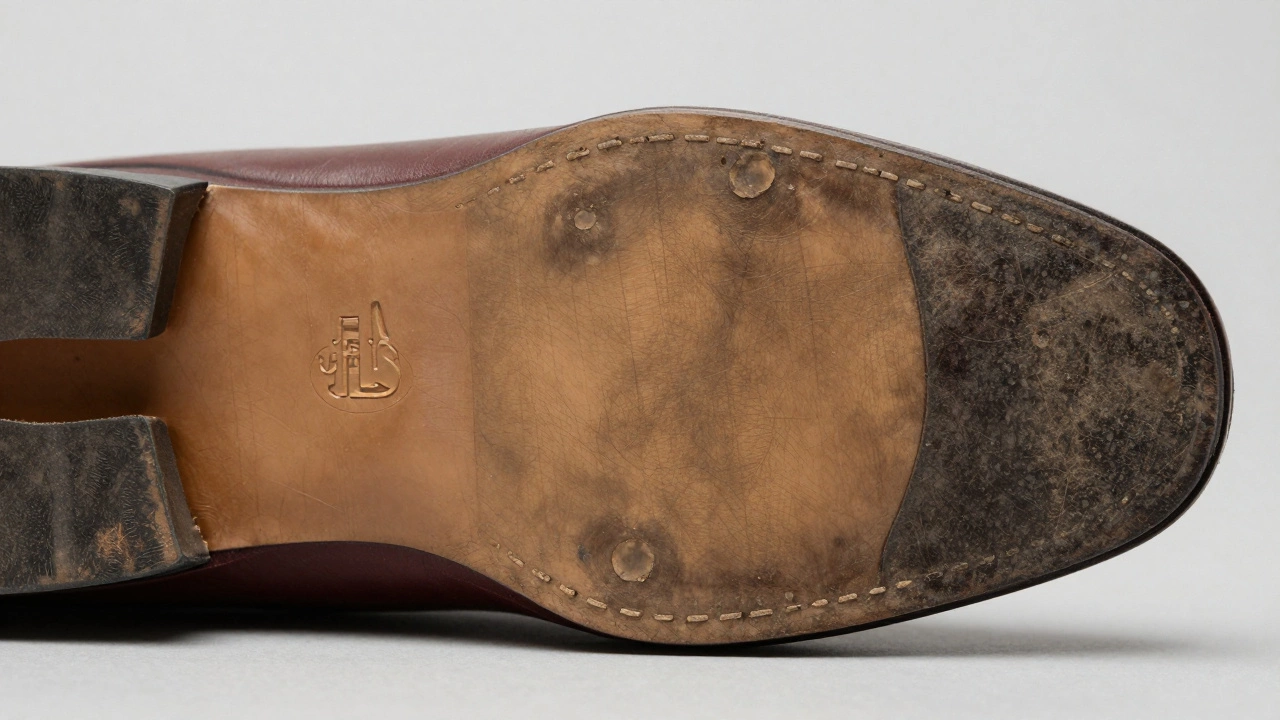
Look at the bottom of your shoes. Everyone wears their shoes differently, but there are a few patterns that mean it's time to head to the store. If you see a hole forming in the ball of your foot or the heel is worn down to the welt (the stitching that holds the sole to the upper), you're risking water damage and blisters.
Pay close attention to asymmetrical wear. If one heel is worn down significantly more than the other, you are creating a tilt in your gait. This doesn't just ruin the shoe; it sends a misalignment signal up to your ankles, knees, and lower back. Walking in tilted shoes is like driving a car with bad alignment-you might get where you're going, but you're wearing out the engine.
| Wear Pattern | What it Means | Action Required |
|---|---|---|
| Smooth, flat wear | Normal longevity/end of life | Full replacement or resole |
| Deep hole in the forefoot | Localized friction/thinning | Immediate replacement (risk of leaks) |
| Heavy outer edge wear | Supination (rolling outward) | Consult a podiatrist + new shoes |
| Heel tilt (left/right) | Gait imbalance | Stop wearing immediately |
When Leather is Beyond Saving
Full-grain leather is the highest quality leather made from the top layer of the hide, known for its durability and breathability. While it's tough, it isn't immortal. There is a big difference between a "patina" (the natural aging and darkening of leather) and "dry rot."
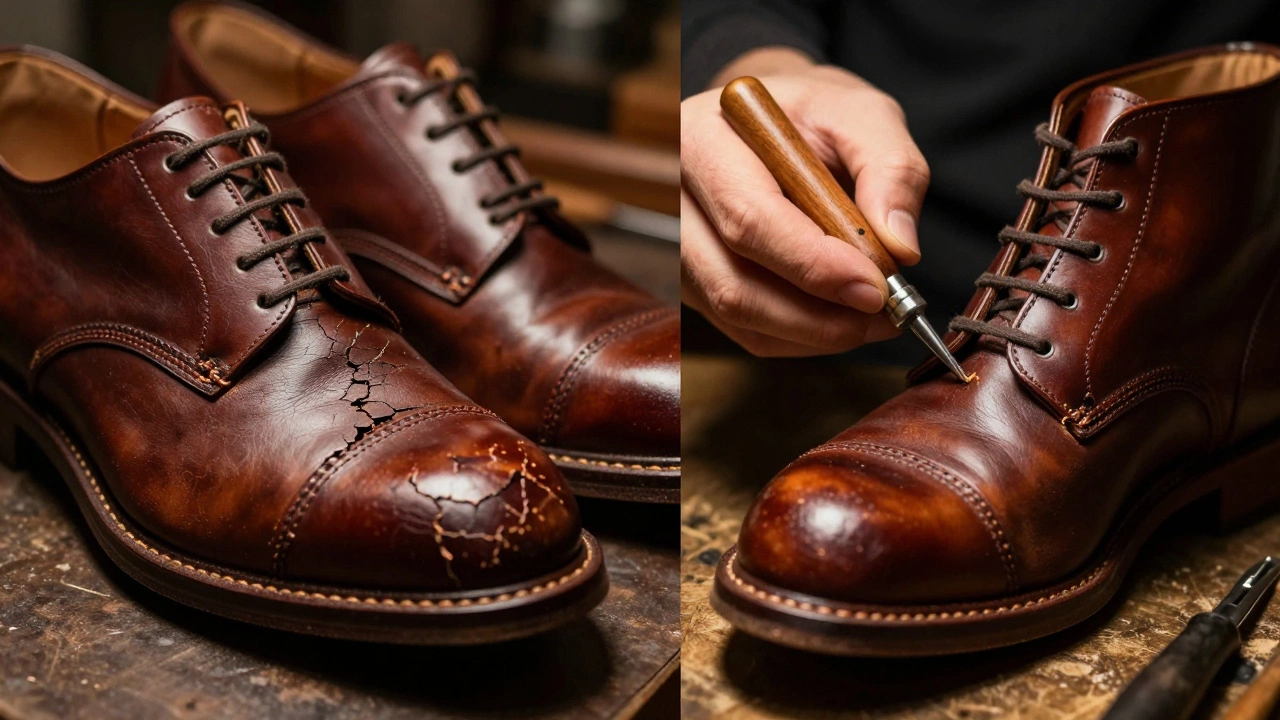
If you see deep, jagged cracks in the leather-especially across the creases where your toes bend-that is a structural failure. You can use a leather conditioner to prevent this, but once a crack goes all the way through the hide, you can't "heal" it. Water will seep in, and the leather will lose its ability to hold the shape of your foot. If the leather feels stiff and brittle even after conditioning, the fibers have broken down.
The Art of the Resole: Save or Toss?
Not every leather shoe needs to be thrown in the trash. This depends entirely on how the shoe was built. If you own Goodyear Welted shoes, which use a strip of leather (the welt) to stitch the upper to the sole, you can actually replace the bottom entirely. This is a sustainable way to keep high-end footwear for decades.
However, if your shoes are "cemented" (glued), they are disposable. Once the sole detaches or wears through on a glued shoe, the cost of repair usually exceeds the value of the shoe. Check the side of the sole; if you see stitching, it's likely a candidate for a cobbler. If it's a smooth transition of glue, it's time to shop for a new pair.
Listen to Your Body
Your feet are incredibly communicative. If you start feeling a dull ache in your arches that wasn't there before, or if you're getting new blisters in places where you never had them, the shoe's internal support has shifted. This often happens when the inner lining wears through, and your foot begins to slide more than it should. Friction is the enemy, and a worn-out lining is a friction machine.
Think about the "break-in" period. When you first got these shoes, did they feel supportive? Now, do they feel too "relaxed"? While we love the feeling of a broken-in shoe, there is a tipping point where "comfortable" becomes "unsupported." If you find yourself subconsciously gripping with your toes to stay stable, the shoe is no longer doing its job.
Practical Replacement Checklist
If you're still on the fence, run through this quick checklist. If you hit two or more "Yes" answers, it's time to retire the pair.
- Is there a visible hole in the sole or a gap in the leather?
- Do you feel the ground more than you used to (loss of cushioning)?
- Is the heel wear uneven (one side lower than the other)?
- Does the shoe twist easily when you hold the toe and heel?
- Are you experiencing new foot, knee, or back pain?
- Does the leather feel brittle or crack when you bend it?
How often should I replace leather shoes on average?
It depends on your usage. For a daily commuter walking 5,000+ steps, the midsole usually loses its effectiveness every 12 to 18 months. However, if you rotate your shoes and use cedar shoe trees, you can extend the life of the leather for several years, though the soles will still wear down based on your mileage.
Can a cobbler fix a crack in the leather?
A professional cobbler can fill and dye a crack to make it less visible, but they cannot restore the original structural integrity of the leather. If the crack is purely cosmetic, a repair is great. If the leather is splitting open while you walk, the shoe is unsafe and should be replaced.
Why does rotating shoes make them last longer?
Leather needs time to dry out from the moisture of your feet. If you wear the same pair every day, the leather stays damp, which weakens the fibers and accelerates stretching. Giving them 24 hours to rest allows the material to contract and the midsole to recover its shape.
What is the difference between a resole and a repair?
A repair is a localized fix, like patching a hole or replacing a heel cap. A resole is the complete removal of the bottom external layer and the installation of a brand new sole. Resoles are only possible on welted construction, not glued shoes.
Do I need to replace my shoes if they still look new but hurt my feet?
Yes. This is the most common mistake. The internal foam (the midsole) can collapse and lose its support while the outer leather remains pristine. If the support is gone, the shoe is effectively a shell and can cause long-term orthopedic issues.
Next Steps for Shoe Care
If you've decided your current pair still has a few months of life left, start a maintenance routine now to prevent a sudden failure. Use a horsehair brush to remove grit from the seams-grit acts like sandpaper on leather. Apply a quality cream conditioner every two months to keep the leather supple.
For those investing in a new pair, look for "resolable" options. Check the product descriptions for terms like "Stitchdown construction" or "Goodyear Welt." These are the shoes that move from the disposable category into the heirloom category. When you do finally toss your old pair, consider taking them to a textile recycling center rather than the landfill, as many components of modern footwear are incredibly difficult for the earth to break down.