The Great Uniform Desaturation Timeline
Explore how the color palette of school uniforms changed over the last century. Click on an era or use the slider to see the dominant colors, primary drivers, and material changes for each period.
Pre-1970s
Institutional Prestige & TraditionDominant Colors
Material Focus
Why It Changed
You walk into a high school hallway today, and what do you see? A sea of navy blue, charcoal gray, and stark white. It’s practical, sure. But it’s also incredibly boring compared to the vibrant tartans, bright blazers, and distinct crests that used to define student identity just a few decades ago. If you’re wondering when this shift happened, you aren’t imagining things. The death of color in school uniforms wasn’t an overnight accident; it was a slow, deliberate slide driven by economics, politics, and a fundamental change in how we view education.
The timeline isn't as clear-cut as "1980: Color died." Instead, think of it as a gradual desaturation that accelerated sharply between the late 1970s and the mid-1990s. To understand why your kid’s blazer is now the color of a rainy Tuesday in November, we have to look at what uniforms actually were before they became corporate beige.
The Era of Distinctive Identity (Pre-1970s)
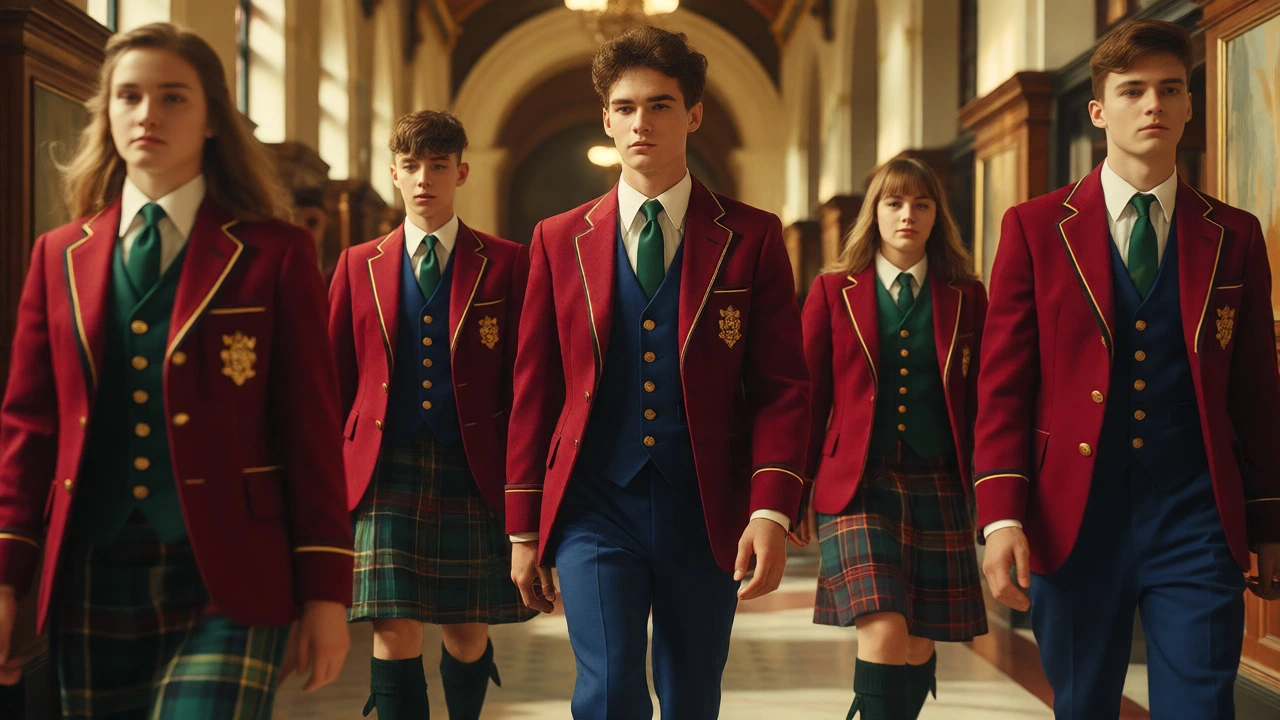
Before the global spread of fast fashion and budget cuts, school uniforms were often expensive custom orders for local tailors. Because schools competed for prestige, their uniforms were designed to stand out. In the UK, which heavily influenced North American private school traditions, a school’s identity was tied to its specific shade of blue, red, or green. These weren't generic hues; they were proprietary colors mixed specifically for the institution.
This period saw the dominance of the blazer with heavy embroidery and distinctive piping. The goal was visibility and pride. If you wore a maroon blazer from St. Joseph’s, everyone knew exactly where you went to school. The color was a badge of belonging. This visual diversity extended beyond just the jacket. Ties were striped with school colors, socks had specific patterns, and even the buttons on the trousers might be brass or gold-plated rather than plastic. The uniform was a piece of clothing meant to last years, so investing in quality fabric and distinct design made financial sense for families who could afford it.
The Economic Crash and the Rise of Mass Production (1970s-1980s)
The first major blow to colorful uniforms came from the oil crises of the 1970s. Suddenly, manufacturing costs skyrocketed. Schools, particularly public ones beginning to experiment with mandatory dress codes, needed cheaper solutions. They stopped ordering from bespoke tailors and started buying from large-scale suppliers who produced standard items in bulk.
Here is where the color palette began to shrink. When you produce millions of shirts, you don't want ten different shades of blue. You want one shade that matches every time. Navy blue became the default because it hid dirt well, didn't fade obviously under sunlight, and matched almost anything else in a wardrobe. Gray followed close behind for similar reasons. Brighter colors like red or yellow showed stains easily and faded quickly, making them poor choices for mass-produced, low-budget garments.
By the 1980s, the "uniform" was no longer a custom garment but a commodity. Suppliers offered catalogs with limited options. Schools, facing budget constraints, chose the cheapest available option. Since navy and gray were the most common stock items, they became the path of least resistance. The distinctive crest remained, but the canvas underneath it turned dull.
The Political Shift: Standards Over Style (1990s)
If economics built the stage, politics wrote the script for the final act. In the early 1990s, there was a massive push in the US and UK to reintroduce strict dress codes and uniforms in public schools. This wasn't about tradition; it was about behavior management and reducing gang-related clothing conflicts.
Policymakers argued that uniforms would eliminate visible markers of socioeconomic status. If everyone wears the same thing, no one can tell who has the latest designer jeans. But here is the irony: to make uniforms truly inclusive and affordable for all families, they had to be stripped of any element that could be seen as "luxury" or "distinctive." Custom colors cost more. Complex patterns cost more. So, the government-backed mandates favored simple, cheap, standardized items.
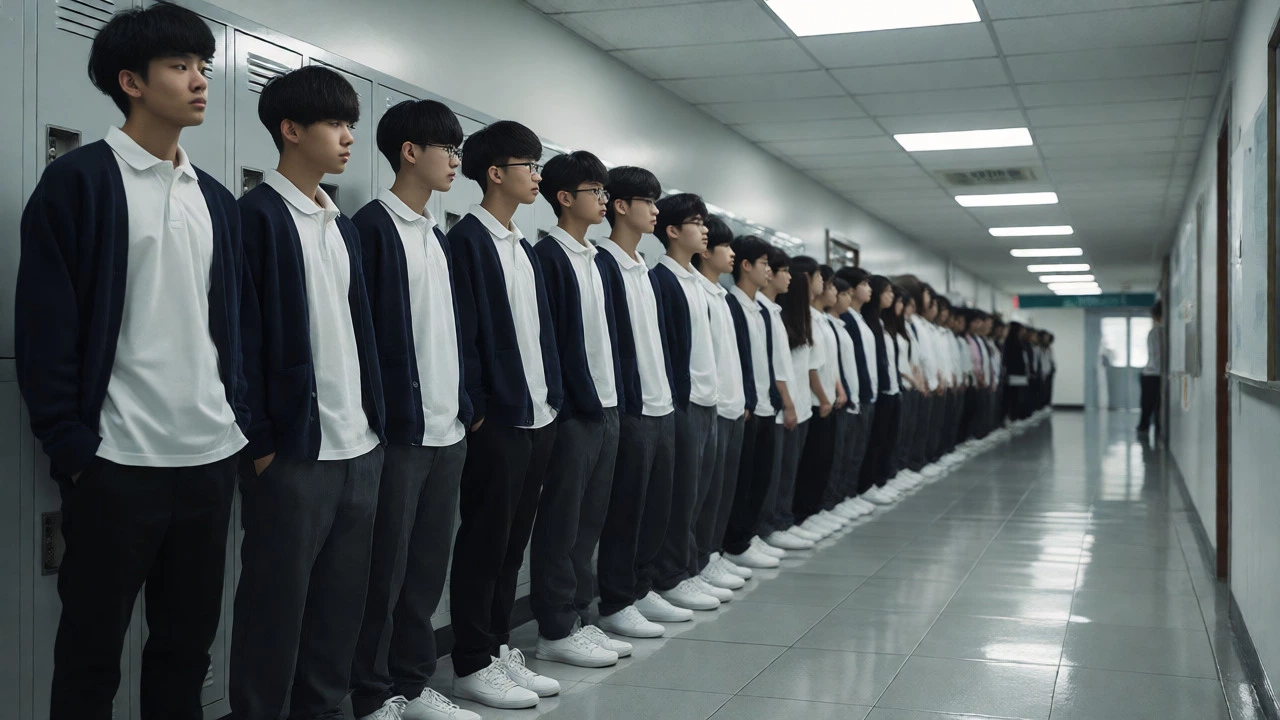
Charcoal gray and black pants replaced varied trouser colors. White polo shirts replaced colored button-downs because white cotton was cheap and easy to bleach clean if stained. The result was a uniform aesthetic that prioritized low maintenance and low cost over individual expression. The vibrancy was drained not just by fashion trends, but by legislative intent to simplify and standardize.
The Fast Fashion Effect (2000s-Present)
As we moved into the 2000s, the rise of fast fashion further cemented the drabness. Retailers like Walmart and Target began selling "uniform packs"-three polos for $10. These packs came in basic neutrals: black, navy, gray, and white. Parents buying for back-to-school season gravitated toward these deals because they were undeniably convenient.
Schools adapted to this reality. Many updated their policies to allow "any navy top" or "any gray bottom," effectively outsourcing the color choice to the consumer. This flexibility sounds good on paper, but it led to a homogenization of style. Students didn't buy unique items; they bought the easiest-to-find items. And the easiest-to-find items were always neutral.
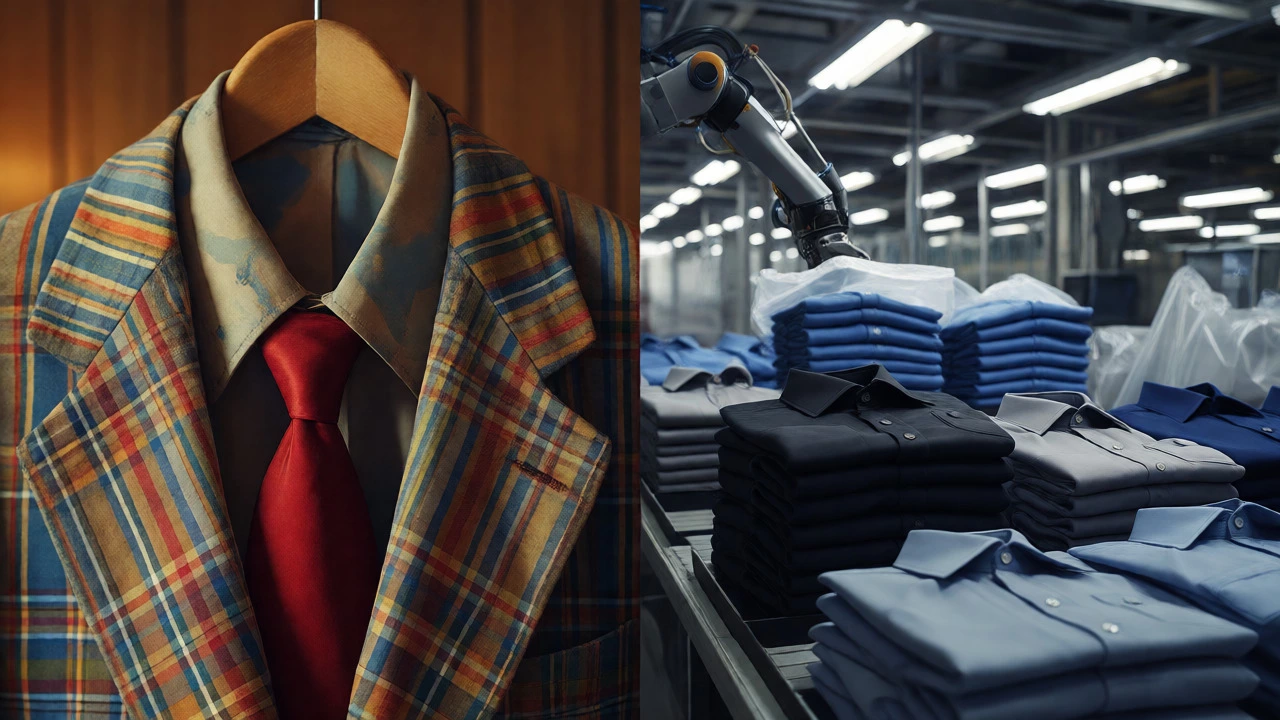
Furthermore, the cultural perception of "professionalism" shifted. In the workplace, suits became less colorful too, moving toward conservative grays and blues. Schools mirrored this trend, wanting students to look "ready for work." A bright red tie might feel playful, but a dark blue one feels serious. As schools positioned themselves as training grounds for the workforce, their wardrobes aligned with corporate office wear, which is notoriously monochromatic.
Why Navy Blue Won the War
It’s worth asking: why did navy blue win so decisively? It’s not just about being boring. It’s about utility. Navy blue is forgiving. It hides ink stains, grass stains, and lunch spills better than light blue or pastels. It doesn’t show sweat marks as prominently as gray. And psychologically, it’s associated with trust and authority, which appeals to administrators.
Gray is the runner-up for similar reasons. It’s neutral, it doesn’t clash with skin tones, and it looks professional. Black is popular for bottoms because it goes with everything, though it shows lint and dust more than other colors. Together, these three colors dominate over 80% of modern school uniform sales.
| Era | Dominant Colors | Primary Driver | Material Focus |
|---|---|---|---|
| Pre-1970s | Custom Blues, Reds, Greens, Tartans | Institutional Prestige & Tradition | Wool, Heavy Cotton, Silk Blends |
| 1970s-1980s | Navy, Dark Gray, Maroon | Manufacturing Cost Reduction | Polyester-Cotton Blends |
| 1990s | Standard Navy, Charcoal, White | Policy Standardization & Inclusivity | Mass-Produced Synthetics |
| 2000s-Present | Navy, Black, Gray, White | Fast Fashion Convenience & Corporate Mimicry | Performance Fabrics, Cheap Cotton |
The Counter-Movement: Is Color Coming Back?
Interestingly, we are seeing a small backlash against the sea of gray. Some progressive schools are experimenting with "gender-neutral" uniforms that use softer palettes like sage green, burgundy, or deep teal. These colors are chosen to avoid traditional gender coding (blue for boys, pink for girls) while still offering something more visually interesting than charcoal.
Additionally, private schools that market themselves on exclusivity are bringing back richer colors. If a school charges $30,000 a year, they don’t want their students looking like they shop at discount stores. They commission custom fabrics again, using deeper, more sophisticated hues like forest green or royal purple. But this is a niche trend. For the vast majority of public and semi-private institutions, the economic logic of navy and gray remains unchallenged.
So, when did uniforms stop being colorful? Technically, they started fading in the 1970s due to inflation, but they lost their soul in the 1990s when policy makers decided that uniformity was more important than identity. Today’s drabness is a feature, not a bug-it’s the price we pay for affordability and administrative simplicity.
Why are most school uniforms navy blue?
Navy blue dominates because it is cost-effective to produce in bulk, hides stains and wear better than lighter colors, and aligns with traditional notions of professionalism and authority. It also reduces the need for multiple matching pieces, simplifying shopping for parents.
Did school uniforms ever have bright colors?
Yes, prior to the 1970s, many schools used distinct, brighter colors like reds, greens, and yellows to establish institutional identity. These were often custom-made items that served as a visual marker of prestige and belonging within the community.
How did fast fashion impact uniform colors?
Fast fashion retailers standardized uniform offerings into cheap, multi-packs of neutral colors like black, gray, and navy. This convenience encouraged parents to buy pre-packaged sets rather than seeking out specific school colors, leading to a homogenization of uniform aesthetics.
Are schools bringing color back into uniforms?
Some private and progressive schools are reintroducing richer colors like burgundy, forest green, and teal to differentiate themselves and offer gender-neutral options. However, this is limited to institutions with higher budgets that can afford custom manufacturing.
What role did politics play in uniform desaturation?
In the 1990s, political pushes for dress codes aimed to reduce socioeconomic disparities and gang influence. To ensure affordability and inclusivity, policies favored simple, inexpensive, standardized items, which naturally leaned toward neutral, mass-produced colors like gray and navy.