Ever bought a dress thinking it was a sundress-only to realize it doesn’t quite fit the vibe? You’re not alone. The term sundress gets thrown around a lot, but what actually makes a dress a sundress? It’s not just about being light or colorful. There are specific features that separate a true sundress from any other summer dress.
It’s Not Just a Dress in Summer
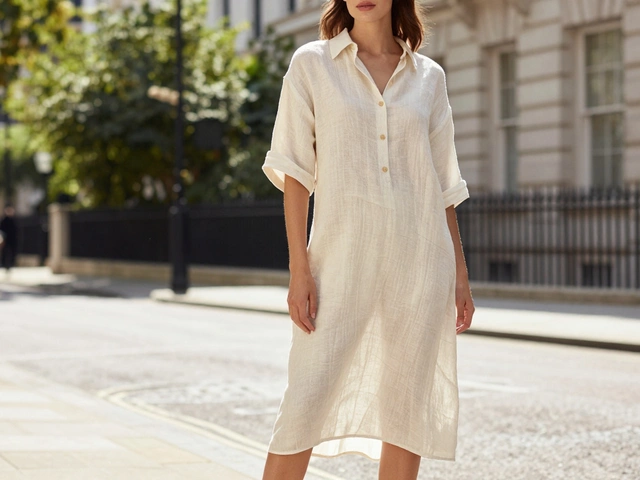
A sundress isn’t defined by the season you wear it in, but by how it’s built. Think of it as a dress designed for warmth, sun, and ease. It’s meant to be worn barefoot at the beach, paired with sandals at a farmers’ market, or layered over a swimsuit for a quick errand. The key is simplicity. No zippers, no boning, no lining unless it’s sheer. No buttons down the front unless they’re loose and decorative. If it feels like you’re wearing a costume, it’s not a sundress.Key Features of a True Sundress
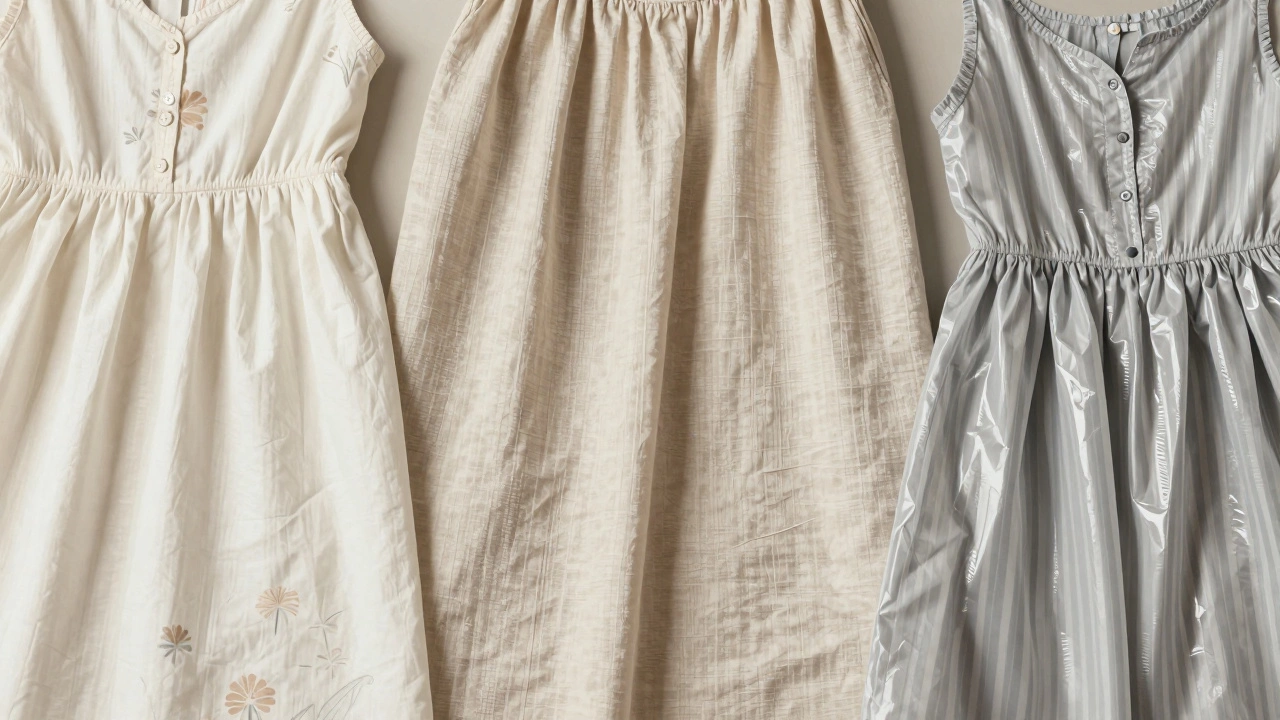
- Lightweight fabric: Cotton, linen, rayon, or chambray. These breathe. They don’t stick. They dry fast. If it’s polyester that looks shiny or feels plastic-y, it’s probably not a sundress-even if it’s labeled "summer style."
- Strap style: Thin straps, spaghetti straps, or wide shoulder straps are standard. Sleeveless is the norm. Some have adjustable ties, but never structured shoulder pads.
- Loose, flowing fit: It shouldn’t hug your body. A sundress drapes. It moves with you. Think A-line, shift, or empire waist-not bodycon or fit-and-flare.
- Short to mid-length: Most sundresses hit above the knee or at mid-thigh. Longer versions exist, but they’re usually made of even lighter materials and have open backs or slits to keep them from feeling heavy.
- Minimal detailing: No ruffles on the neckline, no lace trim unless it’s subtle. Prints are common-florals, stripes, or small polka dots-but never busy patterns that look like they’re trying too hard.
Compare this to a cocktail dress or a maxi dress. A cocktail dress might be sleeveless, but it’s structured, often lined, and made of heavier silk or satin. A maxi dress might be long and flowy, but if it’s made of thick cotton or has a hidden zipper, it’s not a sundress. The difference is in the intention: sundresses are made for comfort, not formality.
What Doesn’t Count as a Sundress
There are a lot of dresses that get mislabeled. Here’s what to watch out for:- Wrap dresses: Even if they’re light, wrap dresses have ties or buttons that fasten at the side or front. That adds structure. A true sundress slips on over the head or has no closure at all.
- Backless dresses: If it’s a backless dress with a structured bodice and built-in support, it’s a beach cover-up or evening dress-not a sundress.
- Smocked dresses: Smocking adds shape and tension. Sundresses avoid that. They’re meant to hang loosely, not cling or sculpt.
- Dresses with pockets: Not a dealbreaker, but if the pockets are bulky or the dress has too many functional details (like belt loops or side zippers), it’s drifting into casual dress territory, not sundress.
Here’s a real example: I bought a dress last summer labeled "sundress" on a popular online retailer. It was made of 100% cotton, had thin straps, and was knee-length. But it had a hidden zipper down the back and a stiff, lined bodice. I wore it once. It felt like wearing a shirt you had to unbutton. That’s not a sundress. That’s a dress pretending to be one.
History and Evolution
The sundress as we know it started taking shape in the 1940s and 50s. Women were moving away from structured, wartime clothing. Designers like Claire McCardell created simple, cotton dresses that could be worn without undergarments-something revolutionary at the time. By the 1970s, the bohemian look made loose, printed sundresses a staple. Today, the silhouette hasn’t changed much. The fabric has. Modern sundresses use recycled cotton, organic linen, and TENCEL™, which are more breathable and eco-friendly than older versions.What’s stayed the same? The idea that a sundress should feel like second skin. You shouldn’t have to think about it. You shouldn’t need a mirror to check if it’s straight. It’s meant to be worn without fuss.
How to Spot a Sundress in a Store
If you’re shopping and want to know fast whether something qualifies, ask yourself three questions:- Can I wear this without a bra? (If the answer is no, it’s probably lined or too structured.)
- Does it feel like it would dry in 20 minutes if I spilled lemonade on it?
- Would I feel comfortable wearing this to the park, the grocery store, and then to a friend’s BBQ-all in one day?
If you answer yes to all three, you’ve got a sundress. If you’re hesitating, it’s probably something else.
Common Misconceptions
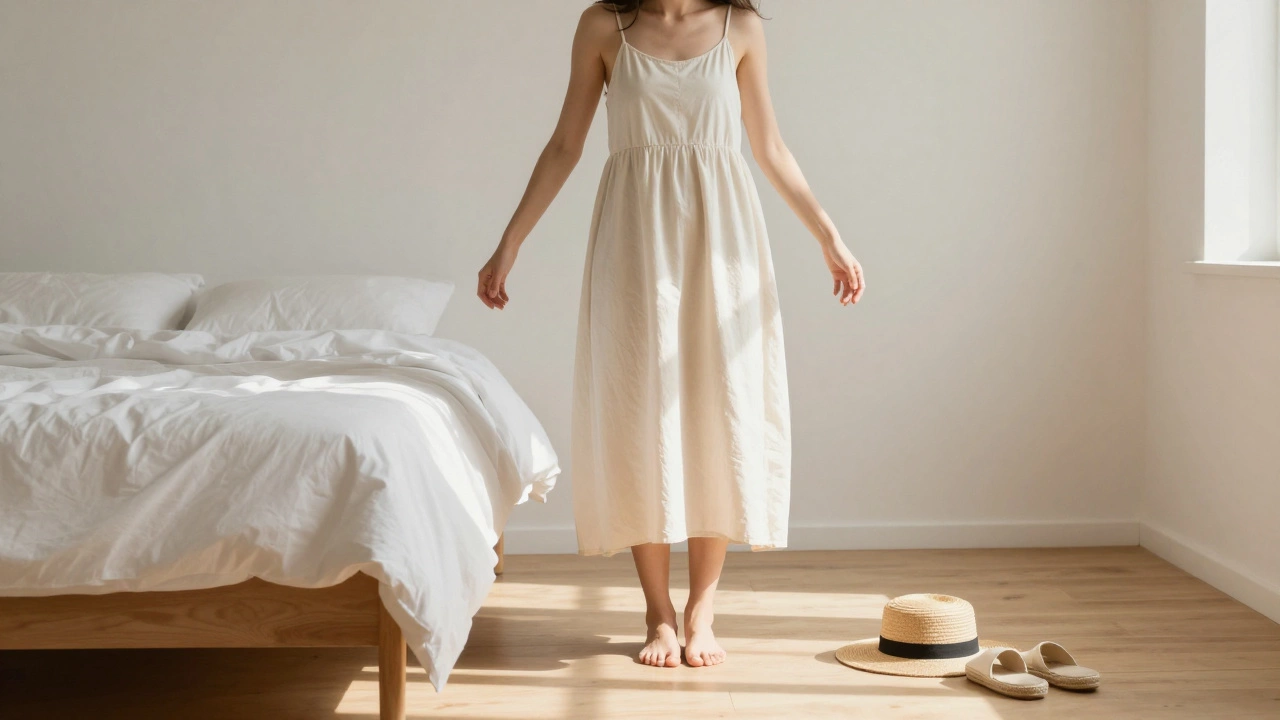
Some people think a sundress has to be floral. It doesn’t. Solid colors like cream, pale blue, or soft yellow are classic. Others think it has to be short. It doesn’t. A knee-length or even ankle-length sundress made of airy linen with thin straps still counts. What matters is the feel, not the length.Another myth: sundresses are only for skinny bodies. That’s false. The loose fit is what makes sundresses flattering for every shape. A shift sundress hides the midsection. An empire waist lifts the bust and flows over the hips. A tiered sundress adds movement without clinging. The design works because it doesn’t fight the body-it lets it breathe.
What to Pair With a Sundress
A sundress doesn’t need accessories. But if you want to add something, keep it simple:- Sandals or espadrilles
- A straw hat or woven tote
- Minimal gold jewelry-maybe a thin chain or small hoop
- Sunglasses, always
Never wear heels with a sundress. It defeats the purpose. Never wear a cardigan unless it’s sheer. Never tuck it in. The whole point is ease. The moment you start fussing with it, you’re no longer wearing a sundress-you’re wearing a dress you’re trying to make work.
Final Check: Is It a Sundress?
Here’s a quick mental checklist you can use anytime:- ✔️ Made of natural, breathable fabric
- ✔️ Sleeveless or thin straps
- ✔️ No zippers, buttons, or closures (or only decorative ones)
- ✔️ Loose, unstructured fit
- ✔️ No lining or padding
- ✔️ Designed to be worn barefoot or with sandals
- ✔️ Feels like nothing at all
If you check all seven, you’ve got a real sundress. If even one feels off, it’s just a summer dress. And that’s okay. But if you want the true sundress experience-light, lazy, effortless-you need to know the difference.
Can a sundress have sleeves?
Traditional sundresses are sleeveless, but lightweight cap sleeves or short flutter sleeves made of the same breathable fabric are still acceptable. Anything longer than three-quarter length or made of thicker material turns it into a casual dress, not a sundress.
Is a maxi dress a sundress?
Only if it’s made of lightweight fabric like linen or rayon, has thin straps, no lining, and no structure. Many maxi dresses have zippers, boning, or thick material, which disqualifies them. A long sundress should feel just as airy as a short one.
Do sundresses need to be printed?
No. Solid colors are classic. Pale blues, creams, soft pinks, and whites are just as common as florals. In fact, minimalist solid sundresses are often more versatile and easier to style.
Can you wear a sundress in the fall?
Absolutely. A sundress isn’t defined by the season-it’s defined by its design. Many people layer them with light cardigans or denim jackets in early fall. As long as the fabric is still breathable and the cut is loose, it works.
Are sundresses only for women?
Traditionally, yes-but that’s changing. More unisex and gender-neutral designs are appearing, especially in brands focused on minimalist, functional clothing. The core features-light fabric, loose fit, no structure-apply regardless of gender.