Not all t-shirts are created equal. You’ve probably felt the difference - one feels soft, lasts years, and still looks good after 50 washes. Another feels thin, pills after two washes, and fades to gray in the sun. The secret isn’t in the brand or the price tag. It’s in the material.
Why Fabric Matters More Than You Think
A t-shirt is one of the most worn items in your closet. You wear it to work, to the gym, to run errands, and sometimes just to sleep in. If it’s made from cheap fabric, it won’t just look bad - it’ll feel bad. It’ll itch, shrink, stretch out, or turn see-through. High-quality fabric doesn’t just last longer. It feels better, breathes better, and actually improves how you feel all day.
Back in the 1990s, most t-shirts were made from 100% cotton. Today, you’ll find blends with polyester, rayon, spandex, and even bamboo. But not all blends are good. Some are just cheaper ways to cut costs. The best t-shirts still rely on natural fibers - especially cotton - but the type and processing matter more than ever.
100% Combed Cotton: The Gold Standard
If you want the highest quality t-shirt material, start with 100% combed cotton. Here’s why:
- Combing removes short fibers and impurities, leaving only the longest, strongest strands.
- This results in a smoother, softer, and more durable fabric.
- It resists pilling and holds its shape better over time.
- It absorbs dye evenly, so colors stay vibrant longer.
Brands like Bella+Canvas, Gildan Ultra Cotton, and American Apparel use combed cotton in their premium lines. You can often tell by the weight - a good combed cotton t-shirt weighs between 4.5 and 6.5 ounces per square yard. Anything lighter than 4 ounces is usually thin and flimsy. Anything heavier than 7 ounces might feel stiff, unless it’s a heavyweight tee meant for layering.
Organic Cotton: Better for You and the Planet
Organic cotton is grown without synthetic pesticides or GMO seeds. It’s not just eco-friendly - it’s often softer and less likely to irritate sensitive skin. The Soil Association and GOTS (Global Organic Textile Standard) certify true organic cotton.
Many people assume organic cotton is weaker. That’s not true. In fact, because it’s not exposed to harsh chemicals during farming, the fibers remain longer and stronger. A 2023 study by the Textile Exchange found that organic cotton t-shirts retained 23% more tensile strength after 50 washes compared to conventional cotton.
Brands like Patagonia, Pact, and Everlane use organic cotton in their core t-shirts. They’re pricier - usually $30 to $50 - but they last longer and don’t shed microplastics or leave chemical residues on your skin.
Supima and Pima Cotton: The Luxury Tier
Supima and Pima cotton are extra-long staple (ELS) varieties. They come from a small portion of the world’s cotton crop - less than 1% - and are grown mostly in the U.S., Peru, and Australia.
- Supima is a trademarked U.S.-grown Pima cotton with fibers 35% longer than regular cotton.
- These longer fibers mean fewer ends sticking out - which means less pilling and a silkier feel.
- Supima t-shirts feel like they’re made from cashmere, but they’re breathable like cotton.
Brands like American Giant, Uniqlo’s U series, and Brooks Brothers use Supima cotton. You’ll pay $45 to $80 for one, but if you want a t-shirt that lasts 10 years and still looks new, this is it.
Blends: When They Help - and When They Hurt
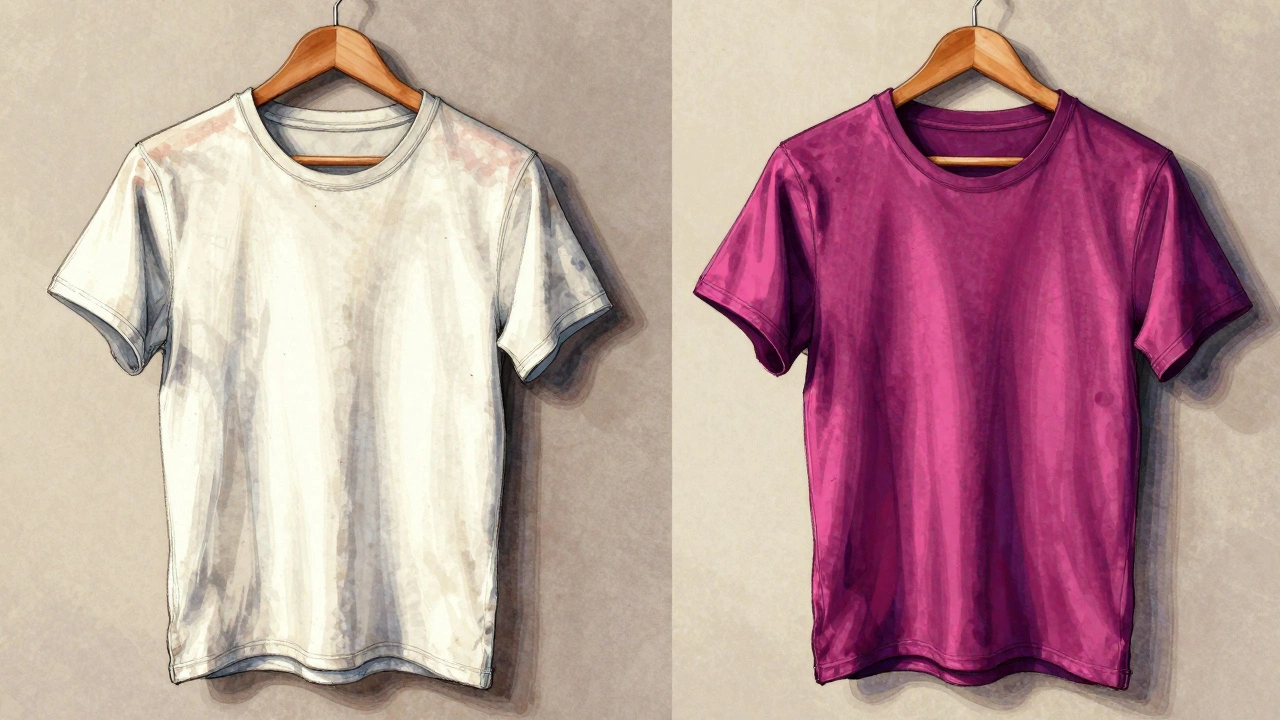
Not all blends are bad. But most cheap t-shirts use them to cut costs - not to improve performance.
Here’s what works:
- 95% cotton, 5% spandex - Adds just enough stretch for movement without losing shape. Great for fitted tees.
- 50% cotton, 50% polyester - Used in athletic wear. Wicks sweat better than pure cotton, but doesn’t feel as soft. Good for workouts, bad for everyday wear.
- 60% cotton, 40% polyester - Common in budget brands. Feels stiff, holds odor, and fades quickly.
Avoid anything over 50% polyester. Polyester doesn’t breathe. It traps sweat and smells. Even a 20% blend can make a t-shirt feel plasticky after a few washes.
What About Bamboo, Modal, or Tencel?
These are semi-synthetic fibers made from wood pulp. They’re often marketed as “eco-friendly” or “silky soft.”
Bamboo rayon? Most of it is processed with toxic chemicals. Unless it’s certified as lyocell (closed-loop process), it’s not as green as it sounds.
Modal and Tencel (a brand of lyocell) are better. They’re soft, breathable, and drape well. Tencel, in particular, is made from sustainably harvested eucalyptus trees using a non-toxic solvent. It’s more expensive than cotton but feels luxurious.
Brands like Lululemon and Eileen Fisher use Tencel blends in premium t-shirts. They’re great for warm climates and people who hate the cling of synthetic fabrics.
Weight, Weave, and Finish Matter Too
Even the best cotton can feel cheap if the weave is poor or the finish is rough.
- Ring-spun cotton - Cotton fibers are twisted and spun into fine, strong yarn. Smoother than open-end cotton.
- Single jersey knit - The most common weave. Soft, stretchy, and breathable.
- Double-knit - Thicker, less stretchy. Used for structured tees or athletic wear.
- Garment-dyed - The finished shirt is dyed, not the fabric. Gives a softer, worn-in look from day one.
Look for “ring-spun combed cotton” on the label. That’s the sweet spot for quality. Avoid “open-end cotton” - it’s coarse and rough.
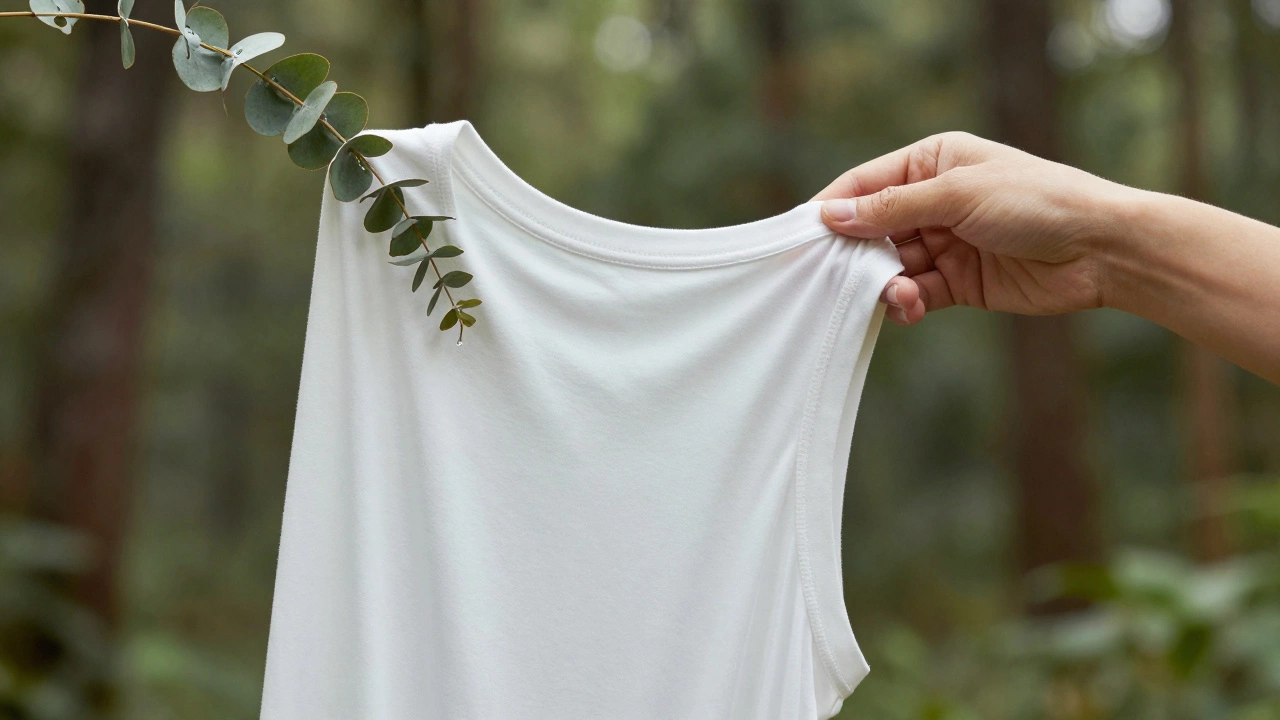
How to Spot a High-Quality T-Shirt
Here’s how to test a t-shirt before you buy:
- Stretch the fabric gently. If it snaps back quickly, it’s well-made. If it sags or stays stretched, it’s low quality.
- Hold it up to the light. If you can see through it easily, it’s too thin.
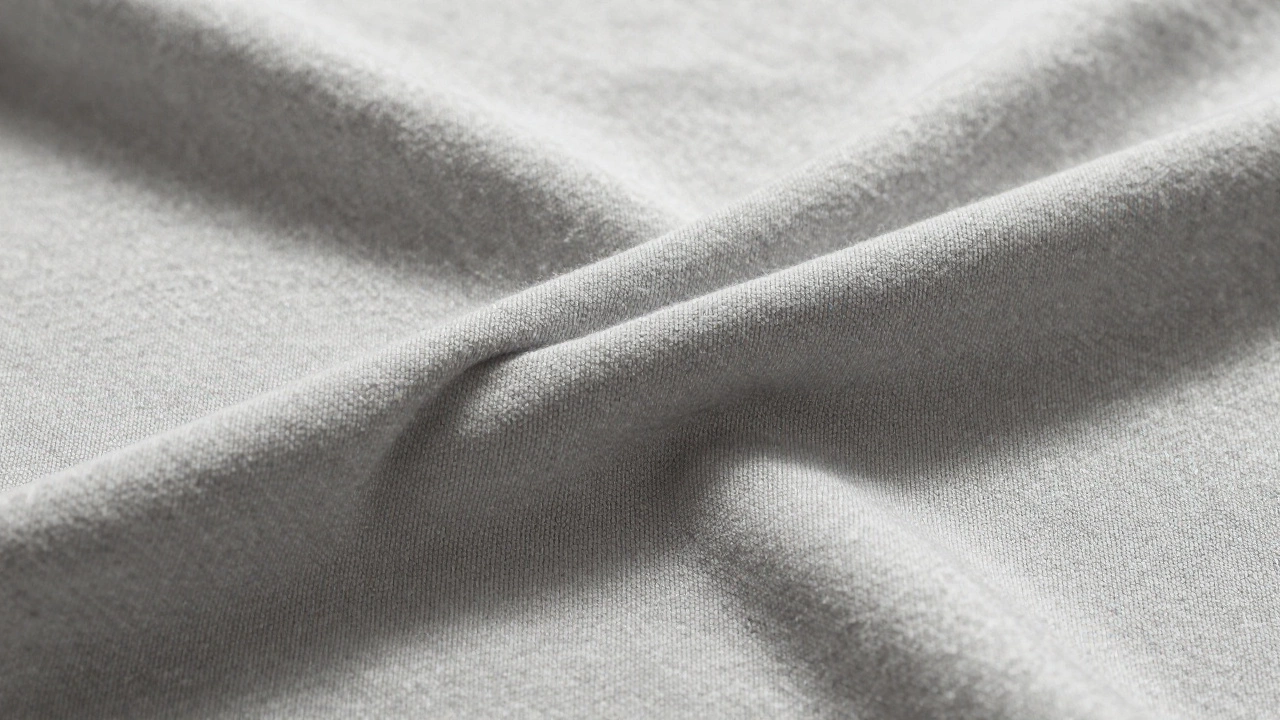
- Rub the fabric between your fingers. If it feels smooth and dense, it’s good. If it feels fuzzy or thin, skip it.
- Check the seams. Double-stitched hems and reinforced necklines mean the brand expects it to last.
- Smell it. If it has a chemical odor, it’s been treated with harsh dyes or finishes.
What About Price?
You get what you pay for - but not always.
A $5 t-shirt from a fast-fashion brand? It’s made from low-grade cotton or polyester blends. It’ll fall apart in a year.
A $20 t-shirt from a mid-tier brand? Could be decent if it’s 100% combed cotton.
A $40+ t-shirt? Likely Supima, organic, or Tencel. It’ll last 5-10 years if cared for properly.
Think of it like shoes. You wouldn’t buy $20 running shoes and expect them to last 5 years. Same with t-shirts.
The Bottom Line
The highest quality material for t-shirts is 100% combed cotton - especially if it’s ring-spun, organic, or Supima. For extra softness and sustainability, Tencel blends are a strong second choice.
Avoid polyester-heavy blends. They trap sweat, hold odors, and degrade faster. Don’t be fooled by buzzwords like “luxury cotton” or “ultra-soft” - check the label. If it doesn’t say 100% cotton or list the fiber type clearly, it’s probably not worth it.
Invest in one or two high-quality tees. Wear them until they’re threadbare. Then buy another. You’ll save money, reduce waste, and feel better every day.
Is 100% cotton always the best choice for t-shirts?
Not always. Pure cotton is excellent for everyday wear, breathability, and comfort. But if you sweat a lot during workouts, a blend with 5-10% spandex or polyester can help with moisture-wicking and stretch. For casual use, though, 100% cotton - especially combed or Supima - is still the top choice.
What’s the difference between Supima and regular cotton?
Supima cotton has fibers that are 35% longer than regular cotton. Longer fibers mean fewer loose ends, which reduces pilling and creates a smoother, silkier texture. Supima is also grown under strict standards in the U.S., making it more consistent in quality. Regular cotton can be coarse and break down faster after washing.
Are organic cotton t-shirts worth the extra cost?
Yes, if you care about your skin and the environment. Organic cotton is grown without synthetic pesticides, which reduces chemical runoff and keeps your skin free from irritants. It’s also more durable - studies show it retains strength better after repeated washing. The price difference is usually $5-$15 more per shirt, but it lasts longer, so the cost per wear is lower.
Why do some t-shirts shrink after washing?
Most shrinkage happens with non-pre-shrunk cotton. High-quality brands pre-wash and dry their fabric before sewing, which removes most of the shrinkage. Cheaper brands skip this step to save money. Always check if the label says “pre-shrunk.” Wash in cold water and air dry to prevent any further shrinkage.
Can you tell the quality of a t-shirt just by how it feels?
Yes. A high-quality t-shirt feels dense and smooth, not thin or flimsy. It should have a slight weight to it - not heavy, but substantial. Cheap tees feel like tissue paper. Good ones feel like they’re made to last. If it feels soft but doesn’t have much body, it’s probably low-grade cotton or a blend with polyester.
When you find a t-shirt that feels right - soft, durable, and true to size - hold onto it. You won’t need to replace it often. And in a world full of fast fashion, that’s the real luxury.