Summer Dress Selector
When the sun stays out longer and the air gets warmer, everyone starts thinking about what to wear. And one of the most common questions people ask is: summer dresses - what are they actually called? It’s not just one thing. There’s no single name for every dress you throw on when it’s hot outside. Instead, there are several styles, each with its own look, feel, and purpose. Knowing the difference helps you shop smarter, wear better, and avoid buying something that doesn’t suit your body or the occasion.
Sundress: The Classic Go-To
The most common name you’ll hear is sundress. It’s simple, light, and made for days when you want to feel like you’re walking through a field of wildflowers. Sundresses are usually sleeveless or have thin straps, made from cotton, linen, or rayon. They’re loose-fitting, often with a V-neck or square neckline, and fall anywhere from mid-thigh to just above the ankle. You’ll see them in florals, stripes, or solid pastels. They’re not meant to be formal - think farmers markets, backyard BBQs, or lazy beach afternoons.
What makes a sundress a sundress? It’s not just the fabric. It’s the vibe. No zippers, no buttons, no structure. You pull it over your head and go. Brands like Free People, Anthropologie, and even Target have whole sections dedicated to them every spring. They’re the dress you buy because you don’t want to think about what to wear.
Maxi Dress: Long, Flowy, and Effortless
If you want something longer, you’re probably looking at a maxi dress. These hit the floor or just above your ankles. They’re often made from lightweight materials too - think chiffon, voile, or thin cotton blends. Maxi dresses can be casual or dressy, depending on the cut and details. A simple cotton maxi with spaghetti straps works for grocery runs. Add a belt, a lace trim, or a halter neckline, and it’s ready for dinner outdoors or a sunset walk.
One big advantage of maxi dresses? They’re forgiving. They hide legs you’re not sure about, cover shoulders if you’re sun-sensitive, and don’t require much styling. Pair them with sandals, flip-flops, or even sneakers. They’re popular in places like Florida, California, and Toronto when the weather finally breaks in June.
Shift Dress: Simple, Structured, and Timeless
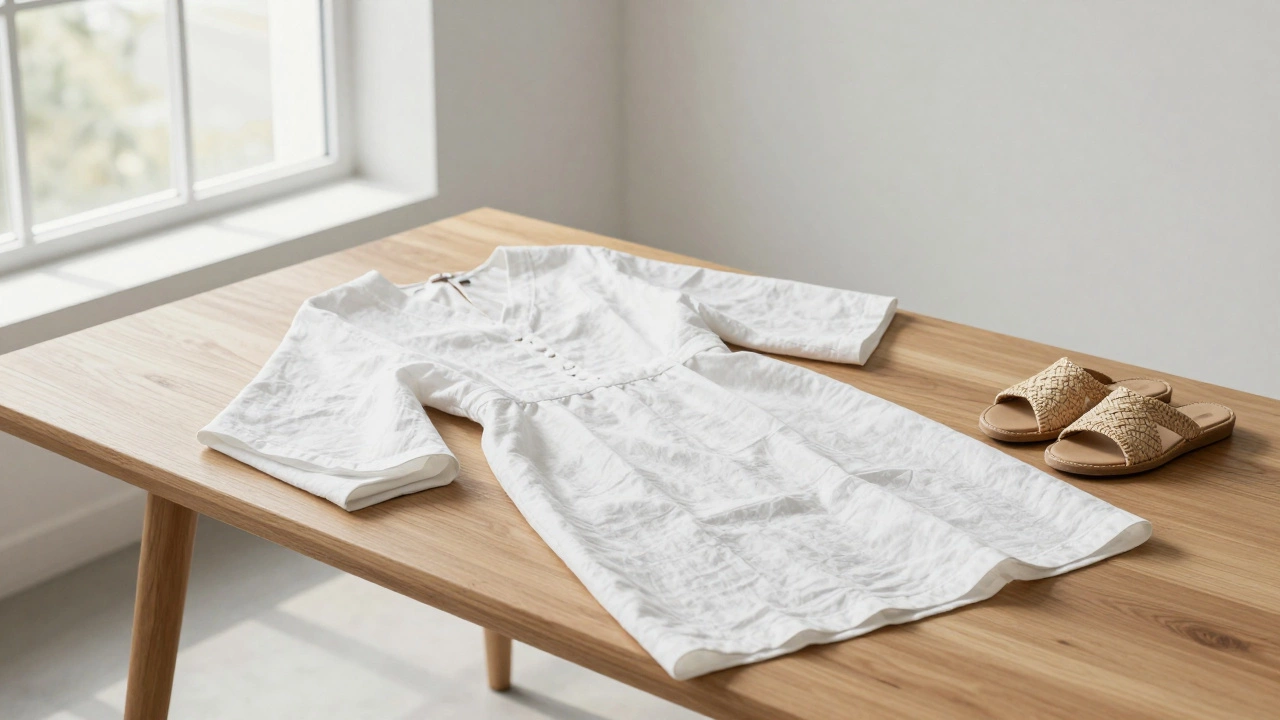
Not all summer dresses are flowy. Enter the shift dress. It’s straight-cut, usually hits around the knee, and doesn’t cling to your body. It’s boxy, yes - but that’s the point. It’s designed to let air flow and keep you cool. Shift dresses often have short sleeves or cap sleeves, and they’re made from sturdier fabrics like cotton poplin or linen blends. You’ll see them in solid colors - navy, white, olive, blush - and sometimes with small prints.
Unlike sundresses, shift dresses can work in more polished settings. Wear one to a casual office, a lunch meeting, or a gallery opening. They’re the dress you put on when you want to look put-together without trying too hard. Brands like C&A, Madewell, and COS have perfected this style. It’s not flashy, but it’s reliable.

Wrap Dress: Flattering and Versatile
The wrap dress might not be the first thing you think of for summer, but it’s one of the most popular for a reason. It wraps around your body and ties at the side or back, creating a V-neckline that flatters most body types. The fabric is usually lightweight - silk, rayon, or cotton - and it moves with you. The tie at the waist cinches in just enough to define your shape without squeezing.
Wrap dresses are great because they’re adjustable. If you’ve had a big meal, you loosen the tie. If you’re heading somewhere dressier, you tighten it. They’re also easy to pack - fold them up, and they don’t wrinkle much. Diane von Furstenberg made them famous in the 70s, and they’ve never really left. You’ll still see them in stores today, especially in neutral tones and bold prints.
Beach Dress: The Cover-Up That Does More
Then there’s the beach dress. It’s not always called that, but if you’ve ever bought a dress just to throw over your swimsuit, you know what it is. These are often sheer, loose, and long. Think kaftans, kimono-style tops with open sides, or dresses with slits. They’re made from materials like lace, mesh, or lightweight knit. They’re not meant to be worn alone - they’re cover-ups. But they’re also stylish enough to wear with sandals and a hat for a quick coffee run after the beach.
Beach dresses blur the line between swimwear and regular clothing. You’ll find them in resort towns, on Instagram influencers, and in the swimwear section of stores like H&M and Zara. They’re not for every occasion, but when you need something breezy and modest at the same time, they’re perfect.
Other Names You Might Hear
There are a few other terms you’ll come across. A tea dress is usually a bit more fitted, with a nipped waist and a flared skirt - often seen in vintage styles. It’s not super common in summer unless it’s made from light fabric. A pinafore dress is a sleeveless dress worn over a top, often in denim or cotton. It’s cute, casual, and works well for teens and young adults.
And then there’s the shirt dress - basically a long shirt with buttons down the front, sometimes with a belt. It’s practical, easy to layer, and great for transitional weather. You can wear it open as a jacket or buttoned up as a dress. It’s a favorite among people who want one piece that works for multiple situations.
What to Look for When Buying
Not all summer dresses are created equal. Here’s what actually matters when you’re shopping:
- Fabric: Stick to natural fibers - cotton, linen, rayon, silk. They breathe. Avoid polyester unless it’s labeled as "moisture-wicking."
- Fit: Don’t buy something too tight. Summer heat makes clingy fabrics uncomfortable and sweaty.
- Length: Mid-thigh to ankle is safest. Too short, and you’re constantly adjusting. Too long, and you’re tripping on grass or sand.
- Neckline: V-necks and square necks are best for airflow. High necks trap heat.
- Washability: Can you throw it in the machine? If not, you’ll hate it after two wears.
Also, check the seams. Cheap dresses often have loose stitching or raw edges that fray after one wash. Look for double-stitched hems and clean finishes. You don’t need to spend a lot, but you should avoid anything that feels like it’s falling apart.
What Not to Call Them
Don’t call every summer dress a “sundress.” That’s like calling every car a “sedan.” A maxi dress isn’t a sundress. A wrap dress isn’t a beach dress. Each has its own purpose. Using the right term helps you communicate better - whether you’re asking a friend for advice, searching online, or shopping in-store.
And don’t fall for marketing terms like “holiday dress” or “vacation dress.” Those are just fancy ways of saying “summer dress.” Stick to the real names. They’re more accurate and easier to search.
Final Thought: It’s About How You Feel
At the end of the day, the name doesn’t matter as much as how the dress makes you feel. If you’re comfortable, cool, and confident, you’ve got the right one. But knowing the difference between a sundress and a wrap dress helps you find it faster. You won’t waste time scrolling through 50 options that don’t fit your style or body. You’ll know exactly what to look for.
Summer dresses aren’t just clothing. They’re a way to move through the season with ease. Whether you’re chasing shade under a tree or dancing barefoot on a patio, the right dress makes it better.
Are sundresses and summer dresses the same thing?
Not exactly. A sundress is one type of summer dress - the most common one. But not all summer dresses are sundresses. Maxi dresses, wrap dresses, shift dresses, and beach dresses are also summer dresses. Sundresses are typically sleeveless, short to mid-length, and very casual. Other styles can be longer, more structured, or designed for different occasions.
What’s the best fabric for summer dresses?
Cotton and linen are the top choices. They’re breathable, absorb moisture, and dry quickly. Rayon and silk are also good for a flowy feel, but they need more care. Avoid polyester unless it’s labeled as moisture-wicking - regular polyester traps heat and sweat. Natural fibers keep you cooler and feel better against your skin.
Can you wear a maxi dress to work in summer?
Yes, if it’s styled right. A solid-color maxi dress in cotton or linen with a belt and simple sandals works in casual offices. Avoid overly sheer fabrics, loud prints, or beachy details. Add a light blazer or cardigan if your workplace is air-conditioned. The key is simplicity and polish.
Why do some summer dresses have ties?
Ties - like on wrap dresses - let you adjust the fit. They’re flattering because they cinch the waist naturally, which works for most body shapes. Ties also make the dress more versatile: you can loosen it for comfort or tighten it for a more defined look. Plus, they’re easy to pack and don’t need zippers or buttons.
Do I need more than one summer dress?
You don’t *need* more than one, but having two or three makes life easier. One for casual days (like a sundress), one for outings (like a wrap dress), and maybe one for slightly dressier moments (like a shift dress). Rotating them keeps your wardrobe fresh and reduces wear on any single piece. Plus, different occasions call for different vibes.