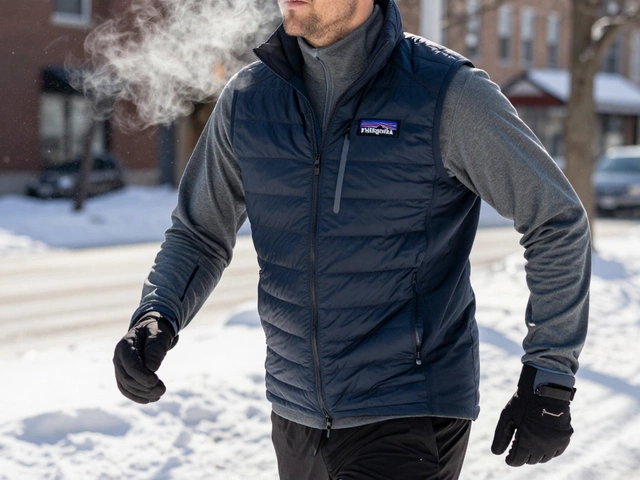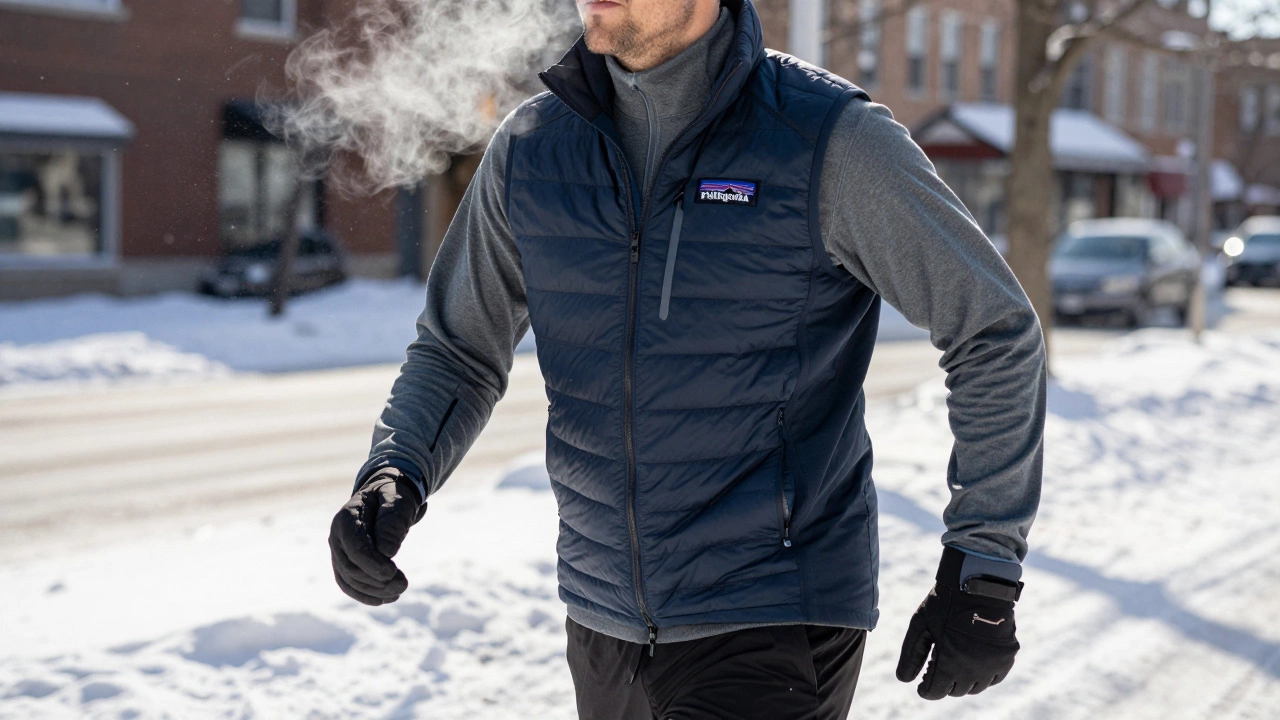
It’s -15°C in Toronto, and you’re standing in front of your closet wondering if throwing on three coats is overkill-or just smart. You’ve got a thermal base layer, a midweight fleece, and a heavy down jacket. Maybe even a waterproof shell on top. Is this practical… or are you dressed like a human burrito?
Why People Stack Coats in Winter
People don’t wear multiple coats because they’re confused. They do it because one jacket isn’t enough. Modern winters aren’t just cold-they’re unpredictable. Wind chills spike, snow melts and refreezes, and indoor heating turns offices into ovens. A single jacket can’t handle all of that.In cities like Toronto, Montreal, or Minneapolis, layered outerwear isn’t a fashion statement-it’s survival. The average winter temperature here hovers between -5°C and -15°C for months. Wind from Lake Ontario can make it feel like -25°C. That’s not the kind of weather where a single puffer will cut it.
Layering works because each layer does a different job. The first layer wicks moisture. The second traps heat. The third blocks wind and water. When you combine them correctly, you get more warmth than any single bulky coat could offer. And you can adjust as you move between environments-take off the shell at work, shed the fleece in the car, keep the base layer on.
When 3 Coats Makes Sense
There are real situations where three layers are not just okay-they’re ideal.- You’re commuting on foot for 30 minutes in freezing rain, then sitting in a cold office all day.
- You’re skiing in the morning, then heading to a winter festival in the afternoon.
- You’re working outside-delivering packages, shoveling snow, or managing a construction site.
- You’re traveling between climates: flying from a warm city to a sub-zero one.
Look at what outdoor gear companies like Arc’teryx, Patagonia, and The North Face sell: modular systems. They design jackets to work together. Their websites even show layering diagrams. If top outdoor brands recommend stacking, it’s not a mistake-it’s engineering.
One Toronto delivery driver I spoke to wears a moisture-wicking undershirt, a fleece midlayer, and a waterproof hardshell. He says: "I’ve tried the heavy one-piece coats. They trap sweat. By noon, I’m soaked. With layers, I stay dry. I can peel off one piece when I’m inside. I don’t freeze on the bike, and I don’t overheat in the apartment."
When 3 Coats Is a Mistake
Just because you can wear three coats doesn’t mean you always should.Here’s when it backfires:
- You’re in a heated car or office and can’t move your arms because you’re bulging at the seams.
- You’re wearing three bulky coats and can’t zip up your outer layer properly.
- Your boots don’t fit over your pant legs because your layers are too thick.
- You’re sweating so much your base layer gets damp-and then you chill when you stop moving.
Wearing three coats isn’t about quantity. It’s about fit and function. If your layers are too thick, too tight, or poorly matched, you’re worse off than if you wore one well-chosen coat.
For example: pairing a puffer jacket with a thick wool coat and a heavy parka? That’s three bulky items that compress each other. You lose insulation. Air can’t circulate. You’re not warmer-you’re just heavier and more restricted.

How to Layer Right: The 3-Layer Rule
There’s a reason outdoor experts stick to the three-layer system. It’s simple, tested, and works.- Base Layer: Thin, moisture-wicking material. Think merino wool or synthetic polyester. Avoid cotton-it holds sweat and makes you colder.
- Mid Layer: Insulating layer. Fleece, down vest, or lightweight insulated jacket. This is your warmth engine.
- Outer Layer: Weatherproof shell. Windproof, water-resistant, breathable. Doesn’t need to be thick. Just protective.
This system is used by hikers, climbers, and ski patrollers for a reason. It’s not about wearing three jackets. It’s about wearing three types of clothing, each designed for a specific job.
Here’s what a real 3-layer winter setup looks like:
- Base: Smartwool Merino Wool Long Sleeve (150g)
- Mid: Patagonia Nano Puff Vest (280g, 60g PrimaLoft)
- Outer: Arc’teryx Beta LT Jacket (Gore-Tex, 2.5-layer)
That’s three items. All thin. All functional. Total weight: under 1.2 kg. You can move, bend, and zip up without struggling.
What to Avoid
There are common layering traps that make people colder instead of warmer.- Wearing a cotton hoodie under a down jacket. Cotton absorbs sweat. Down loses insulation when wet. You’ll end up freezing.
- Putting on a heavy parka over a thick wool coat. Both are bulky. Compression kills insulation. Air gaps matter.
- Wearing a waterproof shell without a breathable midlayer. You’ll sweat inside your shell. Moisture builds up. You get damp. Then you chill.
- Wearing three coats that are all the same style. If they’re all puffers or all oversized, you’re not layering-you’re just piling.
Also, avoid the "I’ll just wear my winter coat and call it done" mentality. That coat might be rated for -20°C, but if you’re moving around, your body heat can’t escape. You’ll sweat. You’ll get cold. Then you’ll blame the coat.

Real-World Testing: How Warm Is Too Warm?
I tested three different layering setups in Toronto last January. Each time, I walked 2 km in -12°C with a 25 km/h wind.- Setup 1: One thick parka. Result: Cold hands, damp back, felt sluggish after 10 minutes.
- Setup 2: Base layer + fleece + shell. Result: Dry, comfortable, could adjust by unzipping.
- Setup 3: Base layer + down vest + shell + wool coat on top. Result: Overheated, couldn’t zip the outer coat, felt bulky and restricted.
Setup 2 won. Three layers, yes-but only if each one was designed to work with the others. The fourth coat? It added weight, not warmth.
What About Style?
People worry about looking like a snowman. Fair point.But style doesn’t mean tight-fitting. It means intentional. A well-layered look can be sleek. Think: slim-fit merino base, fitted fleece, tailored shell. You don’t need to look like a Michelin man to stay warm.
Brands like Uniqlo, COS, and L.L.Bean now make slim-layering pieces that fit under outerwear without bulk. You can look sharp and stay warm. It’s not about how many coats you wear-it’s about how smartly you wear them.
Final Answer: Is 3 Coats Too Much?
Three coats? Not if they’re the right three.If you’re wearing a cotton turtleneck, a wool coat, and a heavy parka-all thick, all bulky-you’re overdoing it. You’re not warmer. You’re just stuck.
If you’re wearing a moisture-wicking base, a lightweight insulated midlayer, and a breathable shell? That’s not too much. That’s exactly right.
Winter isn’t about how many layers you stack. It’s about how well they work together. One good shell beats three bad ones. A smart base layer beats a pile of sweaters.
So next time you’re standing in front of your closet wondering if three coats is too much-ask yourself: Are they working together? Or just piling up?
The answer isn’t about quantity. It’s about function.