Leather Shoe Quality Inspector
1 Material Test
Inspect the texture and grain of the leather.
Budget Signs
- Perfectly smooth/plastic look
- No wrinkles when pressed
- Smells like chemicals
Quality Signs
- Natural imperfections/texture
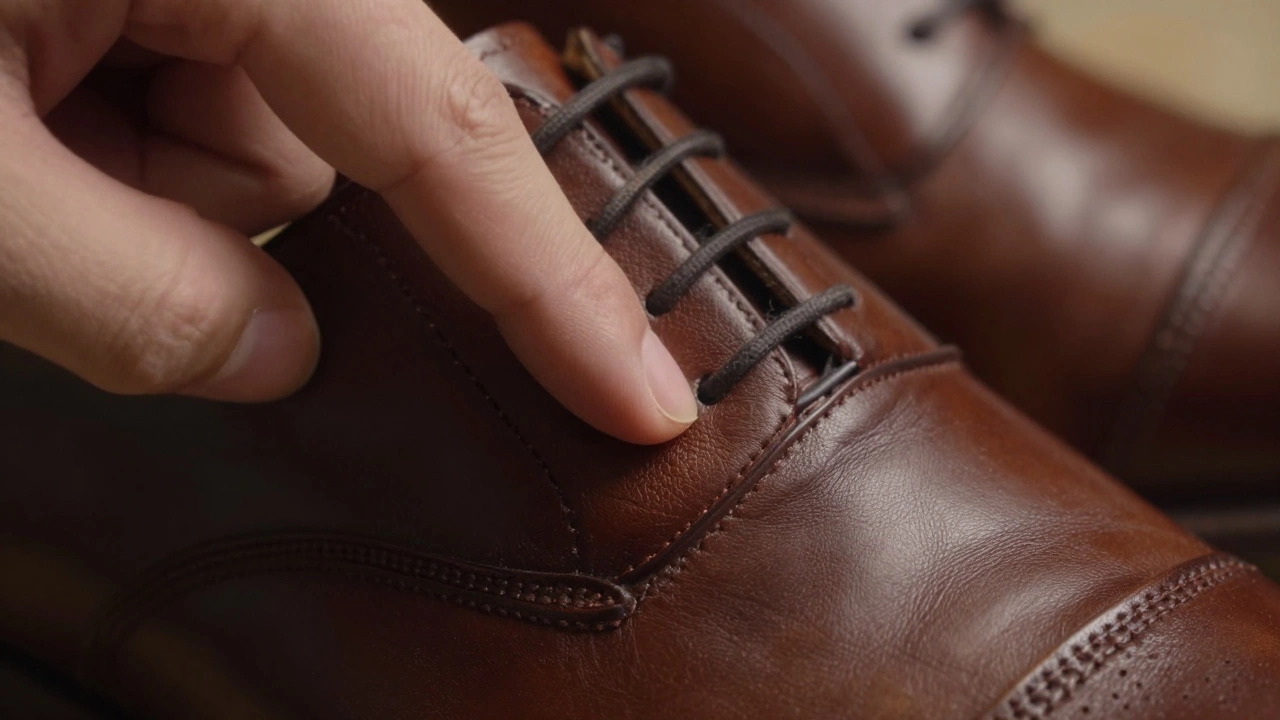
- Wrinkles around fingerprint
- Earthy, organic smell
2 Construction Method
Look at the bottom edge where the sole meets the upper.
Cemented (Glued)
- Clean line, no strip visible
- Not resoleable
- Usually under $150
Stitched (Welted)
- Visible leather strip (welt)
- Fully resoleable
- Durable stitching visible
3 Hardware & Structure
Check the eyelets, lining, and heel counter firmness.
Budget Signs
- Thin stamped metal eyelets
- Synthetic mesh lining
- Soft/collapsing heel back
Quality Signs
- Reinforced/Riveted eyelets
- Leather/Natural fiber lining
- Firm, rigid heel counter
Inspection Result
Budget Risk
Quality Score
You walk into a store. You see two pairs of brown oxfords. One costs $80. The other costs $350. They look almost identical from three feet away. Which one will last you five years? Which one will fall apart in six months? The price tag doesn't always tell the truth, but the materials and construction do.
Buying high quality leather shoes isn't about brand names or marketing hype. It’s about understanding what you’re actually paying for. When you buy cheap shoes, you aren’t just buying a lower price; you are buying a shorter lifespan and often, foot pain. When you invest in good shoes, you are buying durability, comfort, and style that improves with age.
So, how do you spot the difference before you spend your money? You need to stop looking at the outside and start inspecting the inside, the sole, and the material itself. Here is exactly what to check.
The Material Test: Real Leather vs. Fake
The first thing you need to know is not all leather is created equal. In fact, much of what is sold as "leather" today is barely leather at all. To find high-quality shoes, you need to understand the hierarchy of hides.
Full-Grain Leather is the highest quality leather available, retaining the natural grain and imperfections of the hide. This is the gold standard. It breathes, it molds to your foot, and it develops a patina-a rich, dark sheen-that makes each pair unique over time. Look for small scars, insect bites, or wrinkles on the surface. These aren't defects; they are proof of authenticity.
If the leather looks perfectly smooth, uniform, and plastic-like, be suspicious. That is likely Corrected-Grain Leather, which is sanded down to remove imperfections and coated with a thick layer of pigment and plastic. It won't breathe well, and when it cracks, it flakes off like dried paint rather than wearing down gracefully.
Then there is Split Leather (or bonded leather), which is made from the fibrous inner layers of the hide glued together. This is often found in cheap fashion brands. It feels stiff and smells like chemicals, not animal skin. Avoid this at all costs if you want longevity.
Pro Tip: Press your finger firmly into the side of the toe box. Real full-grain leather will wrinkle slightly around your finger print. Faux leather or heavily corrected leather will just dent or feel rubbery.
Construction Methods: Glued vs. Stitched
This is where the real money goes. The way the upper part of the shoe connects to the sole determines its life expectancy. There are two main camps: cemented construction and stitched construction.
Cemented construction uses strong industrial glue to attach the sole. This is fast and cheap to manufacture. Most mass-market shoes under $150 use this method. The problem? Glue fails. After a year or two of walking, the bond weakens, water gets in, and the sole separates from the upper. Once that happens, the shoe is trash. You cannot easily resole them.
High-quality shoes use stitching. The most famous method is Goodyear Welt, a construction technique where a strip of leather (the welt) is stitched to the upper and the insole, and then the outsole is stitched to the welt. Imagine a sandwich. The bread is the upper and the sole. The filling is the welt. Because the sole is stitched on, you can cut those stitches, remove the worn-out sole, and stitch on a new one. A Goodyear-welted shoe can last decades because it is repairable.
Another excellent method is Blake Stitch, which is a construction method where the upper is stitched directly through the insole to the outsole. This creates a sleeker, more flexible shoe, often used for dress shoes. It is also resoleable, though slightly less waterproof than Goodyear welt.
Look at the bottom of the shoe. Do you see a visible strip of leather running around the perimeter, between the sole and the upper? That’s a welt. If you see nothing but a clean line where the sole meets the upper, it’s likely glued.
The Smell and Touch Check
Your nose knows more than you think. Take the shoe out of the box and bring it close. High-quality leather has a distinct, earthy, organic smell. It might remind you of an old library, a tannery, or rain on dry dirt. It should never smell like sharp chemicals, acetone, or burnt plastic. That chemical odor indicates synthetic glues, dyes, or faux materials.
Touch the lining. Cheap shoes often have linings made of polyester or nylon mesh. These trap sweat and heat, leading to blisters and odor. Quality shoes feature linings made of Calfskin Leather or Breathable Fabric such as Alcantara or high-grade canvas. Run your hand inside. It should feel smooth and cool, not sticky or rough.
Hardware and Details
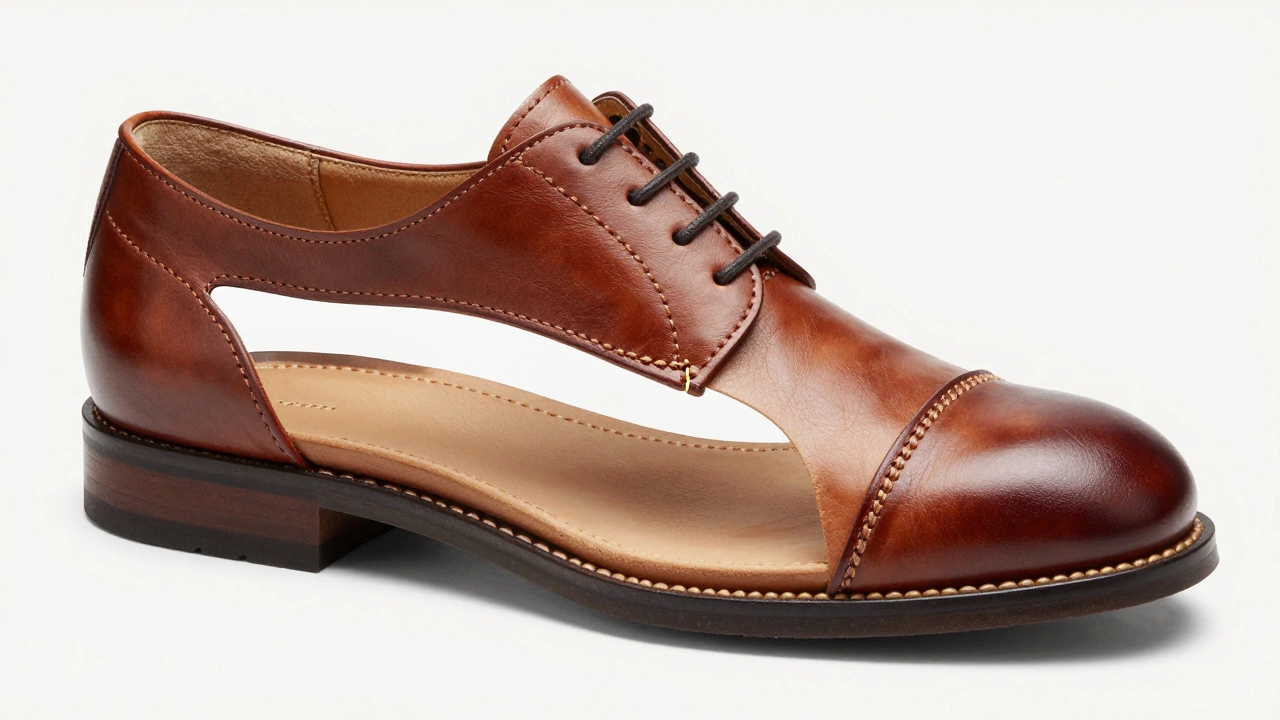
Quality shows in the small things that people ignore. Look at the eyelets-the metal rings where the laces go. On cheap shoes, these are often thin, stamped brass that tarnishes quickly or tears through the leather. On quality shoes, they are reinforced with grommets or made of solid brass or nickel that is securely riveted into place.
Check the stitching. Is it even? Are the thread thicknesses consistent? Loose threads or uneven spacing suggest rushed manufacturing. High-end shoemakers use waxed linen thread, which is stronger and water-resistant than the cotton or polyester threads used in budget options.
Look at the heel counter-the back part of the shoe that holds your heel in place. Squeeze it. It should be firm and rigid. If it collapses easily under your thumb, the shoe lacks structural integrity. Your heel will slide up and down, causing friction and blisters. A good heel counter provides stability and support.
Price as a Signal, Not a Rule
While you can find decent shoes for $150-$200, true high-quality leather footwear usually starts around $300 and goes up from there. Why? Because full-grain leather hides are expensive, and skilled labor for Goodyear welting takes time. If a pair claims to be "full-grain" and "hand-stitched" for $60, it is lying.
However, price alone doesn't guarantee quality. Some luxury brands charge for the logo, not the craft. Always prioritize the construction methods and materials over the brand name.
Comparison: What to Look For
| Feature | Budget Shoe ($50-$100) | Quality Shoe ($300+) |
|---|---|---|
| Leather Type | Corrected Grain / Split / Faux | Full-Grain / Top-Grain |
| Construction | Cemented (Glued) | Goodyear Welt / Blake Stitch |
| Lining | Synthetic Mesh / Polyester | Leather / Breathable Natural Fibers |
| Sole Material | Rubber / EVA Foam | Leather / Dainite / Vibram |
| Repairability | None (Throw away when broken) | Fully Resoleable and Repairable |
| Smell | Chemical / Plastic | Earthy / Organic |
Common Mistakes Buyers Make
Many people focus only on the color or the style. They forget to check the fit. Even the best leather needs to break in. Buy shoes that fit comfortably right away, with a little room for your toes. Leather stretches, but it doesn't expand infinitely. If it hurts now, it will hurt later.
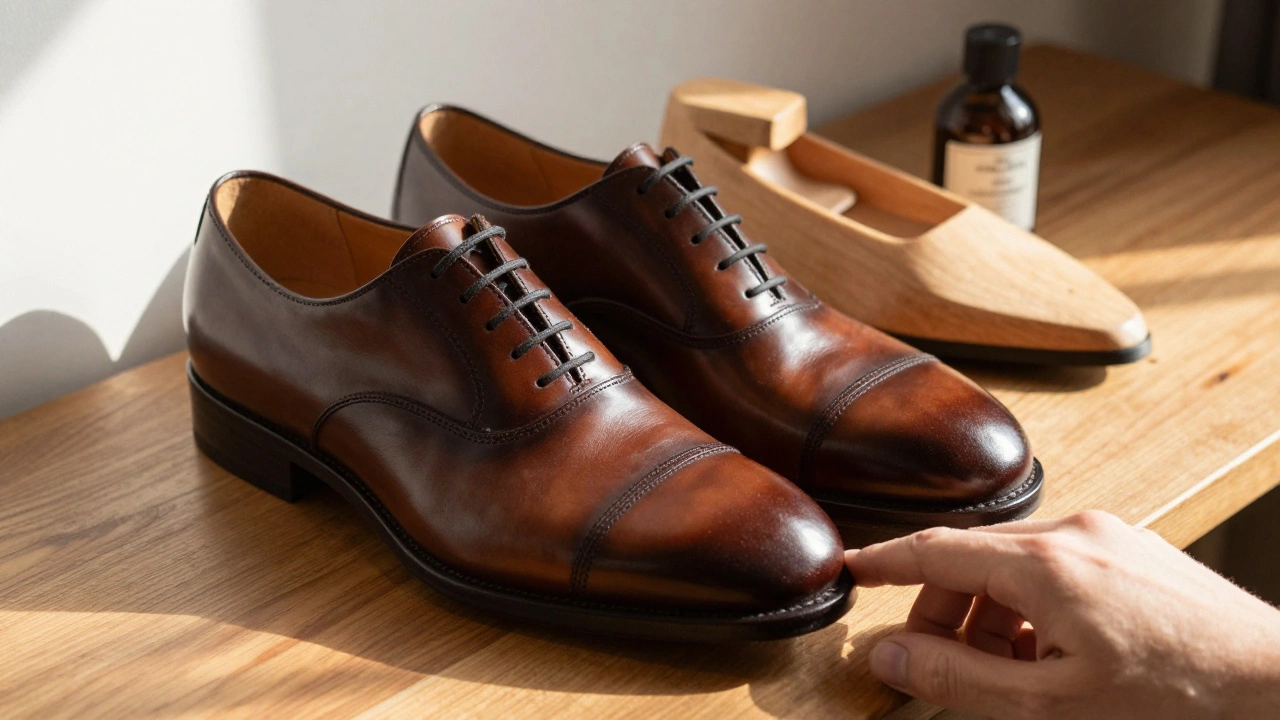
Another mistake is neglecting care. High-quality leather requires maintenance. Use a cedar shoe tree after every wear to absorb moisture and maintain shape. Condition the leather every few months to keep it supple. Without this, even the best shoes will crack and dry out.
Final Thoughts on Investing in Footwear
Buying high-quality leather shoes is an investment in your daily comfort and long-term style. By checking the leather type, inspecting the construction, smelling the materials, and examining the details, you can separate the durable classics from the disposable trends. Don't let a shiny box fool you. Look closer, touch deeper, and walk confidently knowing you chose wisely.
What is the difference between full-grain and top-grain leather?
Full-grain leather is the outermost layer of the hide, keeping all its natural fibers and markings intact. It is the strongest and most durable. Top-grain leather has been sanded to remove imperfections, making it softer and more uniform but slightly less durable than full-grain. Both are real leather, but full-grain ages better.
Are Goodyear welted shoes worth the extra cost?
Yes, if you plan to keep the shoes for many years. Goodyear welting allows you to replace the soles multiple times without damaging the upper part of the shoe. Over a decade, this saves money compared to buying new glued shoes every year. It also provides better waterproofing due to the layered construction.
How can I tell if leather shoes are genuine without touching them?
Look closely at the texture. Genuine full-grain leather has irregular pores and natural variations in color and pattern. Fake leather often has a repetitive, perfect pattern. Also, check the label. Terms like "genuine leather" are legally vague and often mean low-quality split leather. Look for "full-grain" or "top-grain" instead.
Why do my new leather shoes smell like chemicals?
A strong chemical smell usually indicates synthetic materials, heavy adhesives, or poor-quality dyes. High-quality leather should have a mild, natural scent. If the smell is overpowering and doesn't fade after airing out for a day, the shoes may contain harmful volatile organic compounds (VOCs) or be made of faux leather.
Can I resole any leather shoe?
No. Only shoes with stitched construction, such as Goodyear welt, Blake stitch, or Norwegian welt, can be reliably resoled. Cemented (glued) shoes cannot be resoled effectively because the glue bond is weaker than the leather itself, and removing the old sole often destroys the upper.