Hoodie Quality Score Calculator
Inspection Checklist
Select the options that best describe the hoodie you are evaluating.
Excellent Choice
This hoodie features heavyweight fabric, durable stitching, and premium materials designed to last for years.
Ever bought a hoodie that looked perfect in the store but turned into a shapeless sack after three washes? It’s frustrating. You paid for comfort, but you got disappointment. The difference between a hoodie that lasts five years and one that falls apart in five months isn’t just about price. It’s about construction, fabric density, and stitching details that most shoppers overlook.
Finding a high-quality hoodie requires looking past the brand logo and touching the material. In this guide, we break down exactly what to check before you buy, so you never waste money on fast fashion again.
The Weight Matters: Understanding GSM
If there is one number you need to know when buying a hoodie, it is GSM. This stands for Grams per Square Meter. It measures how heavy and dense the fabric is. Most people ignore this because it’s rarely printed on the tag, but it is the single biggest indicator of durability and warmth.
Cheap hoodies often weigh between 200 and 300 GSM. They feel thin, look see-through in bright light, and pill easily. A decent mid-range hoodie sits around 350 to 400 GSM. It feels substantial without being stiff. But if you want something that blocks wind, holds its shape, and lasts for years, you are looking for 400 GSM or higher. Premium brands often use fabrics weighing 450 to 600 GSM. These feel like wearing a warm blanket. They drape well and don’t cling to your body.
Here is a quick rule of thumb:
- 200-300 GSM: Thin, summer-weight, prone to pilling. Good for layering under jackets, not as a standalone piece.
- 350-400 GSM: Standard weight. Good balance of comfort and durability. Suitable for everyday wear.
- 400+ GSM: Heavyweight. Durable, warm, and structured. Ideal for colder climates and long-term use.
Fabric Composition: Cotton vs. Synthetics
Not all cotton is created equal, and mixing materials changes everything. The best hoodies usually use a blend, but the ratio matters. Pure 100% cotton hoodies feel soft and natural, but they can shrink significantly if washed incorrectly. They also tend to wrinkle more than blends.
A common high-quality blend is 80% cotton and 20% polyester. The cotton provides breathability and that classic soft hand-feel, while the polyester adds strength and helps the hoodie retain its shape after washing. Some premium brands use French Terry or Loopback cotton. These fabrics have a textured inner surface that traps heat better than flat fleece. If you see "polyester" listed as the primary ingredient (over 50%), be cautious. While it might be cheaper and resist wrinkles, it often lacks breathability and can feel plastic-like against the skin.
Look for terms like "ring-spun cotton" or "combed cotton." Ring-spinning removes short fibers and twists the remaining long fibers tightly. This results in a smoother, stronger yarn that resists pilling. Combed cotton goes a step further by brushing away loose fibers, leaving only the longest, strongest strands. These processes cost more, which is why you find them in higher-end garments.
Construction Details That Reveal Quality
You can have the best fabric in the world, but if it’s stitched poorly, the hoodie will fail. Flip the hoodie inside out. What do you see? Cheap hoodies have messy seams with loose threads and uneven stitching. High-quality hoodies feature clean, tight stitches with no puckering.
Pay attention to the stitch type. Look for chain-stitching or double-needle stitching on the hem and cuffs. Single-needle stitching is weaker and more likely to unravel. The shoulder seams should lie flat and align perfectly. If the sleeves twist when you hang the hoodie up, the construction is off.
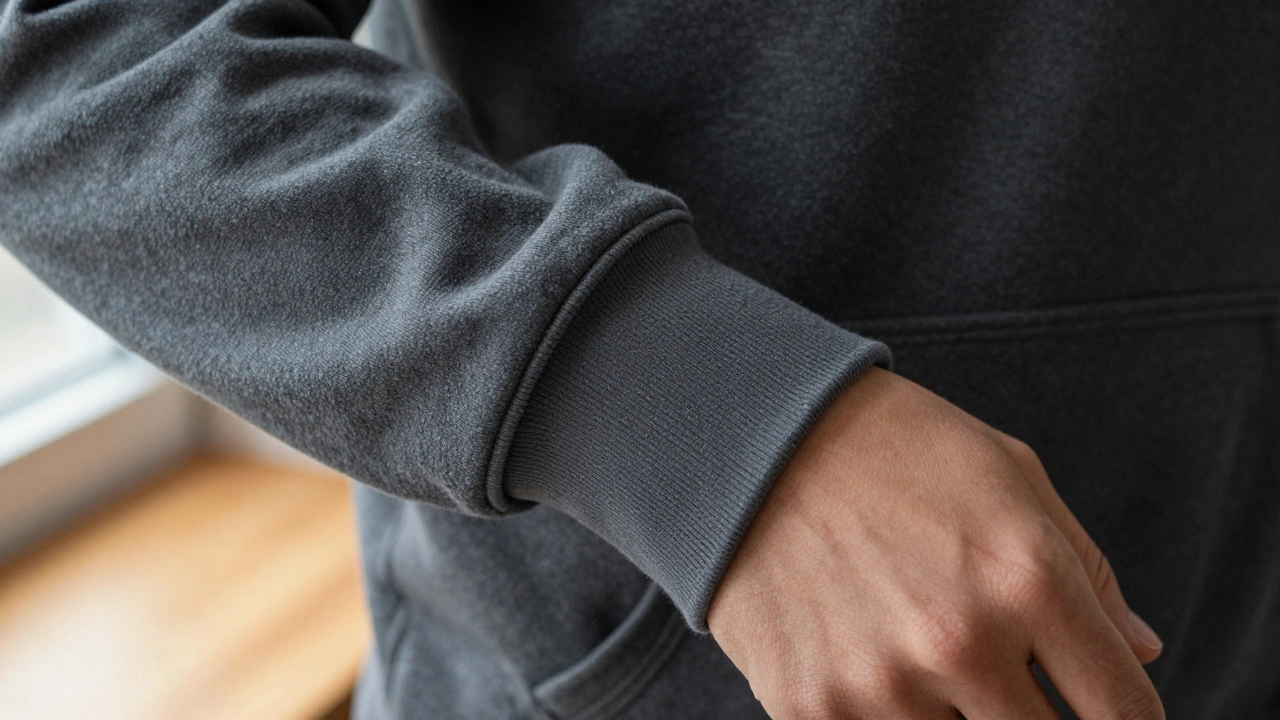
Check the ribbing on the cuffs, waistband, and hood. Ribbing is the elasticated knit that keeps the hoodie snug. Cheap ribbing uses low-quality elastic that snaps back too hard or loses elasticity quickly. After a few washes, cheap cuffs become baggy and floppy. Good ribbing contains a small percentage of spandex or elastane (usually 2-5%) mixed with cotton or polyester. This allows it to stretch and recover its shape repeatedly. Press your thumb into the cuff. If it stays indented, the elasticity is poor. If it springs back instantly, it’s a good sign.
The Hood and Pocket Test
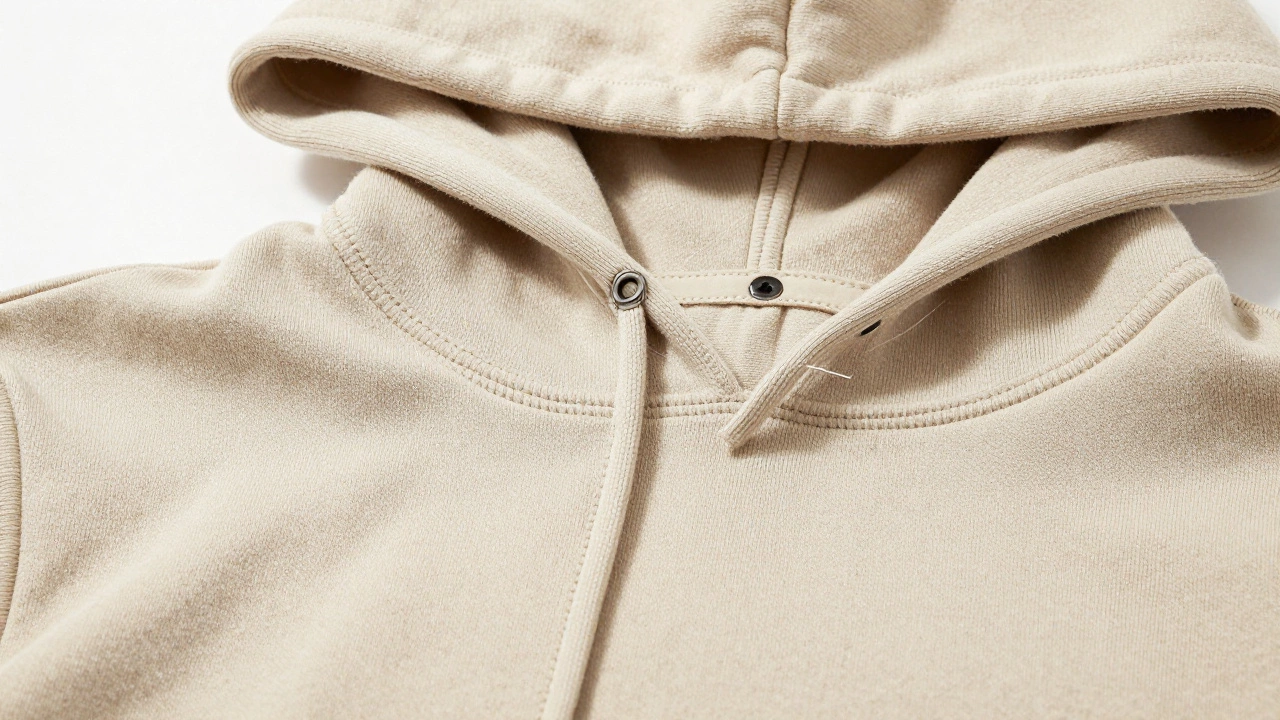
The hood is where many manufacturers cut corners. A quality hood has structure. It shouldn’t flop around wildly when you put it on. Look for a hood made from the same heavy fabric as the body, not a thinner lining. Some high-end hoodies include a separate lining inside the hood for extra warmth and comfort against the forehead.
Check the drawstrings. Are they sewn securely at both ends? Do they have metal or plastic aglets (tips) that match the hardware on the pockets? Cheap drawstrings fray quickly or slip out entirely. Metal eyelets for the drawstrings are preferable to simple holes punched in the fabric, as they prevent tearing.
Kangaroo pockets are standard, but their placement and depth matter. The pocket should be large enough to fit your hands comfortably without straining the seams. Check the bottom of the pocket. Is it reinforced? A reinforced pocket bottom prevents sagging when you carry keys or a phone. Also, ensure the pocket opening is wide enough for your hands but not so wide that items fall out easily.
Hardware and Finishing Touches
If your hoodie has zippers, buttons, or metal grommets, inspect them closely. Zippers should glide smoothly without catching. YKK is the industry gold standard for zippers. If you see a YKK zipper, it’s a strong indicator of quality control. Cheap zippers jam, break teeth, or pull apart.
Metal hardware, like eyelets or rivets, should be solid, not hollow plastic painted to look like metal. Hollow hardware cracks and breaks. Solid metal adds weight and durability. Check the tags. Are they sewn in neatly? Do they scratch your neck? High-quality brands often use printed labels or soft-touch woven tags to avoid irritation.
| Feature | Low Quality Indicator | High Quality Indicator |
|---|---|---|
| Fabric Weight | Under 300 GSM, feels thin | 400+ GSM, feels substantial |
| Material Blend | 100% Polyester or low-grade cotton | Ring-spun cotton blend (e.g., 80/20) |
| Stitching | Loose threads, single needle, uneven | Tight, double-needle, no puckering |
| Ribbing | Stretches out permanently, no snap-back | Contains elastane, recovers shape instantly |
| Hood Structure | Floppy, thin lining, frayed drawstrings | Structured, matching fabric, secure aglets |
| Hardware | Plastic eyelets, generic zippers | Solid metal eyelets, YKK zippers |
Fit and Silhouette
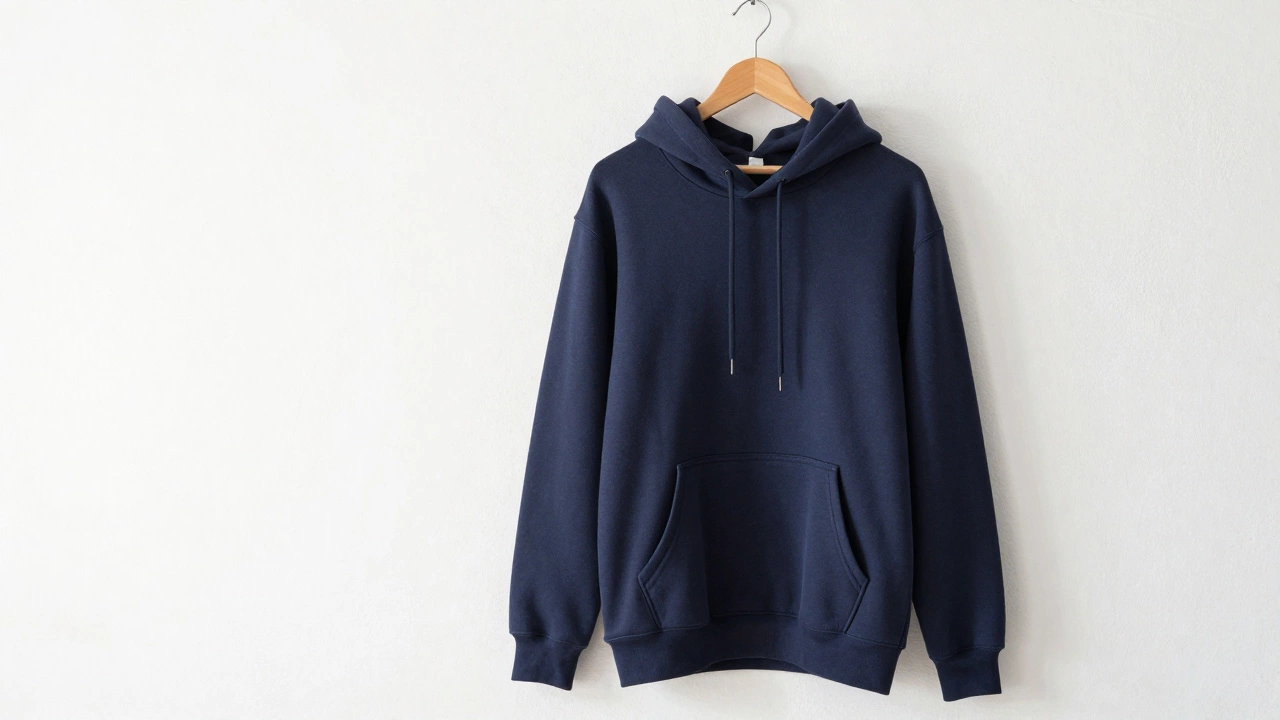
Quality isn’t just about materials; it’s about how the hoodie hangs on your body. A well-made hoodie maintains its silhouette. After washing, it shouldn’t shrink disproportionately in length or width. Try it on. Move your arms. Does the torso ride up excessively? Does the sleeve length change dramatically when you raise your arms? Good pattern grading ensures movement doesn’t distort the fit.
Consider the intended fit. Oversized hoodies are trendy, but an oversized hoodie should still have intentional proportions. The shoulders should drop slightly but not slide off completely. The length should cover your hips adequately. If the hoodie looks boxy and lifeless on the hanger, it will likely look worse on you. Structure comes from the weight of the fabric and the precision of the cut.
Long-Term Care and Durability
Even the best hoodie degrades if treated poorly. To maximize lifespan, wash inside out in cold water. This protects the outer surface from abrasion and fading. Avoid high-heat drying. Heat breaks down elastic fibers in the ribbing and causes cotton to shrink. Air drying is ideal. If you must use a dryer, use the lowest heat setting.
Turn the hoodie inside out before storing it to prevent dust accumulation on the outer fabric. Fold rather than hang heavy hoodies for long periods, as hanging can stretch the shoulders over time. By following these care tips and choosing wisely based on the factors above, you’ll build a wardrobe of hoodies that look great and last for years.
What is the best GSM for a winter hoodie?
For winter conditions, aim for a hoodie with a GSM of 400 or higher. This weight provides sufficient insulation and wind resistance. Fabrics in the 450-600 GSM range are particularly effective for cold weather, offering a dense barrier against chill while retaining body heat.
Is 100% cotton better than a cotton-polyester blend for hoodies?
It depends on your priorities. 100% cotton offers superior breathability and a natural feel but is prone to shrinking and wrinkling. A cotton-polyester blend (like 80/20) provides better shape retention, reduced shrinkage, and increased durability. For everyday wear and longevity, a high-quality blend is often the practical choice.
How can I tell if the stitching on a hoodie is strong?
Inspect the seams inside the garment. Look for tight, even stitches with no loose threads. Double-needle stitching along the hem and cuffs indicates greater strength. Pull gently on the seams; they should not stretch or gap. Chain-stitching is also a sign of durable construction compared to basic lockstitching.
Why does my hoodie cuff lose its shape after washing?
This usually happens because the ribbing lacks elastane or spandex, or because high heat was used during drying. Elastic fibers degrade under high temperatures. To prevent this, wash in cold water and air dry. When buying new hoodies, check the label for a small percentage of synthetic stretch fibers in the cuff composition.
Are expensive hoodies always better quality?
Not necessarily. Price often reflects branding and marketing. However, very cheap hoodies rarely use high-GSM fabrics or durable stitching. Mid-range prices often offer the best value in terms of material quality versus cost. Always prioritize fabric weight (GSM), material composition, and construction details over the brand name alone.