Suit Value & Appearance Estimator
Discover why a $600 tailored suit often looks better than a $3,000 off-the-rack one. Input your details to see where your money is actually going.
Your Suit Details
Analysis Results
Key Factors
Enter your suit details to see the analysis.
You walk into a high-end tailor’s shop in Toronto. A suit hangs on the rack for $3,500. Next door at a department store, a similar-looking option costs $400. You touch the fabric. It feels smoother. The stitching looks tighter. But does that price difference actually translate to looking better when you wear it?
Here is the uncomfortable truth: an expensive suit doesn’t automatically make you look better. A cheap suit fits poorly. That’s why it looks bad. But a $5,000 suit that fits like a sack of potatoes also looks terrible. The magic isn’t in the price tag alone; it’s in how construction, fabric, and fit interact. Let’s break down what you’re actually paying for and where your money makes the biggest visual impact.
The Fit Factor: Why Your Tailor Matters More Than Your Brand
Most men think they need a more expensive suit to look sharper. In reality, they need a better fit. A $600 off-the-rack suit, altered by a skilled tailor for $150, will almost always outperform a $3,000 suit straight off the rack that hasn’t been touched.
Why? Because human bodies are weird. Shoulders slope differently. Armholes sit at varying heights. Collars gap because necks aren’t perfect cylinders. High-end brands often cut their suits with a specific European or Italian silhouette in mind. If that shape doesn’t match your frame, the best wool in the world won’t save you.
- Shoulder Line: This is the hardest part to alter. If the padding extends past your natural shoulder bone, the suit looks boxy and fake. No amount of tailoring fixes this perfectly.
- Chest Suppression: Cheap suits often have a boxy chest. Expensive ones taper slightly to create an hourglass shape. But if the taper is too aggressive, you’ll pull buttons across the stomach.
- Sleeve Length: You want about half an inch of shirt cuff showing. A $400 suit can achieve this with a simple hem adjustment. A $2,000 suit might require reconstructing the sleeve head if the button stance is wrong.
If you’re buying under $1,000, budget for alterations. If you’re spending over $2,000, ensure the brand offers comprehensive fitting services. Otherwise, you’re paying for marketing, not aesthetics.
Fabric Quality: Where You Can Actually See the Difference
Not all fabrics age well. This is where price starts to matter visually over time. A cheap suit uses synthetic blends-polyester or viscose mixed with low-grade wool. These fabrics shine quickly. After six months of wearing them to the office, the elbows and seat develop a glossy, plastic-like sheen. It screams "cheap" even if the color was right initially.
High-quality suits use pure virgin wool from reputable mills like Loro Piana, Vitale Barberis Canonico, or Holland & Sherry. These fabrics breathe better, drape more naturally, and resist wrinkling longer. They don’t just feel nicer; they hang correctly on your body.
| Feature | Budget Suit ($300-$600) | Mid-Range Suit ($800-$1,500) | Luxury Suit ($2,000+) |
|---|---|---|---|
| Material | Poly-blend or coarse wool | Super 100s-120s Virgin Wool | Super 130s-180s Cashmere/Wool Blends |
| Drape | Stiff, holds shape artificially | Natural fall, conforms to body | Fluid, moves with you |
| Wrinkle Resistance | Low (creases easily) | Moderate (recovers overnight) | High (springy weave resists creasing) |
| Lifespan Appearance | Looks worn after 1 year | Looks good for 3-5 years | Looks pristine for 7+ years |
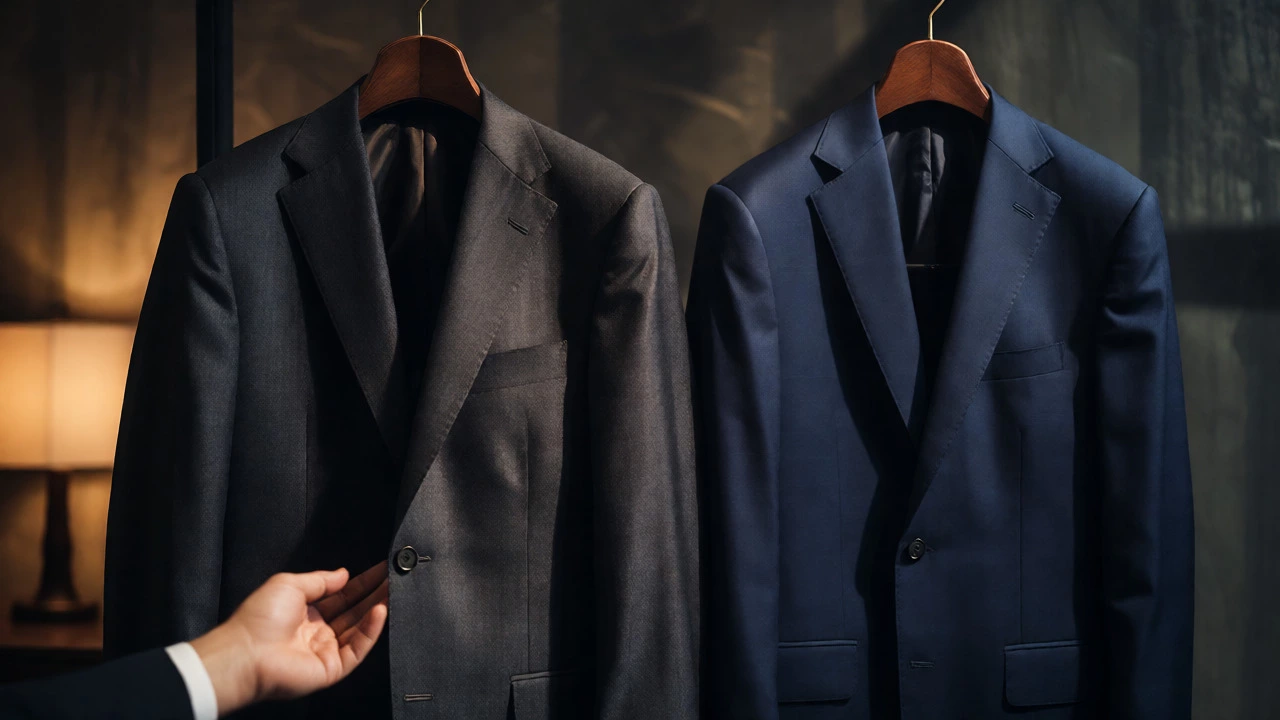
Notice the drape column. That’s the key visual differentiator. Cheap fabric stands away from your body. Good fabric falls against it. When you raise your arms, a luxury jacket returns to its original shape instantly. A cheap one stays distorted until you steam it.
Construction Methods: Internal Details That Change Silhouette
You can’t see the inside of a suit when you’re shaking hands, but you can see the results. Construction determines how structured the jacket feels and how it breaks when you move.
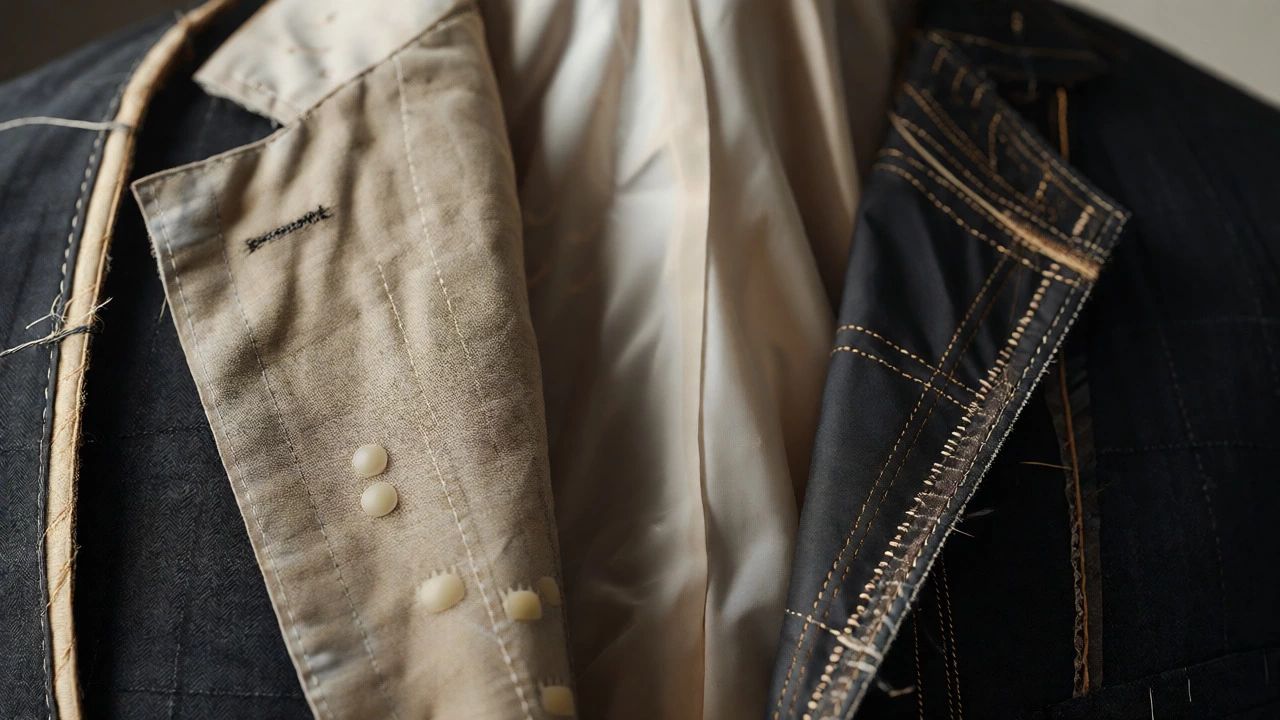
Fused construction uses glue to attach the canvas (the inner layer) to the outer fabric. It’s fast and cheap. The downside? It creates a stiff, cardboard-like feel. Over time, the glue degrades. Bubbles form between the layers, especially after dry cleaning. This ruins the smooth line of the lapel. It’s a common issue in sub-$500 suits.
Half-canvas construction glues only the lower portion and hand-stitches the chest area. This allows the lapels to roll naturally rather than folding sharply. It’s the sweet spot for most professionals. You get durability without the massive price hike.
Full-canvas construction involves no glue. The entire front panel is stitched to the canvas. This requires more skill and time. The result? The jacket molds to your body over months of wear. It becomes uniquely yours. Visually, full-canvas jackets have a softer, more organic structure. They don’t look like armor. They look like clothing.
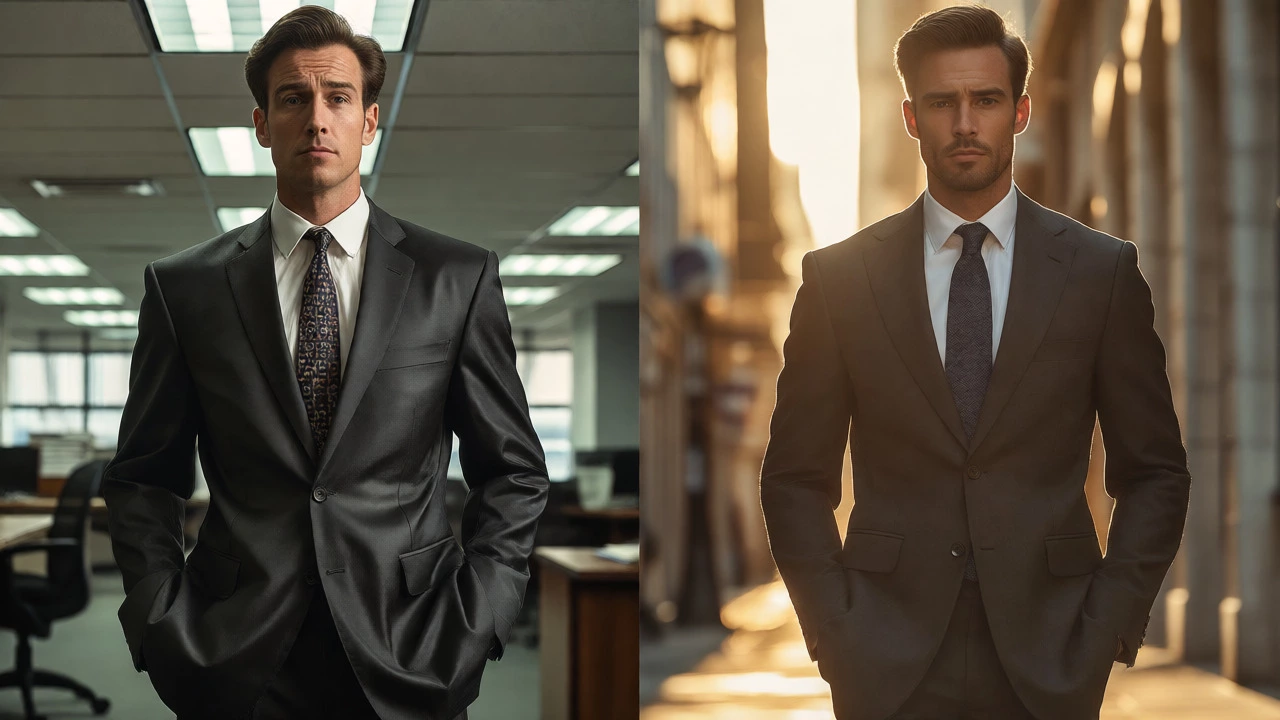
Does this matter for appearance? Yes. A fused suit often has a flat, lifeless chest. A canvassed suit has subtle curvature that mimics the human torso. Photographers notice this. Clients notice this. You might not consciously see it, but people perceive the difference as "quality" or "authority."
The Diminishing Returns Curve: When Extra Money Stops Helping
Let’s talk numbers. Going from a $300 polyester blend to an $800 Super 110s wool suit yields a massive visual upgrade. The fabric stops shining. The lining breathes. The buttons feel solid. People comment on how sharp you look.
Going from $800 to $1,500 improves comfort and longevity. The fabric gets finer. The stitching gets cleaner. But do you look significantly better? Maybe slightly. The drape is smoother. The details are crisper. But to the average observer, the difference is subtle.
Going from $1,500 to $3,500? You’re paying for exclusivity. Rare fabrics like Vicuna or Sea Island Cotton. Hand-painted edges. Specific mill names. Does a $3,500 suit make you look twice as good as a $1,500 suit? Absolutely not. It might look 5% better. And that 5% is mostly visible to other suit enthusiasts who know what to look for.
In Toronto, many corporate lawyers and finance pros spend $1,000-$1,500 per suit. They look powerful. They look polished. Spending $4,000 doesn’t make them look four times more successful. It just means they spent more money. There’s a point where fashion becomes art, and art doesn’t necessarily help your career image.
Style and Confidence: The Invisible Variables
Here’s something tailors rarely tell you: confidence changes perception. If you feel uncomfortable in a tight, expensive suit, you’ll fidget. You’ll tug at the collar. You’ll avoid raising your arms. Your body language screams discomfort, regardless of the price tag.
A well-fitted mid-range suit that you feel great in will always beat an ill-fitting luxury suit you’re self-conscious about. Style isn’t just about the garment; it’s about how you inhabit it.
Consider the details that actually catch the eye:
- Tie Knot Size: A wide knot needs a spread collar. A narrow knot needs a point collar. Mismatch these, and you look sloppy, whether the suit cost $400 or $4,000.
- Shoe Pairing: Brown shoes with a navy suit work. Black shoes with a brown suit rarely do. Getting this wrong undermines even the finest fabric.
- Waistcoat Gap: If you wear a vest, it should cover your belt buckle. If it doesn’t, you look disheveled. This is a fit issue, not a price issue.
These elements cost little to fix but define your overall look. Spend your extra budget on a good barber, clean shoes, and proper socks before upgrading from a $1,200 suit to a $2,500 one.
Verdict: Is the Upgrade Worth It?
So, do expensive suits look better? Only up to a point.
If you’re currently wearing a $200 suit from a discount retailer, yes, spending $800-$1,000 will make you look dramatically better. The fabric improvement alone transforms your presence. You’ll look professional, put-together, and serious.
If you’re already wearing a well-fitted $1,000 suit with decent fabric, spending $3,000 won’t make you look three times better. It might make you feel richer, which could boost confidence, but visually, the gains are marginal.
The real secret isn’t the price. It’s the combination of three things:
- Fabric Integrity: Pure wool, appropriate weight (9-11 oz for year-round), and reputable mills.
- Structural Soundness: Half-canvas or full-canvas construction for natural drape.
- Precision Fit: Alterations that respect your unique anatomy.
You can achieve all three for around $1,200 if you shop smartly. Brands like Suitsupply, Indochino, or local Toronto tailors offer excellent value. Reserve the ultra-expensive suits for weddings or events where you want heirloom quality. For daily work, balance is king.
How much should I spend on my first good suit?
Aim for $800 to $1,200 CAD. This range typically guarantees pure wool fabric and half-canvas construction. Include $150-$200 in your budget specifically for alterations. A $900 suit tailored perfectly beats a $1,500 suit off the rack every time.
Do expensive suits last longer?
Yes, primarily due to fabric quality and construction. High-twist yarns in premium wools resist abrasion better. Full-canvas jackets maintain their shape longer than fused ones. However, lifespan also depends heavily on rotation. Wearing the same suit two days in a row kills any suit, regardless of price.
Is bespoke worth the extra cost over made-to-measure?
For most men, no. Made-to-measure (MTM) adjusts standard patterns to your measurements and is sufficient for 90% of body types. Bespoke creates a unique pattern from scratch. It offers superior fit for unusual proportions but costs 2-3x more. Unless you have significant asymmetry or posture issues, MTM provides better value.
What fabric weight is best for Toronto weather?
Choose mid-weight wool, around 10-11 ounces. This handles Toronto’s humid summers and cool autumns/springs well. Avoid very light fabrics (under 8 oz) as they wrinkle easily and lack structure. Heavy tweeds (over 14 oz) are too warm for indoor offices during warmer months.
Can I tell a cheap suit from an expensive one just by looking?
Often, yes. Look for shiny patches on elbows and seats (synthetic fibers). Check the lapel roll-if it folds sharply instead of rolling softly, it’s likely fused. Inspect buttonholes-if they’re machine-made with rough threads, it’s lower tier. Also, check the lining; cheap suits use slippery polyester linings that trap heat.